Expert articles, practical guides, and updates for agricultural irrigation projects
100 post(s) - Page 1 of 7
Build a filling-capacity worksheet that separates displaced volume, reference air flow, accessory losses and verified exhaust-curve evidence.
Build a labeled manifold flow map, compare branch head requirements and see why adding one zone changes existing branches. Include isolation and a removal plan.
Check actuator torque limits, movement and standby energy, outage behavior and physical feedback before choosing how a remote irrigation valve will operate.
Separate tail drainage from continuing inlet flow, then verify the closing command, chamber response, sealing condition and downstream supply.
An original evidence-gap example shows why a body rating or generic seal name cannot qualify a complete irrigation valve for its chemical exposure.
Check the working space, component-removal opening, drainage route and electrical connection protection before choosing an irrigation valve box.
Compare mechanical travel with actual flow reduction, then account for closure tail water and overlapping zone demand using transparent worked examples.
A traceable coefficient worksheet compares fully open candidates and converts the same liquid duty between Kv and Cv without assuming that capacity proves regulation.
A connection register and worked pressure examples distinguish reverse-flow control from the evidence needed for irrigation source protection.
A worked hydraulic example shows how sustaining upstream pressure can restrict another irrigation branch, and what to verify before accepting the arrangement.
An original USD example separates installation costs, paid labour, energy, water and subscriptions, then tests replacement timing and the assumptions behind payback.
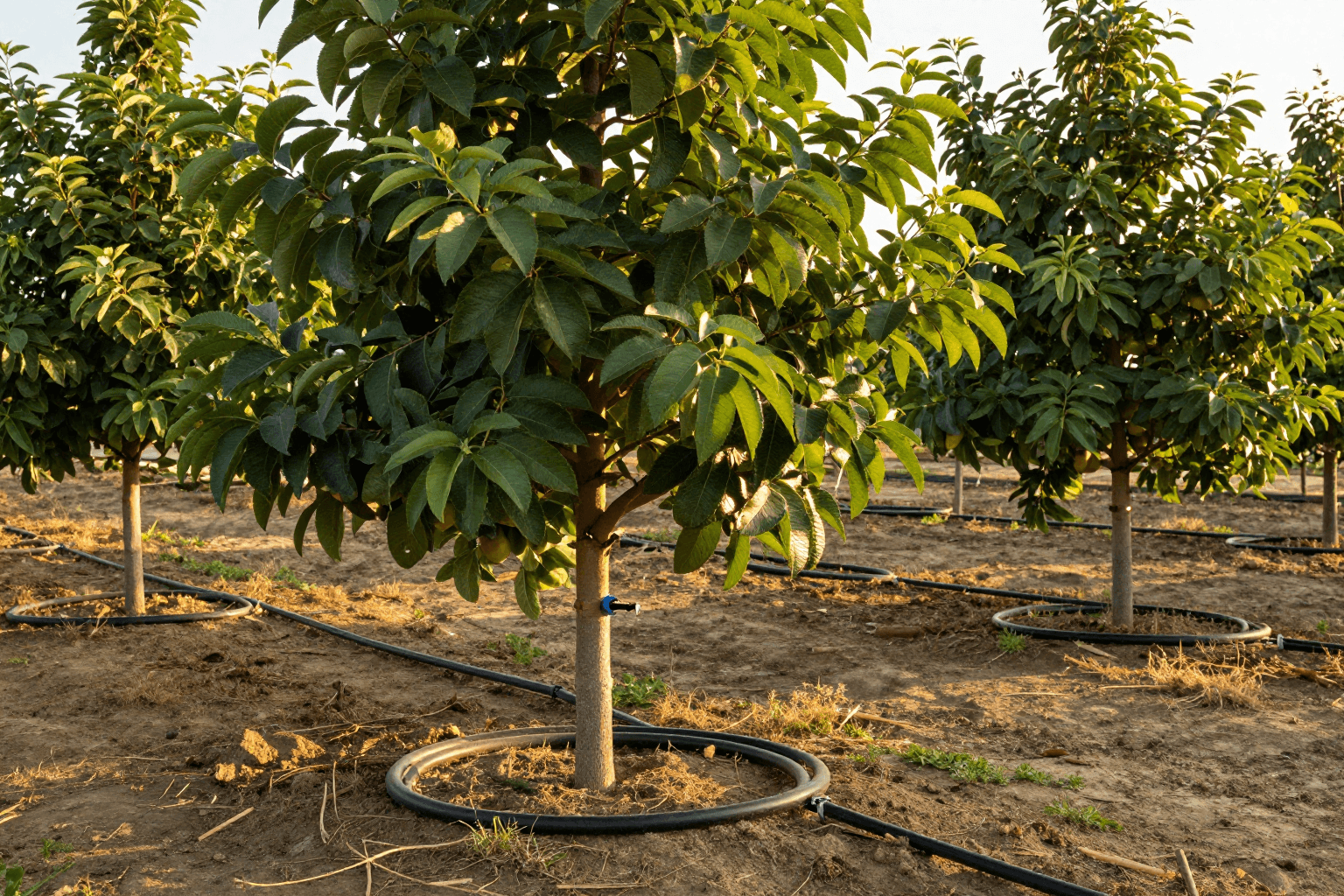
Use a mapped soil-response review to distinguish uneven wetting, persistent wetness and delivery faults before changing avocado drip irrigation settings.
Metric and US-unit examples connect emitter flow, line spacing, runtime and applied depth, with separate checks for bed layouts, wetted strips and measured event volume.
Separate pressure loading, damaged tubing, incomplete engagement and external pulling before rebuilding an irrigation connection. Includes original force and movement examples.
A practical control sequence for variable irrigation demand, with an original timing log and a zone-capacity worksheet for operation after a pump fault.