Irrigation Filter Buying Guide: How to Choose the Right Filter
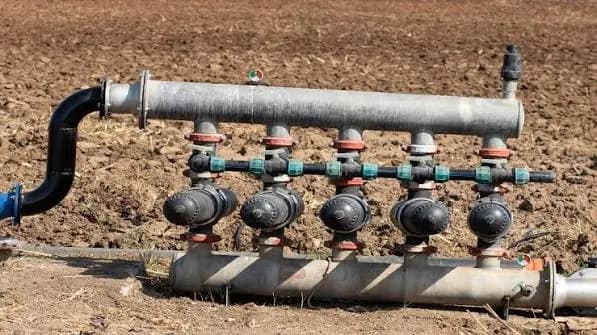
In short: An irrigation filter buying guide helps you choose the filter that removes debris before it reaches and clogs your emitters. It matters because every irrigation system needs a filter — no matter how clean the water looks — and a blocked dripper is usually only noticed once a plant wilts. The right choice depends on four things: your water source, your emitting device, ease of cleaning, and the space at the water source. Filtration is really about surface area: more area means longer between cleanings. This guide walks through the four decisions and explains mesh versus micron so you buy once and buy right.
A filter is cheap insurance for any drip or sprinkler system. IrriNex (a B2B agricultural irrigation manufacturer) offers screen, disc, media, and hydrocyclone irrigation filters across the full mesh range.
Do you really need a filter? Yes.
Even mains water carries fine particles, and surface sources carry far more. A filter guards every emitter downstream for a small upfront cost, which is why a quality filter belongs on every system — clean water or not. According to irrigation industry standards, sprinklers need at least 80 mesh, drip emitters at least 120 mesh, and drip tape at least 155 mesh.
How to choose an irrigation filter in four steps
- Start with your water source. "Clean" water (mains, some wells) needs only insurance-grade filtration. "Dirty" water (ponds, rain barrels, canals) carries debris that demands more surface area, so choose a larger filter to stretch the time between cleanings.
- Match the filter to your emitting device. Different emitters need different fineness. Rotors and spray nozzles need at least 80 mesh; drip emitters and sprayers need at least 120 mesh; drip tape needs at least 155 mesh. On a mixed system, filter to the smallest orifice.
- Consider ease of cleaning. Choose a filter whose screen or discs you can remove without dismantling the head. Inline hose filters are economical but must be disconnected to clean; canister and disc units are quicker for frequent service.
- Check the space at the source. A timer, backflow preventer, filter, and pressure regulator together often need about 15 inches (38 cm) of clearance from the faucet. If space is tight, a tee-style filter reduces what is required.
Screen vs disc filter elements
| Element | Strengths | Best suited to |
|---|---|---|
| Screen | User-friendly, economical, easy to clean; good on solids, silt, sand, snails | Clean-to-average water and growers wanting simple, low-cost service |
| Disc | 3-D depth filtration; excellent on algae, organic matter, fine sand and slime | Dirty or biologically active water (ponds, canals) needing finer, deeper filtration |
Mesh vs micron, explained
Two ratings describe fineness. Mesh counts the openings per square inch — a higher number means a finer filter. Micron is the size of particle that passes. A higher mesh number always means finer filtration. As a rough guide, 80 mesh ≈ 177 micron, 120 mesh ≈ 125 micron, 155–200 mesh ≈ 74–88 micron. For a deeper technical treatment, see our full drip irrigation filtration guide and how a hydrocyclone removes sand.
Conclusion and expert recommendations
First, size the filter to your dirtiest water and your finest emitter, then add surface area — over-sizing buys you longer intervals between cleanings. Second, never set and forget it: check the screen monthly even on clean water. Compare options with how to select the right filtration system, then browse irrigation filters.