What is a Hydrocyclone Used For and How Does it Work?
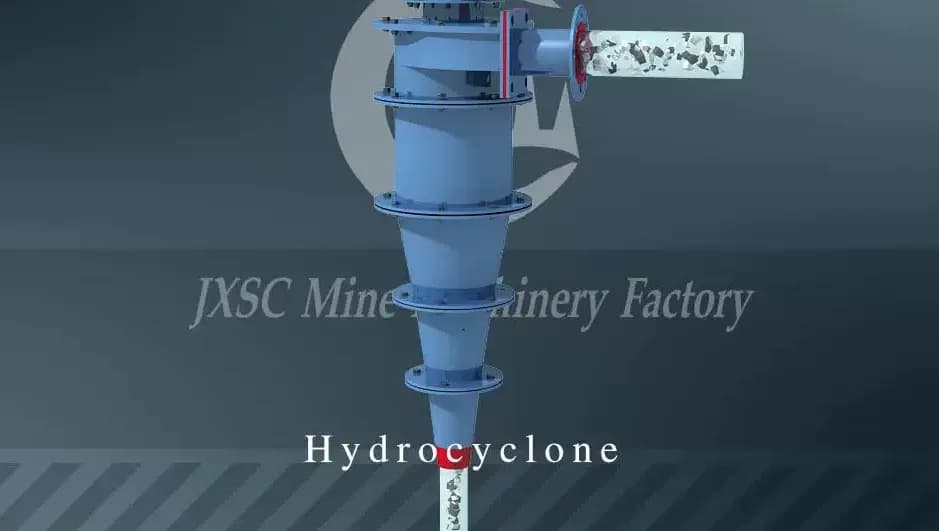
Summary: A hydrocyclone is a cone-shaped centrifugal separator that removes sand, grit, and other heavy particles from irrigation water before the flow reaches fine filters, valves, emitters, or sprinklers. It has no moving parts. Pressurized water enters tangentially, spins inside the cone, and pushes heavier particles toward the outside wall and down into the collection chamber. Sand is much denser than water, which is why this kind of separation works so well on well water and other gritty sources. In irrigation, a hydrocyclone cuts the sand load on the rest of the filtration train and extends the service life of pumps, emitters, and control valves. It belongs at the front of the filtration line, not in the final fine stage.
What a hydrocyclone is used for in irrigation
A hydrocyclone filter is used as a pre-filter when the water source carries sand or other heavy inorganic particles. It is especially useful for well water, river intakes, canal water, and reservoirs where abrasive grit can damage pumps and clog emitters. It does not replace every filter; it removes heavy particles first so screen, disc, or sand media filters can handle the finer load.
In a complete irrigation filtration train, the hydrocyclone usually sits before a screen or disc filter. This layout protects precision components such as drippers, micro sprinklers, and irrigation valves.
How a hydrocyclone works
Pressurized water enters the cylindrical top section through an offset inlet. That tangential entry creates a vortex, or spinning flow path, inside the separator. Centrifugal force drives denser particles outward toward the wall while cleaner water migrates toward the central core.
The heavier particles spiral downward into the underflow chamber or collection pot. The cleaned water turns upward through the central vortex finder and leaves through the top outlet. Because the device has no screen element, it does not clog in the same way a mesh filter does, but it still needs periodic purging of collected sand.
How to use a hydrocyclone in 5 steps
Step 1: Test the water source for sand load
Collect water while the pump is running at normal operating flow and let the sample settle in a clear container. Visible sand or grit means a centrifugal separator belongs near the front of the system. If the sample contains algae or floating organic matter instead, a hydrocyclone alone is not the right filter.
Step 2: Place the hydrocyclone before fine filtration
Install it upstream of screen, disc, or media filters so the heavy load is removed first. This sequence reduces cleaning frequency downstream and protects the finer filter element. The filtration system selection guide explains how to combine filter types.
Step 3: Match the model to flow rate and pressure
A hydrocyclone only separates well when water velocity creates the correct vortex. Oversizing reduces spin energy, while undersizing creates excessive pressure loss. Select a unit whose recommended flow range matches your pump and zone demand.
Step 4: Install a purge or collection system
Collected sand must leave the separator before the chamber fills. Use a manual flush valve for small installations or an automatic purge valve for high-sand sources. A full sand chamber reduces separation efficiency and can send grit downstream.
Step 5: Verify downstream pressure and emitter performance
After installation, check pressure before and after the hydrocyclone and inspect the next filter in line. Reduced sand accumulation downstream confirms the separator is doing useful work. If emitters still clog, add or upgrade fine filtration rather than blaming the hydrocyclone.
Hydrocyclone vs other irrigation filters
| Filter option | Best removal target | Pros | Cons | Best suited for |
|---|---|---|---|---|
| Hydrocyclone | Sand, grit, dense inorganic particles | No moving parts, handles high sand load, protects downstream filters | Weak on algae, silt, and light organic matter | Best suited for well water and sandy pumping stations |
| Screen filter | Defined particle sizes larger than the mesh opening | Simple, compact, easy to inspect | Clogs quickly under heavy organic load | Best suited for relatively clean water and small drip systems |
| Disc filter | Mixed mineral and organic particles | High dirt-holding capacity and good cleaning performance | More parts to clean than a screen filter | Best suited for drip irrigation with moderate water contamination |
| Sand media filter | Organic matter, algae, and suspended solids | Excellent for pond and reservoir water | Larger footprint and backwash requirement | Best suited for farms using open water sources |
Key hydrocyclone selection criteria
Flow rate is the first selection criterion because it determines vortex strength. Pressure loss is the second because every separator consumes some energy. Particle type is the third because hydrocyclones favor heavier particles and should not be selected as the only solution for algae, biofilm, or fine clay.
Maintenance access also matters. Install the unit where the purge valve can be opened safely and where the collected sand will not damage flooring, wiring, or crop beds. For product-level options, see hydrocyclone filters and the broader irrigation filters category.
Common hydrocyclone mistakes
- Using a hydrocyclone to remove algae or floating debris.
- Installing it after the fine filter instead of before it.
- Selecting by pipe diameter rather than required flow range.
- Forgetting to drain the sand collection chamber.
- Ignoring pressure loss in low-pressure drip systems.
Bottom line
A hydrocyclone is a centrifugal pre-filter for sand-heavy irrigation water. It works by spinning pressurized water so dense particles move outward and downward while cleaner water exits through the top. Expert advice: use a hydrocyclone before fine filtration when sand is visible in the source, and pair it with a screen, disc, or media filter when drip emitters require finer protection. For complete layouts, compare hydrocyclone filter products, disc filters, and sand media filters.