How to Plan a Drip Irrigation System: A Step-by-Step Guide
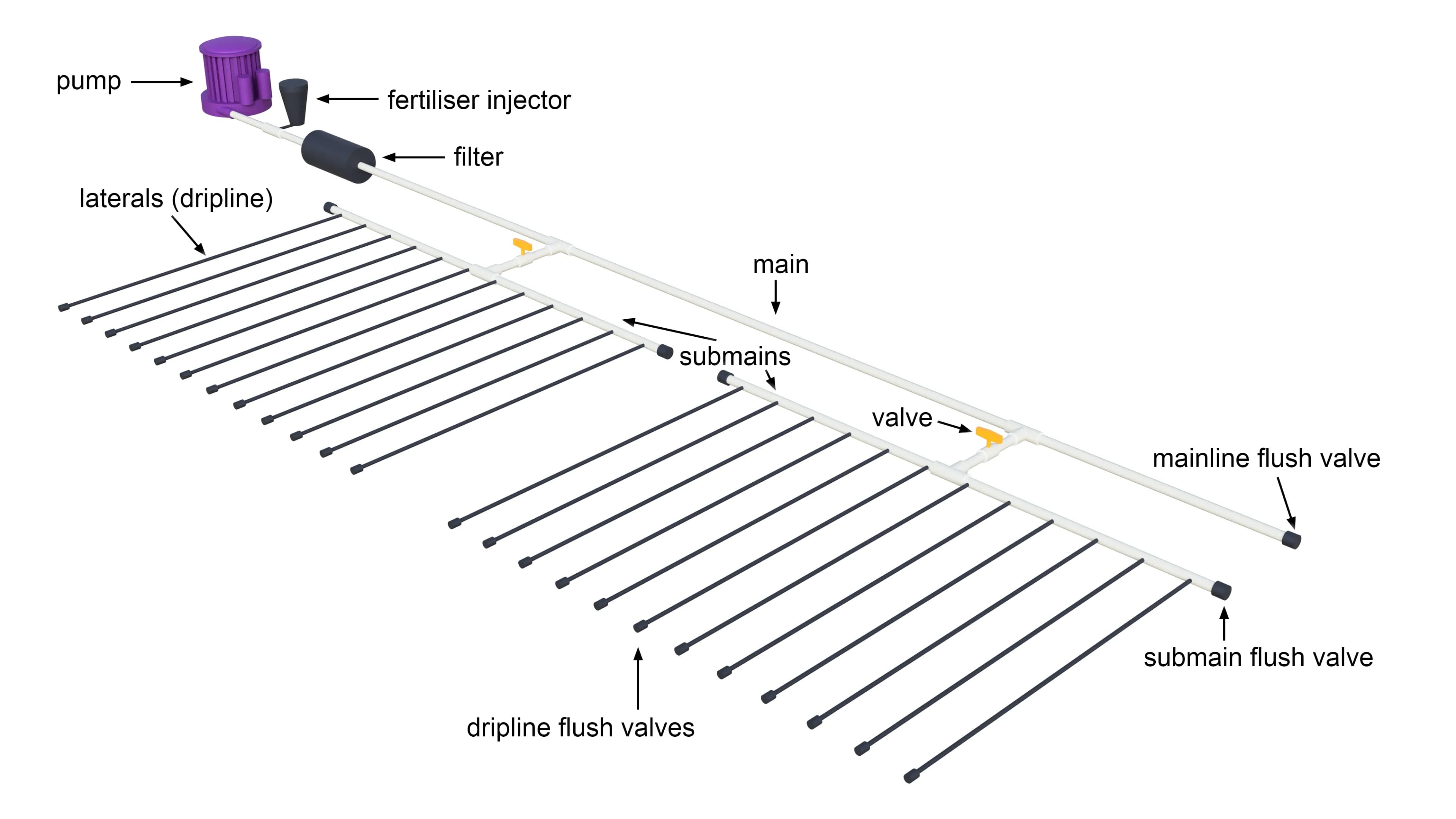
In short: Planning a drip irrigation system means matching water quality, soil, crop, emitter, and irrigation shifts so the system can meet peak crop water demand efficiently and uniformly. It matters because most drip failures are designed in, not operated in — a poorly planned system can never be managed into good performance. Sound planning locks in water savings, even application, and low running costs for the life of the system. This guide walks through the key planning factors and a six-step method, and compares pressure-compensating and non-compensating emitters so you choose the right one for your terrain.
Good planning is what separates a drip system that thrives from one that disappoints. IrriNex (a B2B agricultural irrigation manufacturer) supplies the emitters, tubing, and filters a sound design specifies.
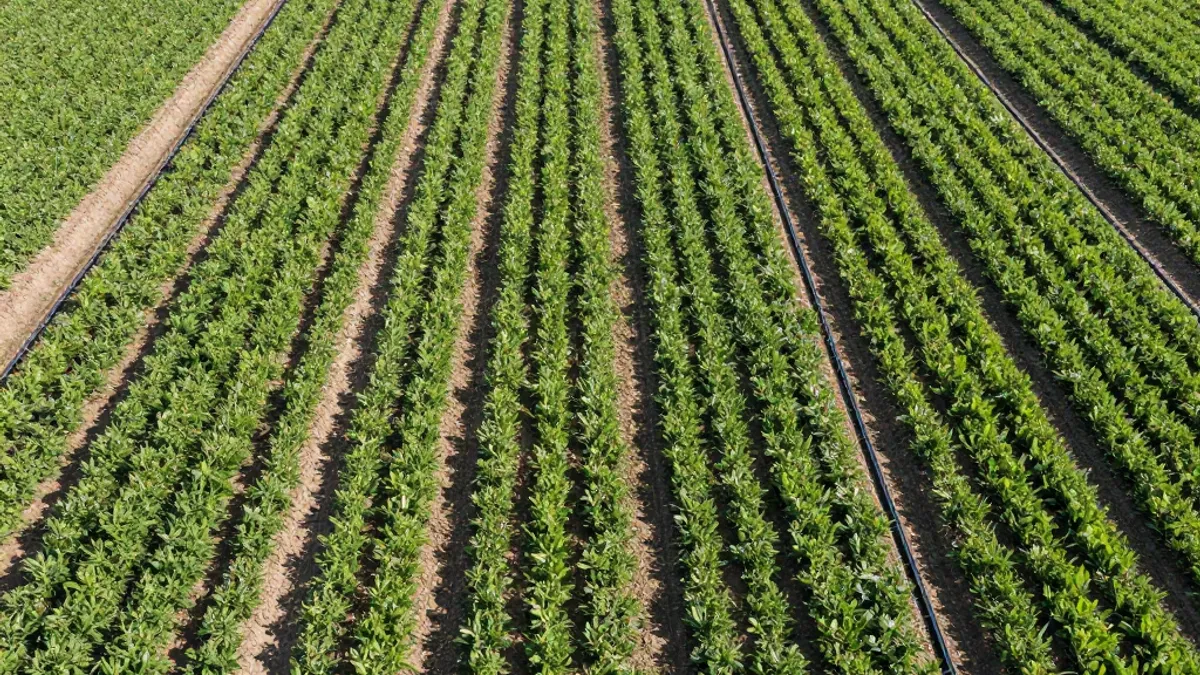
What goes into planning a drip system
Five factors drive the design: water quality, soil type and variation, crop and root depth, emitter selection, and the number of irrigation shifts. Get these right on paper and the field follows.
How to plan a drip irrigation system in six steps
- Test your water quality first. Check pH, hardness, iron and manganese, and turbidity. The result sets your filtration and disinfestation plan and flags any blockage risk before you buy a single fitting.
- Survey the soil and its wetting pattern. Sandy soils give narrow, deep wetted patterns and need closer dripper spacing; clays spread wider and shallower. Group similar soils into the same shift so each is watered to its own needs.
- Choose the right emitter, discharge, and spacing. Today most growers use 1–2 L/h emitters at close spacing (often 0.3–0.5 m) to form a continuous wetted strip. The emitter discharge must not exceed the soil’s infiltration rate. See the best drip emitters and when to use each.
- Calculate the maximum number of irrigation shifts. Confirm the system can meet peak demand. According to design practice, a 1.3 mm/h system needing 8.0 mm/day with 18 pumping hours allows no more than three shifts — design beyond that and you can’t keep up in a heatwave.
- Use a certified irrigation designer. A good design holds emitter-discharge variation to ±5% within a valve unit and keeps pipe velocity in range, balancing capital cost against lifetime energy cost.
- Build in future expansion. Size mains, pump, and shifts for the area you may add later; retrofitting capacity into an undersized system is far more expensive than planning it in.
PC vs non-PC emitters: which to specify
| Emitter | How it behaves | Best suited to |
|---|---|---|
| Pressure-compensating (PC) | Holds a steady flow across a pressure range | Sloping or undulating ground, and long laterals over 300–400 m |
| Non-compensating (non-PC) | Flow varies with pressure (rated at ~100 kPa) | Flat ground with short, well-designed laterals where cost matters |
For non-PC emitters, choose a low discharge exponent (0.5 or less): at a 20% pressure change, an x=0.4 emitter varies only 7.6%, versus 15.7% at x=0.8. Manufacturing quality matters too — a coefficient of variation (Cv) under 0.03 is excellent, and target emission uniformity (EU) above 90%.
Conclusion and expert recommendations
First, start every plan with a water test and a soil survey — they are cheap relative to the system and prevent the costliest mistakes. Second, design for peak demand and future area, then choose the emitter to match your terrain. When you are ready to build, follow our drip irrigation installation guide, and see the approach applied in our vegetable drip irrigation solution. Considering buried lines? Read sub-surface drip irrigation next.