
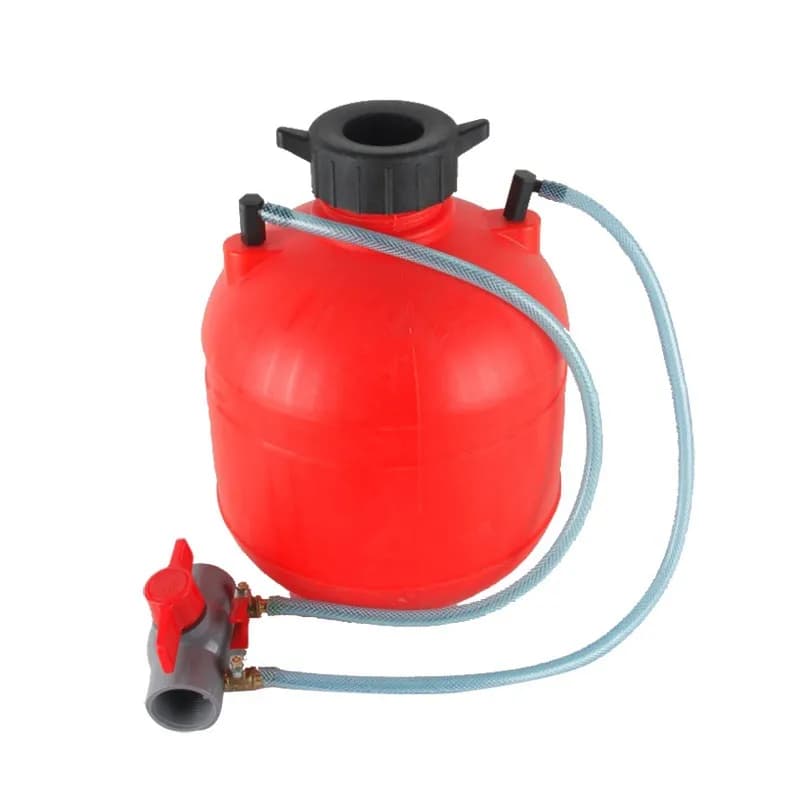
fertilizer tank
IrriNex Plastic Fertigation Tank – Irrigation Fertilizer Injection Tank
Compact fertilizer tank for small-scale fertigation with bypass pressure differential.
PEPP
 1 / 8
1 / 8SKU: FRT-TNK-L
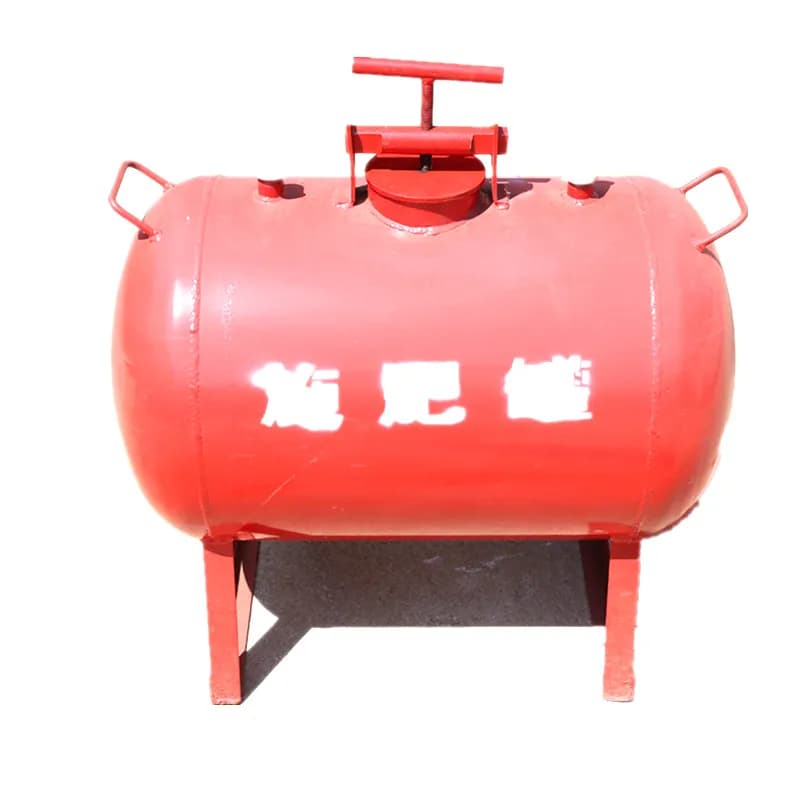
Large-capacity fertilizer tank for commercial fertigation systems with pressure bypass.
Material
SS
Size Range
300L / 500L / 2000L
| Parameter | Value |
|---|---|
| Tank Volume | 60 / 100 / 160 / 200L |
| Max Pressure | 0.6MPa |
| Connection | 1" / 1-1/2" / 2" |
| Bypass Type | Pressure differential |
The steel fertilizer tank stores liquid nutrient concentrate and feeds it into the irrigation mainline at a controlled rate. It's designed for fertigation setups where you want a reliable, refillable reservoir between your fertilizer supply and the drip or sprinkler system — rather than injecting directly from bulk containers.
The tank comes with an integrated Venturi fitting that handles the injection without a separate pump. Connection is straightforward: the Venturi installs inline on the mainline, and the suction tube drops into the tank. Flow through the mainline draws concentrate automatically.
Capacity runs from 500 L to 2,000 L. The base model uses galvanized steel, which handles most standard liquid fertilizers. The stainless version is the right choice for acidic or high-chloride solutions that would eventually compromise galvanized surfaces over multiple seasons.
Details worth checking when comparing tanks or planning installation — material grade, connection points, and how the base sits on site.


The tank itself needs very little attention — rinse after each fertilizer batch, check the lid seal once a season, and drain before storage. Most issues come from leaving concentrate sitting inside between uses rather than from wear on the tank itself.
A useful starting point: the tank should hold enough concentrate for one full fertigation cycle without refilling mid-run. At a 1:200 dilution ratio, a 500 L tank delivers 100,000 L of nutrient solution per fill — enough for most small to mid-size drip blocks. Larger blocks or multiple daily cycles typically need 1,000 L or more. If you're unsure, round up — a tank that's slightly oversized is much less disruptive than stopping mid-cycle to refill.
Galvanized steel handles most standard NPK liquid fertilizers without issue and costs less. If you're using acidic fertilizers (pH below 5), chelated micronutrient mixes, or high-chloride solutions, stainless is the right choice — galvanized coatings break down over time with these inputs, and the contamination shows up in your nutrient solution. When in doubt, choose stainless: the price difference over a 5–10 year lifespan is usually smaller than it looks at purchase.
Fertilizer tanks work best with clean, filtered water going in. Sediment and particles in the supply water shorten the life of the injection fitting and can clog drip emitters downstream. These two kits combine the tank with pre-filtration suited to different source water conditions.

Compact fertilizer tank for small-scale fertigation with bypass pressure differential.
Pressure
0.6 MPa
Standards
ISO
INQUIRY FOR:
IrriNex Fertigation Tank – Liquid Fertilizer Injector for Irrigation Systems