IrriNex Logo
IrriNexIrrigation Solutions
Products
Solutions
DownloadsBlogAboutContact
Get Quote →
IrriNex Logo
IrriNexIrrigation Solutions

Specializing in drip irrigation, sprinkler systems, and smart water management. Reliable agricultural irrigation solutions from China for global farms.

+86 17300766401 info@irrinex.com WhatsApp

PRODUCTS

  • Drip Irrigation
  • Micro Irrigation
  • Irrigation Valves
  • Irrigation Filters
  • Irrigation Accessories

SOLUTIONS

  • Vegetable Drip Irrigation System
  • Orchard Dripper Irrigation System
  • Greenhouse Micro Sprinkler System
  • Greenhouse Drip Irrigation System
  • Fertigation System Solution

COMPANY

  • About Us
  • Contact

RESOURCES

  • Blog
  • Downloads
  • Sitemap
MATERIALS:PVC | CPVC | HDPE | PP | PPR | PPH | PVDF
STANDARDS:DIN | ANSI | BS | ISO 9001

© 2026 ZLONG LIMITED. All rights reserved.

Privacy PolicyTerms of ServiceShipping PolicySitemap
HomeProductsHydrocyclone FilterIrriNex Hydrocyclone Filter – Sand Separator for Irrigation Systems
IrriNex Hydrocyclone Filter – Sand Separator for Irrigation Systems - 11 / 7
Hydrocyclone Filter

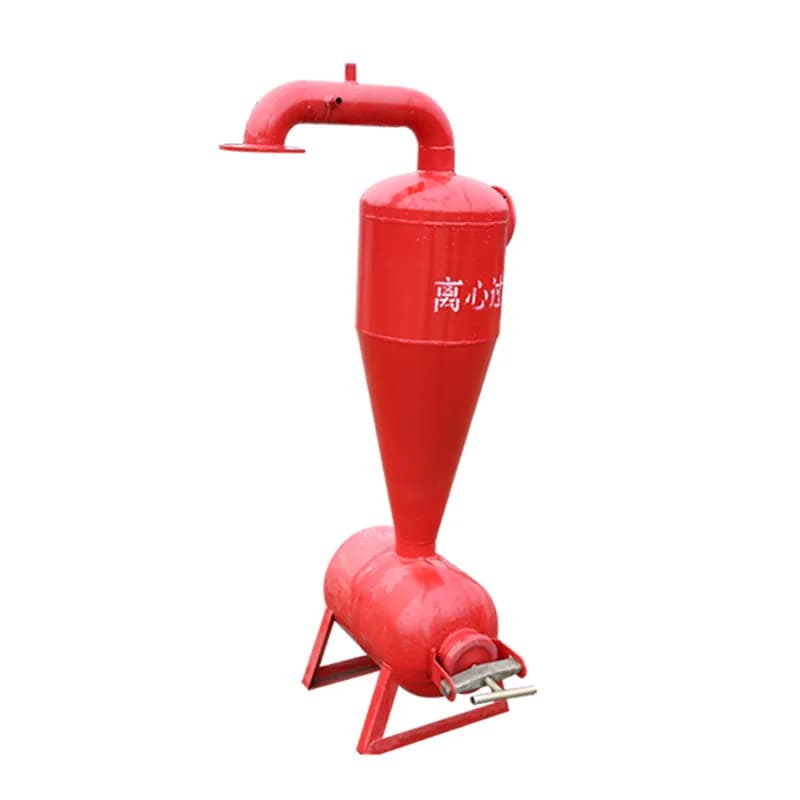
IrriNex Hydrocyclone Filter – Sand Separator for Irrigation Systems

SKU: FLT-CYC

Centrifugal hydrocyclone sand separator for pre-filtering well water and open source water.

Material

PP, SS

Size Range

2" / 3" / 4"

Pressure

PN10

Standards

ISO

Applications

Technical Specifications

ParameterValue
Connection Size2" / 3" / 4"
Max Flow15 - 80m³/h
Sand Removal> 98%
Max Pressure1.0MPa

Full Description

Hydrocyclone Filter – IrriNex
how it works

Centrifugal Separation, No Moving Parts

A hydrocyclone filter separates sand and heavy particles from water using centrifugal force. Water enters the filter body at an angle and immediately begins rotating. The rotation throws heavier particles — sand, grit, silt — toward the outer wall, where they slow down and fall into a collection chamber at the base.

Clean water exits from the top outlet and continues into the irrigation system. The whole process happens continuously and passively — no power, no filter cartridges, no moving parts to wear out.

One limitation worth knowing: hydrocyclone filters are effective against particles denser than water (sand, mineral grit) but don't remove organic matter, algae, or fine dissolved particles. For water sources with significant organic load, a screen or disc filter downstream is usually needed.

separation sequence

Inside the Filter Body

1
Water enters tangentially
The inlet is angled to force water into a spinning pattern the moment it enters. This is what drives the separation — no impellers, no screens at this stage.
2
Centrifugal force pushes particles outward
Sand and heavy particles are denser than water and get thrown toward the wall of the filter body as the water rotates. Lighter water stays toward the center.
3
Particles drop into the collection chamber
The slowed particles lose velocity against the wall and fall by gravity into the sediment collection chamber at the bottom of the filter body.
4
Clean water exits from the top
The central upward vortex carries clean water out through the top outlet and into the mainline. Separation happens continuously without interrupting flow.
product detail

Construction & Design Detail

The filter body, collection chamber, and inlet geometry are all sized to work together. These images show the key details worth checking when specifying or installing the unit.

Hydrocyclone filter body and inlet
Inlet Geometry
Tangential Inlet Design
The inlet is angled to force water into a spiral path immediately on entry. The angle and diameter of the inlet determine the spin rate — and therefore how much centrifugal force acts on the particles inside.
Hydrocyclone sediment collection chamber
Collection Chamber
Bottom Sediment Chamber
Sand and grit fall into the sealed collection chamber at the base. The bottom plug unscrews for routine drainage. The chamber volume is sized to hold a meaningful amount of sediment before performance is affected — exact interval depends on your source water quality.
Hydrocyclone filter flange and outlet
Outlet & Flange
Top Outlet & Flange Cover
Clean water exits through the central top outlet. The removable flange cover gives access to the interior for seasonal inspection or scale removal. Standard BSP/NPT threaded connections on both inlet and outlet.
maintenance & ordering

Cleaning and Lead Times

Cleaning takes a few minutes and needs no tools for routine sediment removal. The collection chamber holds a meaningful amount of material before it backs up — how often you need to clean depends on the sediment load in your source water.

1
Close the upstream valve to stop flow through the filter before starting.
2
Unscrew the bottom plug. Sediment and water drain out from the collection chamber. Let it run until clear.
3
Reinstall the plug and reopen the valve. For routine cleaning, this is all that's needed — usually under five minutes.
4
For a full inspection, remove the flange cover to check the internal chamber and inlet geometry for wear or scale buildup. Recommended once per season.
Check for sediment accumulation early in the season. High-turbidity source water — especially after heavy rain — can fill the collection chamber faster than expected. Establish a cleaning schedule based on your first few weeks of operation, not a fixed calendar interval.
ordering information

Production & Delivery Details

Lead Time 3 – 7 working days
MOQ 1 unit
Standard Packing Wood carton
Custom Packing Available on request
Shipping Terms FOB / CIF / CFR
Export Documentation Full set included
Custom sizes and configurations available. If your system requires a non-standard inlet diameter, mounting orientation, or connection type, contact us with your specifications before ordering.
sizing guidance

Inlet and Outlet Diameter Selection

Match the Filter to Your Pump Inlet

The filter's inlet and outlet diameter should be at least as large as your pump's inlet diameter — and in most cases should match the diameter of the connecting pipe exactly. Undersizing the filter connection creates a flow restriction that loads the pump and reduces system pressure downstream.

Filter inlet Ø ≥ Pump inlet Ø
Ideally: Filter inlet Ø = Main pipe Ø

Flow Rate and Separation Efficiency

Centrifugal separation efficiency depends on flow velocity through the filter body. At very low flow rates, centrifugal force is reduced and separation drops off. Each filter size has an optimal flow range — operating significantly below the rated minimum flow is where performance suffers most. If you're unsure whether your flow rate is within range for a given filter size, send us your pump curve and we'll check it.

Well water pre-filtrationSand removalIrrigation headworks

INQUIRY FOR:

IrriNex Hydrocyclone Filter – Sand Separator for Irrigation Systems

Request a Quote