Help Your Plants Survive Drought
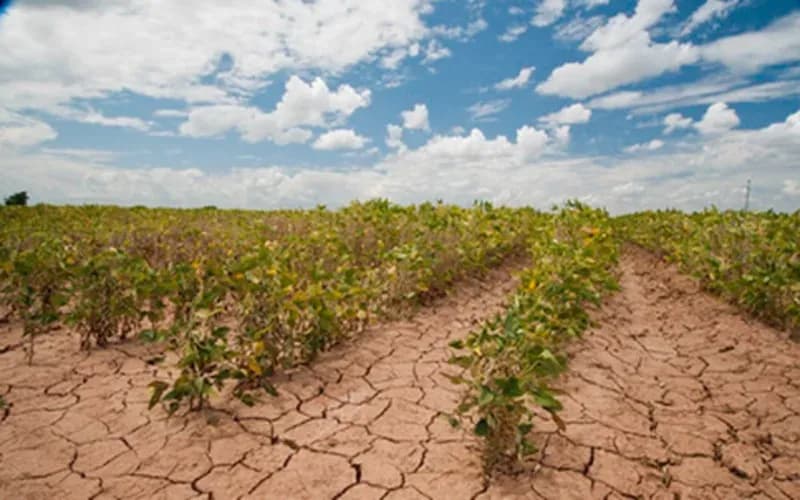
Summary: Helping plants survive drought means protecting the crop root zone from severe moisture stress while using less water, not more water, and applying it at the right time and place. In agriculture, drought management is important because yield loss often begins before full crop failure becomes visible. According to USDA NRCS (the United States Department of Agriculture Natural Resources Conservation Service), drip irrigation can reduce applied water by 30 to 50 percent compared with less targeted methods when it is properly designed. According to FAO field water-management guidance, frequent low-volume irrigation and soil-cover practices reduce evaporation and improve the share of water that reaches the active root zone. This article explains how to use drip irrigation, scheduling, and field prioritization to help crops survive drought under agricultural conditions rather than home landscape watering.
Why drought damages crops so quickly
Drought reduces available soil moisture, limits nutrient movement, and forces the plant to shut down growth to protect basic survival. In row crops, orchards, greenhouse crops, and nurseries, that stress shows up as leaf curl, reduced canopy development, poor fruit sizing, blossom drop, or weak root activity. Once the upper soil profile becomes dry and compacted, recovery becomes slower even after water returns.
How to help your plants survive drought in 5 steps
Step 1: Prioritize the most sensitive or highest-value blocks first
New plantings, shallow-rooted crops, and high-value production blocks need protection before lower-value or more drought-tolerant areas. That order matters because a limited water supply rarely allows every block to be irrigated equally during severe drought. In mixed operations, prioritize newly established crops first, then mature production blocks, then less sensitive ground cover or lower-value areas.
Step 2: Check root-zone moisture instead of judging only by the surface
Drought management decisions should be based on what is happening at root depth, not on how dry the soil surface looks. Use a probe, auger, or moisture sensor to confirm how deeply water is reaching and how quickly it is disappearing between irrigation cycles. A dry surface with adequate root moisture needs a different response than a field where the root zone is already collapsing.
Step 3: Move water directly to the root zone with drip irrigation
Drip irrigation performs well under drought because it reduces evaporation loss and targets the roots rather than the whole field surface. According to USDA NRCS, a well-designed drip system can substantially reduce total water application while maintaining effective crop watering. For operational examples, compare the vegetable drip irrigation solution, the orchard dripper solution, and the greenhouse drip irrigation solution.
Step 4: Use short irrigation pulses and protect the soil surface
During drought, shorter and more frequent irrigation events often hold moisture in the root zone better than large infrequent irrigations that exceed infiltration or evaporate from bare ground. Organic mulch or other soil cover reduces evaporation and keeps the soil profile cooler. This matters most where wind and high temperature accelerate surface drying.
Step 5: Reduce fertigation intensity until water supply stabilizes
High fertilizer concentration under drought can worsen salt stress if there is not enough water to move nutrients safely through the root zone. Keep the fertigation program conservative until irrigation depth and frequency are stable again. If nutrients must still be applied, use controlled low-dose fertigation rather than heavy applications into dry soil.
Drought response options compared
| Irrigation approach | Pros | Cons | Best suited for |
|---|---|---|---|
| Drip irrigation | Strong root-zone targeting, lower evaporation, efficient with limited water | Needs good filtration, monitoring, and pressure control | Best suited for high-value crops, orchards, vegetables, and greenhouse production under drought |
| Overhead sprinkler irrigation | Broader coverage and some cooling benefit | Higher evaporation and wind loss during hot dry weather | Best suited for crops that still need canopy wetting or cooling, where water supply is adequate |
| Surface irrigation | Simple in gravity-fed layouts | Lower efficiency and harder drought control under restricted supply | Best suited for operations with existing surface systems and limited infrastructure flexibility |
Support practices that improve drought survival
Mulch, filtration, and scheduling discipline improve the performance of every liter of water applied. Let the top soil dry slightly between cycles when the crop allows it so roots and soil biology can still exchange oxygen, but do not allow deep root-zone drying to become chronic. For broader efficiency practices, see the water-saving irrigation tips and the filtration system selection guide.
Bottom line
Helping plants survive drought requires priority-based irrigation, root-zone monitoring, precise drip delivery, surface protection, and careful nutrient management. Expert advice: first, schedule irrigation around actual soil moisture and crop stage rather than a fixed weekly routine; second, protect drought blocks with filtration and pressure control before increasing runtime, because uneven discharge wastes scarce water. For equipment options, browse drip irrigation products, irrigation filters, and fertilizer injectors.