The Water Use Efficiency (WUE) Paradigm in Commercial Farming
In modern agricultural economics, water scarcity, escalating pumping energy costs, and strict aquifer extraction limits demand that growers maximize Water Use Efficiency (WUE): the ratio of marketable crop yield produced per cubic meter of water applied. Traditional gravity furrow and flood irrigation systems operate at abysmal application efficiencies of only 40% to 50%, losing more than half of diverted water to deep percolation below the root zone, surface runoff at tailwater ditches, and direct surface evaporation.
By transitioning to pressurized precision micro-irrigation, commercial farms routinely achieve application efficiencies of **85% to 95%**. The following 10 engineering and agronomic practices deliver measurable, verifiable water savings across broadacre and horticultural operations.
10 Proven Agricultural Water-Saving Strategies
1. Convert Surface Flood and Furrow to Precision Drip Irrigation
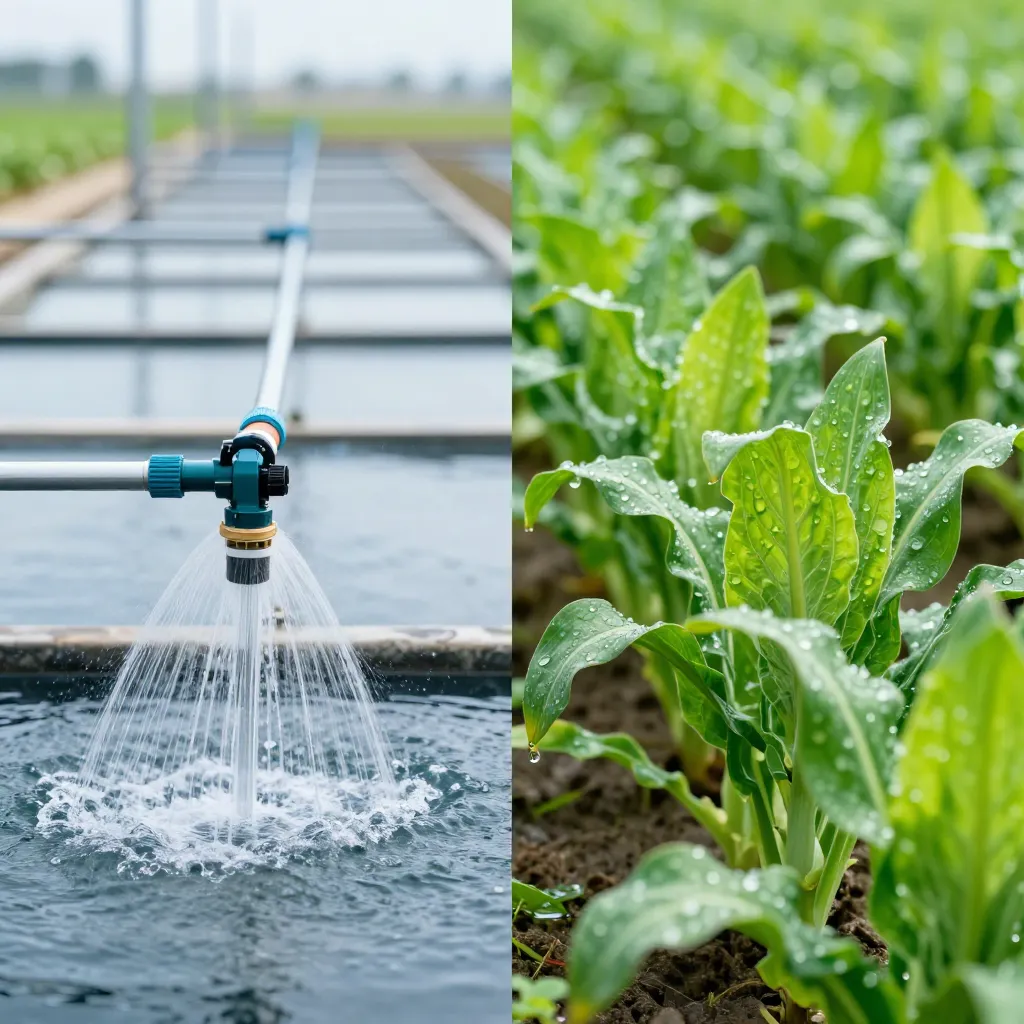
Transitioning open-field crops (such as processing tomatoes, cotton, corn, and almonds) from furrow to drip tape (IrriNex DRT-FLT) immediately reduces applied water volumes by **30% to 50%**. Drip delivers water directly to the crop root bulb, eliminating inter-row evaporation, preventing deep drainage leaching, and maintaining uniform moisture across rolling terrain.
2. Implement Real-Time ETc Scheduling (FAO-56 Penman-Monteith)
Eliminate rigid calendar-based watering routines. Calculate daily crop evapotranspiration (\(ET_c = ET_0 \times K_c\)) using local weather station data and growth-stage crop coefficients. Adjust irrigation runtimes daily to replace only the water lost to atmospheric demand, accounting for effective rainfall and soil storage reserves.
3. Transition to Nighttime and Early Morning Pumping
Irrigating between 9:00 PM and 6:00 AM reduces evaporative water losses by 15% to 25%, particularly in arid and Mediterranean summer climates. Nighttime operation eliminates high daytime wind drift on micro-sprinklers, avoids peak daytime electrical tariffs, and minimizes thermal shock on plant root systems.
4. Deploy Multi-Depth Soil Moisture Probes (Capacitance / TDR)
Install continuous capacitance soil moisture probes at 20 cm, 40 cm, 60 cm, and 100 cm depth profiles within the active root zone. Track the infiltration wetting front in real time to stop irrigation the moment moisture reaches the bottom of the active root zone, preventing unmonitored deep percolation into sterile subsoil.
5. Practice Regulated Deficit Irrigation (RDI)
For wine grapes, almonds, and olives, apply controlled, deliberate water stress during specific non-critical phenological stages (e.g., post-veraison in wine grapes, or hull-split in almonds). RDI reduces total seasonal water consumption by 20% to 30% while improving fruit brix, color density, and suppressing excessive vegetative canopy growth.
6. Enforce Strict Downstream Pressure Regulation
Excessive mainline pressure forces non-compensating drippers and sprinklers to over-discharge exponentially (\(q \propto \sqrt{P}\)). Installing IrriNex IRX-SPR pressure reducing valves maintains lateral pressures at nominal design bounds (1.0 bar for tape; 2.0 bar for micro-sprinklers), eliminating hydraulic over-watering at the head of the block.
7. Conduct Annual Catch-Can Uniformity Audits
Perform annual Low-Quarter Distribution Uniformity (\(DU_{\text{lq}}\)) audits. Systems with \(DU < 75\%\) force growers to over-irrigate the entire block by 25% just to satisfy the driest 25% of crops. Servicing clogged emitters, replacing worn diaphragms, and restoring \(DU \ge 90\%\) saves millions of liters annually.
8. Install Agricultural Mulches and Organic Soil Covers
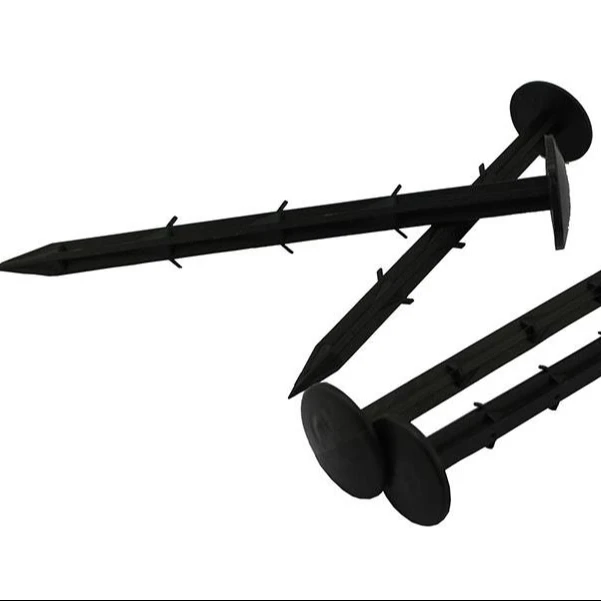
Deploy black polyethylene plastic mulch or organic straw covers along crop rows. Mulch creates an impermeable physical barrier that suppresses direct soil evaporation by up to 70%, suppresses weed transpiration competition, and retains warmth in early spring seedbeds.
9. Execute Automated High-Frequency Pulse Irrigation
In sandy soils with rapid vertical drainage, divide long 6-hour irrigation sets into three or four 1.5-hour 'pulse' cycles separated by 2-hour soak intervals. Pulse irrigation prevents moisture from plunging past shallow root zones, encouraging wide lateral wetted bulb development.
10. Maintain Rigid Filter Backwash Automation
Dirty, clogged filters create massive differential pressure loss that starves downstream pressure-compensating emitters. Automated disc filter batteries (IrriNex FLT-DSC-Y) that trigger backwashing at \(\Delta P = 0.5\text{ bar}\) guarantee continuous rated operating pressure across all field valves.
Water Savings & Efficiency Comparison Matrix
| Management Intervention |
Typical Water Volume Reduction |
Capital Investment Level |
Payback Period |
Impact on Crop Yield & Quality |
| Flood to Drip Conversion |
30% to 50% |
High ($1,500–$2,800 / ha) |
1.5 to 3 seasons |
+15% to +35% yield increase; superior fruit grade |
| ETc-Based Weather Scheduling |
15% to 25% |
Low ($200–$800 total) |
< 0.5 season |
Prevents over-irrigation vegetative lodging |
| Soil Moisture Probe Automation |
10% to 20% |
Medium ($800–$1,500 / station) |
1 season |
Optimizes root-zone aeration and nutrient uptake |
| Regulated Deficit Irrigation (RDI) |
20% to 30% |
Zero (management only) |
Immediate |
Significantly improves fruit sugar and harvest timing |
| Pressure Regulation & Valve Tuning |
10% to 15% |
Low ($150–$400 / valve) |
< 1 season |
Eliminates blowouts and uneven watering |
| Polyethylene Mulching |
20% to 35% |
Medium ($300–$600 / ha/season) |
1 season |
Suppresses weed competition; conserves moisture |
Hydraulic Automation and Smart Solar Controller Integration
Manual gate-valve operation across extensive farm acreage inevitably introduces human error, erratic runtimes, and forgotten night valves. Transitioning to automated irrigation controllers, such as the IrriNex IR-10469 multi-station controller, connects hydraulic valve operation directly to agronomic schedules:
- Flow-Meter Feedback Integration: Pairing electronic pulse-output water meters with the controller enables real-time volumetric tracking. If an unpredicted mainline blowout occurs, the controller detects excessive flow rate (high-flow alarm) and instantly shuts the master valve, preventing tens of thousands of liters from washing out farm roads.
- Solar Radiation & Rain Cutoff Switches: Integrating tipping-bucket rain gauges and solar pyranometers automatically bypasses scheduled irrigation sets when rainfall exceeds soil storage capacity (e.g., > 5 mm), resuming only after soil reservoirs deplete.
- Sub-Zone Cyclic Shifting: By sequentially cycling smaller valve zones instead of attempting to pressurize the entire farm simultaneously, growers operate smaller, more efficient pumps at their Best Efficiency Point (BEP), cutting kilowatt-hour pumping demand by 20% to 40%.
Agronomic Soil Water Reservoir Management (MAD Concept)
To avoid crop stress while saving water, irrigation managers must understand Management Allowed Depletion (MAD): the percentage of Total Available Water (TAW) that a crop can extract from the root zone before experiencing water stress:
$$RAW = MAD \times TAW = MAD \times \left[ \frac{(\theta_{\text{FC}} - \theta_{\text{PWP}})}{100} \times Z_r \right]$$
Where \(\theta_{\text{FC}}\) is soil moisture at Field Capacity (-33 kPa), \(\theta_{\text{PWP}}\) is Permanent Wilting Point (-1500 kPa), and \(Z_r\) is effective root depth. For horticultural crops, MAD is typically set between 30% and 50%. Irrigation events should be triggered exactly when cumulative daily \(ET_c\) depletes the Readily Available Water (RAW), and runtimes should apply only enough depth to refill the reservoir to 90% of Field Capacity, leaving 10% headspace to absorb potential rainfall.
Soil Infiltration Thresholds and Maximum Application Rates
Matching irrigation precipitation rates to soil physical characteristics prevents surface ponding, soil crusting, and tailwater runoff. The table below outlines design thresholds across soil textural classes:
| Soil Texture Class |
Basic Infiltration Rate (\(I_b\)) |
Field Capacity (\(\theta_{\text{FC}}\) % vol) |
Wilting Point (\(\theta_{\text{PWP}}\) % vol) |
Available Water Capacity (AWC mm/m) |
Max Allowable Sprinkler Application Rate |
| Coarse Sand |
25 to 50 mm/h |
10% to 12% |
4% to 5% |
60 to 70 mm/m |
20.0 mm/h (high frequency pulses required) |
| Sandy Loam |
15 to 25 mm/h |
18% to 22% |
8% to 10% |
100 to 120 mm/m |
12.5 mm/h |
| Loam |
10 to 15 mm/h |
26% to 30% |
12% to 14% |
140 to 160 mm/m |
10.0 mm/h |
| Silt Loam |
8 to 12 mm/h |
30% to 34% |
14% to 16% |
160 to 180 mm/m |
8.0 mm/h |
| Clay Loam |
5 to 8 mm/h |
32% to 36% |
18% to 20% |
130 to 150 mm/m |
5.0 mm/h |
| Heavy Clay |
1 to 5 mm/h |
36% to 42% |
22% to 26% |
120 to 140 mm/m |
3.0 mm/h (ultra-low drip emitters only) |
Variable Frequency Drive (VFD) Pump Energy & Water Savings
Operating irrigation pumps directly across-the-line with fixed speed motors forces pumps to operate off their efficiency curve whenever zones change or filters clog. Installing a Variable Frequency Drive (VFD) yields dual water and energy dividends:
- Constant Pressure Modulation: The VFD modulates motor RPM via an analog 4-20mA pressure transducer signal, keeping mainline pressure rock-steady regardless of whether one or four valve blocks are open. This stops high pressure blowouts during low-flow sets.
- Affinity Laws and Energy Savings: Electrical power consumption scales cubically with pump speed ($P \propto N^3$). Reducing pump motor speed by just 15% to match lower flow demand cuts electrical power consumption by approximately 38%, slashing farm operating overhead while preserving aquifer reserves.
Commercial Case Study: Deficit Irrigation and Brix Elevation in Processing Tomatoes
In California's Central Valley and Australia's Murray-Darling basin, commercial processing tomato growers face strict contract penalties for low soluble solids (Brix). Implementing Regulated Deficit Irrigation (RDI) demonstrates the economic power of precision water management:
- Baseline Furrow Irrigation: Applied 8,200 m3/ha of water across the season. Yield reached 95 metric tons/ha, but soluble solids averaged only 4.8° Brix due to vegetative over-growth and water-bloated fruit. Pumping energy costs were high, and weed management required multiple herbicide passes.
- Optimized Subsurface Drip with RDI: Installed IrriNex DRT-FLT drip tape buried at 25 cm depth. Irrigated at 100% of ETc during vegetative vine growth and fruit set. Exactly 45 days prior to anticipated harvest, irrigation applications were systematically cut to 65% of ETc, and completely terminated 15 days before mechanical harvest.
- Measured Agronomic Outcomes: Total seasonal water consumption dropped to 5,100 m3/ha (a **37.8% net water saving**). Fruit yield remained high at 108 metric tons/ha, while soluble solids soared to **5.6° Brix**. The grower received a 14% price premium per ton from the processing cannery, while cutting nitrogen fertilizer expenditure by 22% through precision fertigation.
Frequently Asked Questions on Water Saving Irrigation Tips Commercial Agriculture
How much water does a commercial farm actually save by converting from traditional furrow/flood irrigation to precision drip?
Under equivalent agronomic management, converting from surface flood ($E_a = 40\% - 60\%$) to precision drip ($E_a = 85\% - 95\%$) typically saves 30% to 50% of total applied water while simultaneously boosting crop yields by 15% to 30%.
Why does shifting irrigation schedules to nighttime or early morning reduce water waste?
Nighttime conditions feature lower ambient temperatures, higher relative humidity, and minimal wind. Overhead sprinkler evaporative losses and wind drift drop from up to 25%–30% in midday heat down to less than 5% at night.
What is Regulated Deficit Irrigation (RDI) and on which crops is it successfully used?
RDI is the scientific practice of withholding a controlled percentage of water (e.g. 20%–40% deficit) during specific non-critical crop phenological growth stages (such as post-veraison in wine grapes or post-harvest in almonds) to conserve water without sacrificing yield or quality.
How does fixing an undetected 10% pressure imbalance improve farm-wide water efficiency?
Overpressurized zones apply excessive water that leaches past the root zone, while underpressurized zones under-water crops. Balancing pressure brings all zones to matched design precipitation, eliminating the need to over-irrigate the entire field to satisfy dry spots.