Fertigation in Drip Irrigation: Equipment, Timing, and Best Practices
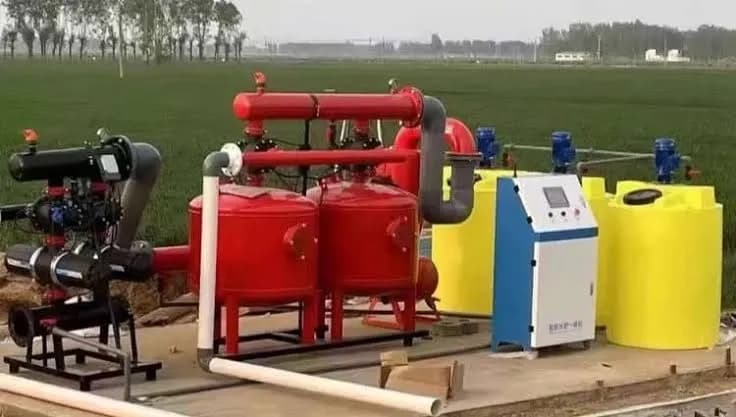
In short: Fertigation (also called nutrigation) is the application of soluble fertilisers and micronutrients to crops through the irrigation system. It matters because delivering nutrients with the water — straight to the root zone — gives high uptake efficiency, lets you time nutrition to crop stages, and cuts labour, fuel, and soil compaction. Drip irrigation is the ideal vehicle for it. But fertigation also depends on system uniformity and brings risks — fertiliser incompatibility, precipitation, and corrosion — that must be managed. This guide covers the equipment, timing, and a five-step best-practice method that keeps nutrients flowing and emitters clear.
Fertigation turns a drip system into a precision nutrient-delivery network. IrriNex (a B2B agricultural irrigation manufacturer) supplies the injectors, tanks, and filters that make it reliable.
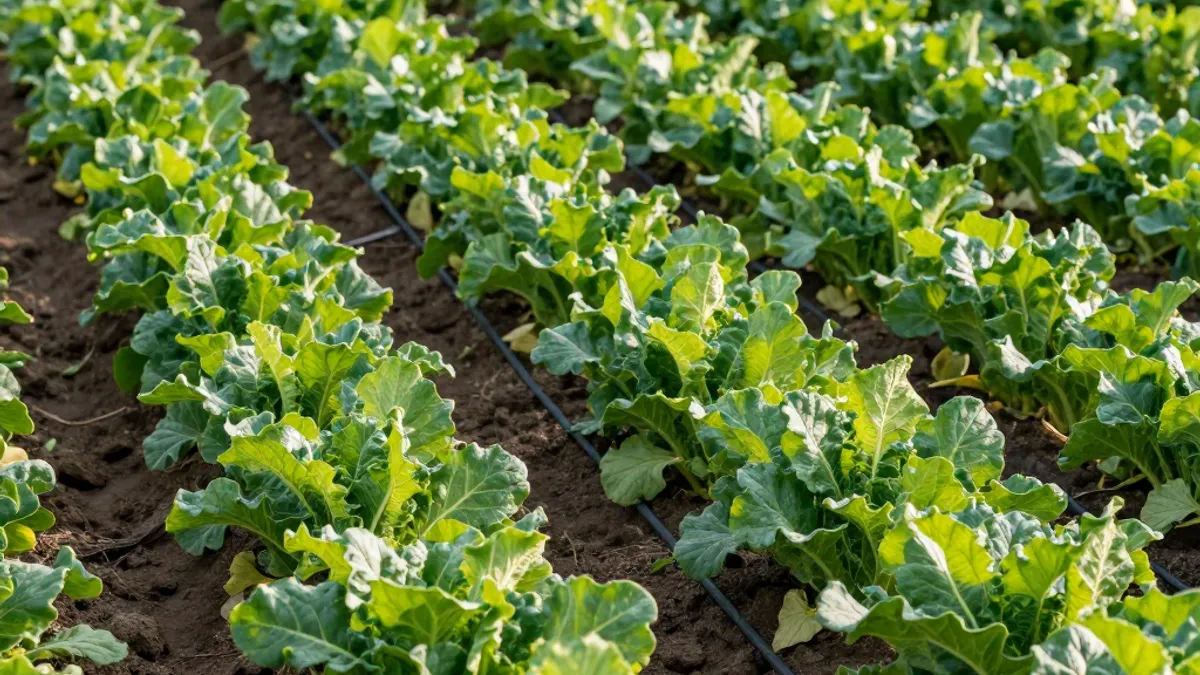
What is fertigation, and why does drip suit it?
Because drip applies water uniformly to the root zone, it can apply dissolved fertiliser the same way. Nutrient concentration is usually expressed in parts per million (ppm): 1 ppm equals 1 gram of nutrient per 1,000 litres of water. The uniformity of the fertiliser application can only be as good as the uniformity of the irrigation, so a well-designed system comes first. According to FAO fertigation guidance, placing soluble nutrients directly in the root zone with the irrigation water raises nutrient-use efficiency well above broadcast spreading.
Five fertigation best practices
- Always inject downstream of the filters. Fertiliser is added after filtration so undissolved particles and precipitates are caught before — not after — the injection point. A backflow preventer protects the water supply.
- Inject late in the irrigation, then flush. Apply fertiliser as late as possible while still leaving enough time to flush the lines clean. This leaves nutrients in the upper root zone and prevents them being pushed past the roots. Many growers then apply only about 75% of a normal irrigation to limit leaching.
- Check compatibility before mixing. The classic failure is mixing calcium-containing fertilisers with phosphate or sulfate fertilisers, which precipitate and block emitters. Run a simple jar test at the injection ratio; cloudiness or sediment after 24 hours means do not inject. Use separate tanks for incompatible products.
- Respect solubility and mixing ratios. As a general rule, dissolve no more than 100 kg of fertiliser per 500 L of water (a 1:5 ratio). Nitrogen fertilisers cool the solution as they dissolve, lowering solubility, so stay conservative.
- Monitor pH and EC. Many growers buffer the solution to around pH 6.5 to reduce precipitation and improve uptake, and watch electrical conductivity (EC) to avoid over-concentrating salts. Long-term use of ammonium-based fertilisers can acidify soil, so monitor the wetted zone.
Injection methods compared
| Method | How it works | Best suited to |
|---|---|---|
| Pressure (venturi) | A pressure differential draws fertiliser through a venturi | Small to mid-size farms wanting low cost and no power |
| Pressure tank | Flow bypasses through a tank, carrying dissolved fertiliser | Simple, small properties with no electricity |
| Injection pump (electric/hydraulic) | A pump meters fertiliser at a set or proportional rate | Larger or intensive operations needing accuracy and automation |
Conclusion and expert recommendations
First, jar-test every new fertiliser combination at your real injection ratio — five minutes prevents a blocked field. Second, always finish the irrigation by flushing the lines clear of fertiliser to stop precipitation and corrosion. The simplest reliable injector is the venturi — see how a venturi fertiliser injector works and how to install one. Browse fertigation equipment or see our fertigation system solution.