how to install a venturi injector
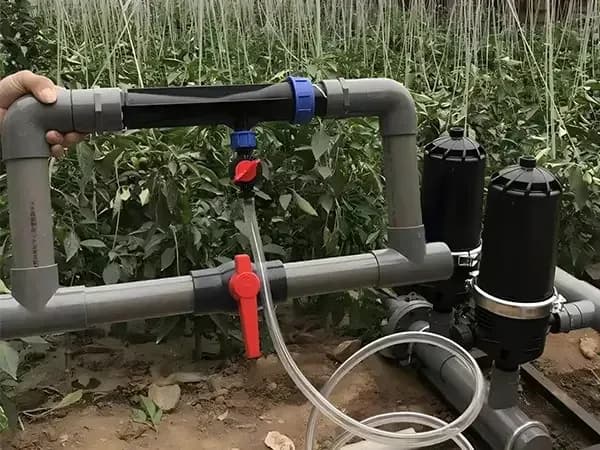
A venturi injector does not work because it was simply added to the pipe. It works when the injector size, the zone flow, and the pressure conditions all make sense together. That is why the best installations start with a hydraulic check, not with the fittings box.
If you get those basics right, a venturi injector becomes one of the simplest ways to dose fertilizer into irrigation water. It has no motor, almost no moving parts, and very little routine maintenance. But it still needs the right installation logic.
Start with actual zone flow, not a guess
Before choosing an injector, confirm the real operating flow of the zone where it will run. An oversized venturi often fails to create enough vacuum to pull fertilizer. An undersized one may create strong suction but restrict the line so much that irrigation performance suffers.
If you are selecting hardware, review IrriNex venturi fertilizer injectors against the working flow and pressure available on your system.
Why pressure difference matters
A venturi works because water speeds up through a narrower throat. As velocity rises, pressure drops, and that pressure drop creates suction at the injector port. No useful pressure difference means no reliable draw.
That also explains why venturi performance can look inconsistent from one system to another. The injector itself may be fine. The problem is often that the pressure drop across it is too weak or too unstable. If you want the hydraulic principle explained more fully, see how a venturi fertilizer injector works.
Why bypass installation usually makes more sense
Most venturi injectors behave better on a bypass line than directly in the mainline. A bypass lets part of the water flow through the injector while the main flow continues in the primary pipe. That gives you a better way to tune suction without over-restricting the full system.
If you are putting together a fertigation assembly, the IrriNex fertigation system solution and bypass valve components for venturi kits are useful reference points.
Step-by-step installation
- Measure the flow and pressure of the zone where the injector will operate.
- Choose a venturi model whose working range matches that zone.
- Add upstream filtration if the water is not consistently clean.
- Build the bypass so flow through the injector can be adjusted.
- Install the injector in the correct flow direction and keep the outlet flooded.
- Connect the suction tube securely and make sure every seal is airtight.
- Open the system gradually and adjust the bypass valves until draw becomes stable.
- Confirm that enough downstream pressure remains for the irrigation network.
If the water carries sand, algae, or debris, handle filtration first. Clean water matters for the injector and for the rest of the network. For that side of the system, see IrriNex irrigation filtration products.
Details that are often overlooked
Keep the suction side airtight
A small air leak at the suction hose, gasket, or fitting can stop fertilizer draw completely. Many suction problems turn out to be seal problems.
Do not place the fertilizer tank too low
If the tank sits much lower than the injector, the vacuum has to do more work to lift solution. Raising the tank often improves suction consistency immediately.
Do not forget downstream pressure
It is easy to chase stronger suction so aggressively that the irrigation line itself is starved. A good installation creates repeatable draw without sacrificing the zone's actual watering performance.
Common reasons for weak or no suction
- The injector is too large for the available motive flow
- The bypass valves are not creating enough pressure difference
- The suction tube or valve is blocked
- An air leak is breaking the vacuum
- The fertilizer container is positioned too low
- Downstream pressure conditions are unstable
Bottom line
A good venturi installation is not the one with the most accessories. It is the one that matches the real flow conditions of the zone and creates steady suction without hurting the rest of the irrigation system. Correct sizing, a well-tuned bypass, clean water, and airtight connections do most of the work.
If you want help sizing an injector or planning a fertigation layout, review IrriNex venturi injector options or contact IrriNex for technical support.