Drip Irrigation Drainage (Drain-Out): How to Stop Water Pooling in Low Spots
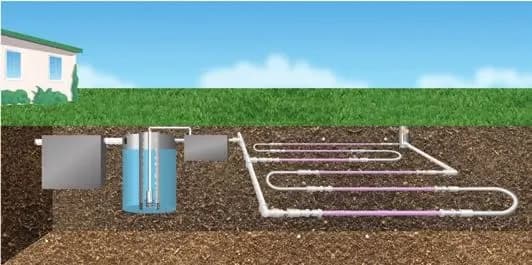
In short: Drip irrigation drainage — or drain-out — is the unwanted discharge of water from emitters at the lowest points of a block after the system shuts off, as residual water in submains and laterals runs downhill by gravity. It matters because emitters in low spots can keep dripping for up to 24 hours after shutdown, causing localised waterlogging, uneven application, root and crop disease, and wasted water — problems that worsen with frequent or pulse irrigation. This guide explains what causes drain-out and gives five proven ways to reduce it, with a retrofit-versus-new-design comparison so you can match the fix to your site.
Drain-out is a hidden efficiency leak in many otherwise well-run drip systems, and it is most severe on sloping orchards and vineyards with long laterals and large submains. IrriNex (a B2B agricultural irrigation manufacturer) supplies the non-leakage driplines and check valves used to control it.
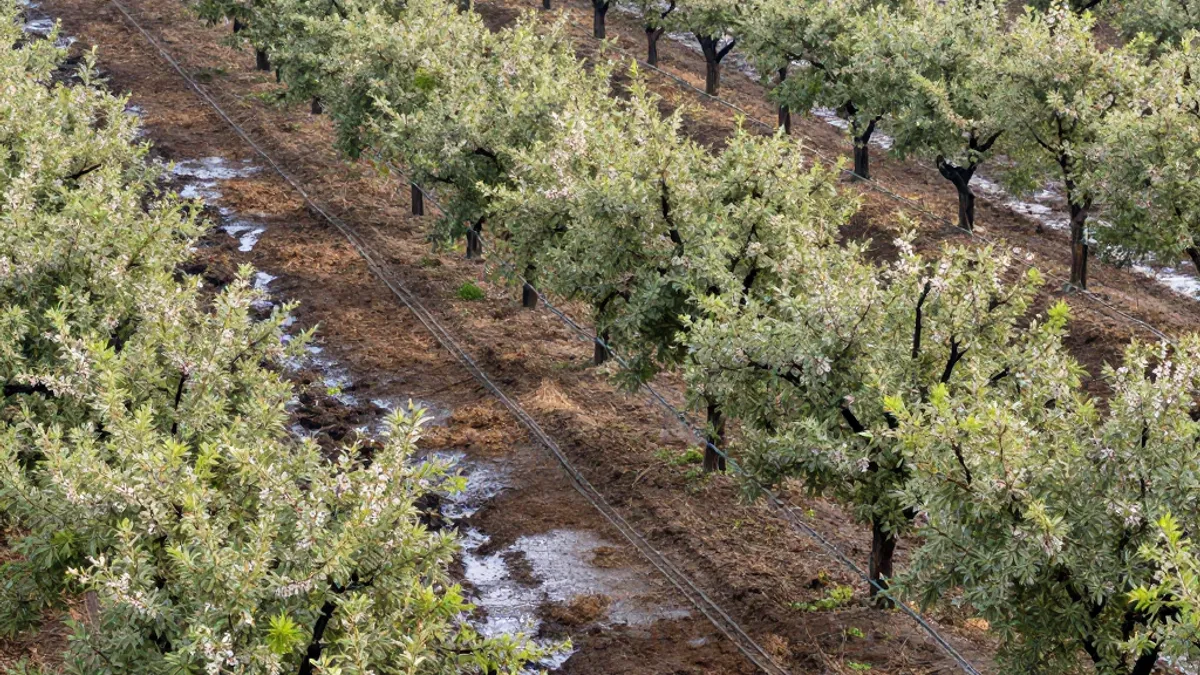
What causes drip system drain-out?
When a valve closes, the water already inside the submains and laterals does not disappear — it flows to the lowest point and empties through the nearest emitters. According to field studies, this can continue for as long as 24 hours after a full shutdown, and it repeats after every pulse. The bigger the pipe, the bigger the reservoir: 50 m of 150 mm submain holds about 1,005 L of water, versus 475 L for 100 mm and just 264 L for 80 mm.
Five ways to reduce drip drainage
- Use non-leakage (CNL/ND) dripline. Compensating-non-leakage or non-drain driplines hold water in the pipe up to a set pressure (typically 1.5–2.5 m of head), so laterals stay full instead of draining to low points.
- Fit dripline non-return valves. Installed at the start of laterals — or part-way down a slope — these stop the submain draining into low-lying areas after shutoff. Place them with supplier advice for correct direction and location.
- Add sustaining (slave) valves on downhill submains. At intervals based on static head (usually 2–3 m), they hold back drainage and spread it to soils further up the slope that tolerate excess water better.
- Add non-return valves on uphill submains. A low-cost option that holds water in submains running uphill so they do not drain back to the valve and its laterals.
- Reposition valves and downsize submains. Putting the valve at the bottom of the slope and running blank submains uphill keeps them full when the valve closes; smaller, centrally fed submains store far less water to drain.
Retrofit vs new design: which approach?
| Approach | What it involves | Best suited to |
|---|---|---|
| Retrofit | Add CNL dripline, check/sustaining valves, shorten or remove flush submains | Existing blocks with localised wet spots, where a full redesign isn’t justified |
| New design | Valves at slope bottom, uphill submains with check valves, smaller/extra submains, short laterals | New developments — especially if pulse irrigation is planned |
Why it’s worth fixing
Excess water in low points doesn’t just waste water — it damages crops. Growers report that bucket tests over 24 hours found emitters applying up to four times the intended volume, and low, waterlogged spots in orchards become focal points for disease and pests. Reducing drain-out also lets growers pulse irrigate with far less loss.
Conclusion and expert recommendations
First, run a 24-hour bucket test to measure your actual drain-out before spending — you cannot fix what you haven’t measured. Second, treat drainage at the design stage, valve by valve, rather than accepting a standard layout. Combine these controls with disciplined system flushing, and plan new blocks using how to plan a drip irrigation system. Reliable irrigation valves are central to every option above. Orchard growers can see this applied in our orchard dripper system.