Drip Fitting Sizing Guide: How to Match Tubing and Fittings Correctly
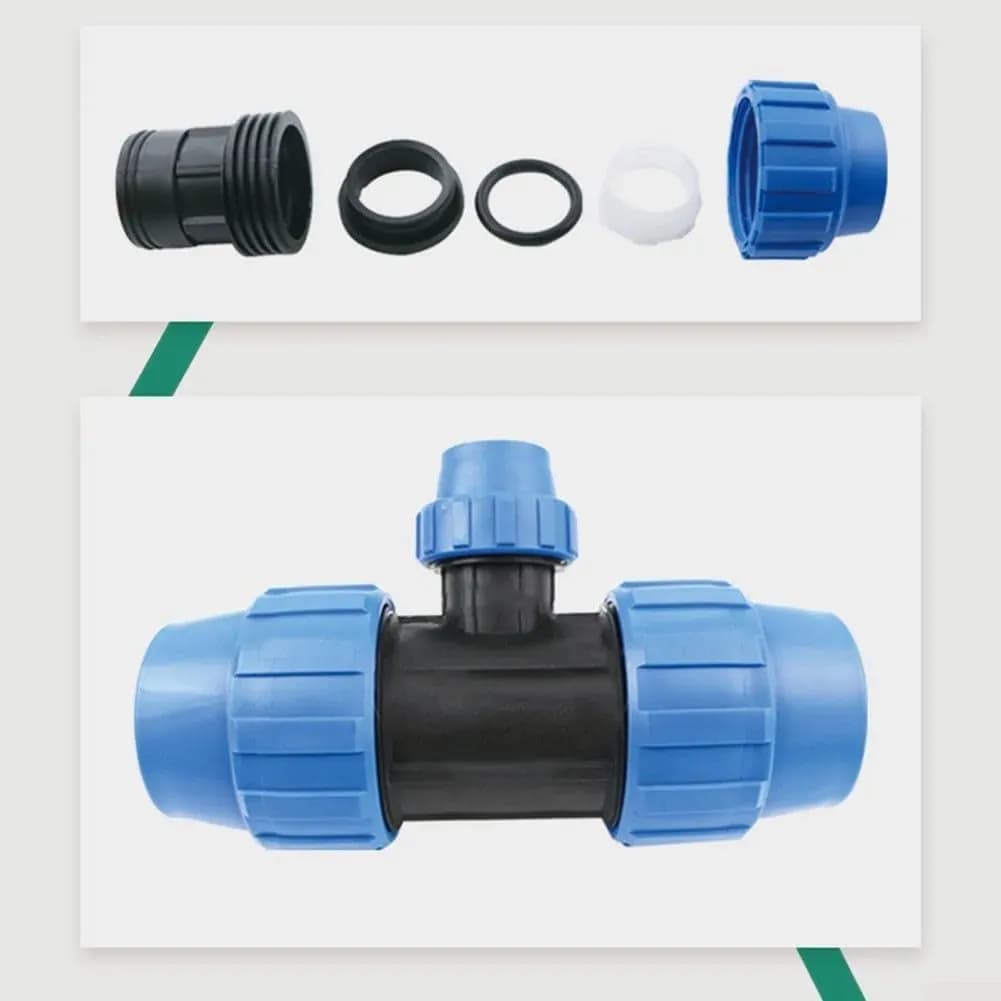
One of the most common drip irrigation mistakes starts with a simple assumption: if two products are both labeled half inch, they must fit together. In practice, that assumption causes loose joints, forced connections, blowouts under pressure, and a lot of unnecessary troubleshooting.
Drip irrigation tubing is often identified by nominal size, but fittings respond to actual dimensions. That means a small difference in outside diameter can decide whether a connection is secure or unreliable.
Why nominal size is not enough
Manufacturers may describe several different products as 1/2 inch tubing even when the real outside diameter is not the same. Depending on the system, you may encounter tubing around .620 OD, .700 OD, .710 OD, or metric sizes such as 17 mm. Those differences look small on paper, but they matter at the fitting interface.
If the fitting is too loose, water pressure will eventually force the tubing off or create a slow leak. If it is too tight, installation becomes difficult and the tubing can be damaged during assembly.
ID vs OD: which measurement controls compatibility?
The inside diameter, or ID, affects how much water can move through the tube. The outside diameter, or OD, is usually the dimension that determines whether a fitting will lock properly.
- ID: important for flow rate, pressure loss, and system capacity
- OD: critical for fitting compatibility and seal quality
That is why measuring OD before ordering fittings is one of the safest habits in drip design.
Common drip tubing sizes you will see
.700 OD tubing
This is one of the most common sizes in residential and light commercial drip layouts. Many compression and locking fittings are designed specifically for this outside diameter.
.710 OD tubing
Some systems use a slightly larger OD. It can look almost identical to .700 tubing, but that small difference is enough to create a poor fit if you mix parts designed for the other size.
.620 OD and metric tubing
Older systems, specialty layouts, and imported components may use smaller or metric tubing. These often need dedicated fittings rather than general-purpose replacements.
If you are deciding where rigid PVC ends and flexible PE begins in a larger irrigation layout, see our PVC vs PE comparison. Material selection and fitting compatibility often need to be considered together.
How fitting style changes the tolerance
Barbed fittings
Barbed fittings insert into the tubing and rely on friction to hold. They are common, practical, and easy to use, especially for smaller distribution lines. They still need the correct tubing range, but they can tolerate slight variation better than some compression designs.
Compression fittings
Compression fittings grip the outer wall of the tube. Because of that, they tend to be more sensitive to exact OD. A .700 compression fitting is generally meant for .700 tubing, not a near match.
Locking or mechanical fittings
Locking styles such as Easy Loc or similar designs use a threaded collar or nut to secure the tubing over a barb. They are popular where installers want a stronger reusable connection and better confidence under pressure.
A simple compatibility check before you buy
- Measure the tubing OD with a caliper whenever possible.
- Confirm whether the fitting spec references OD, not just nominal size.
- Check whether the product is meant for standard poly tubing, micro tubing, or drip tape.
- Review the pressure conditions of the zone.
- Test one connection before buying or installing at scale.
For projects that also use thin-wall tape, it helps to review tubing and tape selection together. Our article on choosing the right drip tape is a useful companion when you are designing row-based systems.
Common mistakes that lead to leaks
- Mixing brands without checking actual dimensions
- Assuming all half inch labels mean the same OD
- Ignoring pressure rating when selecting connectors
- Forcing a fitting that is clearly too large or too small
- Using the wrong fitting type for drip tape versus poly tubing
Bottom line
Reliable drip connections start with measurement, not guesswork. Once you know the real OD of the tubing and the fitting style that matches it, the rest of the system becomes easier to assemble, maintain, and expand.
If you want help checking a tubing and fitting list before purchase, send your project details to IrriNex. For application examples, you can also review our vegetable drip irrigation solution.