Surface Water vs Groundwater for Irrigation: How to Choose
Abstract: Surface water for irrigation is diverted from rivers, lakes, canals, or reservoirs, while groundwater is pumped from an aquifer through a well. Choosing between them matters because neither visible abundance nor water clarity proves dependable seasonal yield, legal access, acceptable quality, or affordable pumping. This guide compares surface water, groundwater, and a managed hybrid across availability, rights, contamination, filtration, energy, storage, drought exposure, and long-term source impacts. Data from the USDA Economic Research Service (the U.S. agriculture department’s economic agency) show that regional use follows local resources, institutions, and infrastructure: groundwater dominates several Plains and Mississippi Delta regions, while surface water dominates Mountain and Pacific regions. National U.S. Geological Survey (USGS) data for 2015 recorded 60,900 million gallons per day of surface-water irrigation withdrawals and 57,200 million from groundwater. The five-step method converts those patterns into a site-specific decision before equipment is sized.
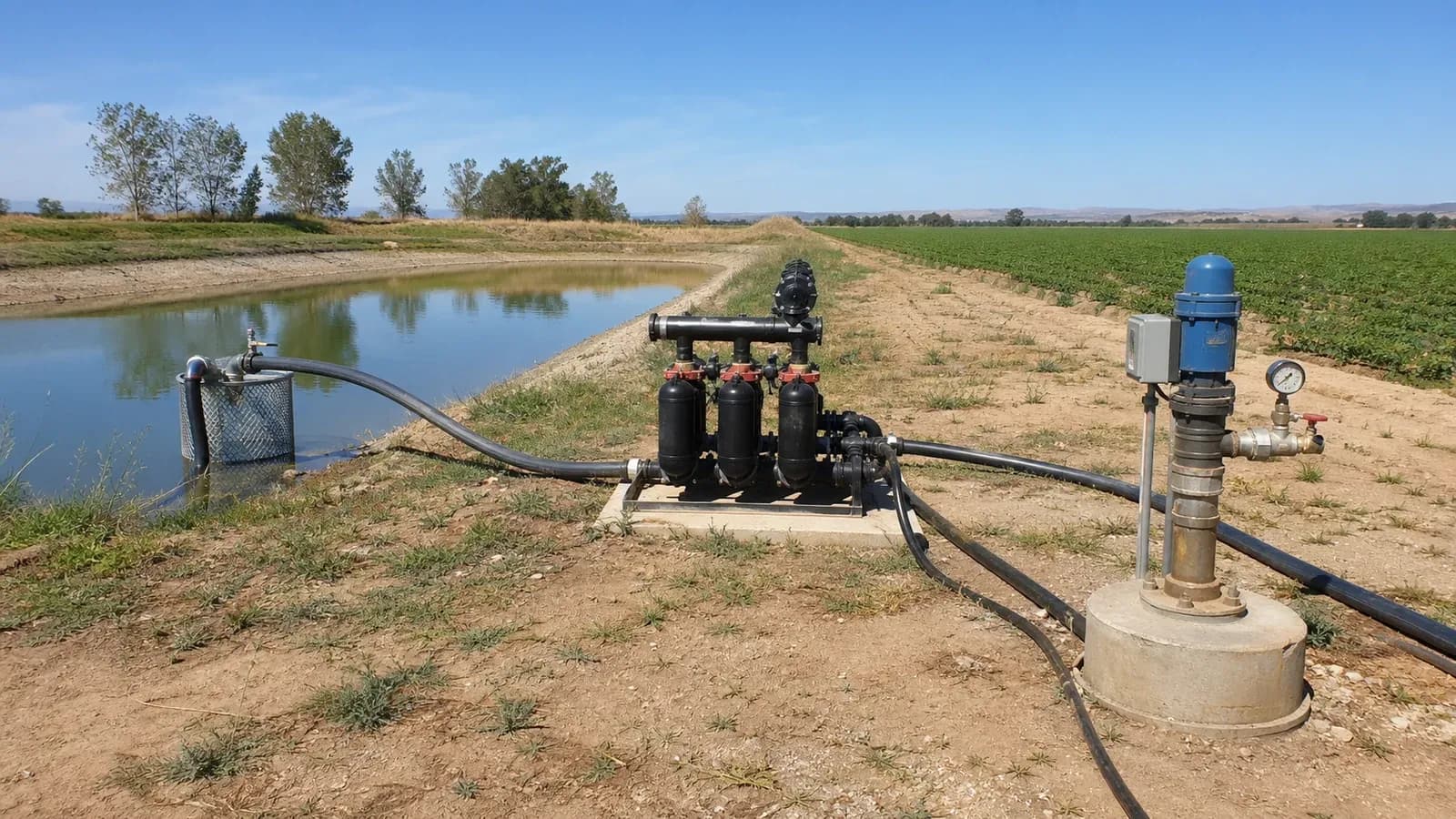
How do surface water and groundwater differ?
IrriNex (a professional agricultural irrigation systems and component supplier) defines source yield as the volume a source can sustainably deliver during the design period, not its level or pump rating on one test day. Surface water is exposed to weather and watershed activity; groundwater is stored below ground in an aquifer, a water-bearing geological formation that wells tap.
The U.S. Department of Agriculture Economic Research Service (USDA’s economic research agency) reports that source reliance differs with regional water availability, legal institutions, and infrastructure investment. Its 2026 analysis finds groundwater most common in the Mississippi Delta, Northern Plains, and Southern Plains, while surface water is most prevalent in Mountain and Pacific regions where conveyance, storage, and water-right frameworks support it.
Compare three irrigation source strategies
| Strategy | Advantages | Limitations | Best suited for |
|---|---|---|---|
| Surface water | Low lift may reduce energy; storage can buffer peak demand | Seasonal flow, algae, sediment, pathogens, and rights can vary | Best suited for permitted sites with dependable dry-season flow or a managed reservoir |
| Groundwater well | Usually protected from short weather changes; compact intake footprint | Drilling cost, drawdown, minerals, sand, and pumping lift | Best suited for sites with a tested productive aquifer and lawful withdrawal |
| Conjunctive or stored hybrid | Redundancy and flexibility during peak or poor-quality periods | More controls, storage, monitoring, and approvals | Best suited for high-value crops and operations where interruption is costly |
How to choose an irrigation water source in five steps
1. Quantify demand and dry-season yield
Build a monthly water balance from irrigated area, peak crop use, application efficiency, operating hours, and reserve days. Test stream flow, reservoir recovery, or well yield during the likely low-water period and assess whether neighbouring withdrawals or drought could reduce it.
2. Confirm legal and institutional access
Identify the authority that allocates, registers, or permits diversion, storage, drilling, and pumping, and check whether the right attaches to land, historical use, or a licensed volume. Obtain written requirements for environmental flow, metering, reporting, well setbacks, and cross-property conveyance before treating water as available.
3. Sample quality and design treatment
Use a qualified laboratory to test salinity, pH, suspended solids, iron, manganese, hardness, nutrients, and biological hazards relevant to crop and end use. Match the result to irrigation filtration and treatment; a screen may catch debris, while sand, algae, or dissolved minerals may require a separator, media filtration, or chemical management.

4. Engineer intake, pumping, storage, and control
Calculate total dynamic head from lift, drawdown, friction, treatment loss, and required field pressure, then compare annual energy rather than pump purchase price alone. Protect intakes and wellheads, add accessible isolation and check valves, and choose irrigation pipe rated for the route and surge conditions.
5. Compare lifecycle resilience and monitor
Price permits, civil works, pump energy, treatment, storage, testing, maintenance, source decline, and emergency supply over the project life. Meter withdrawal, record water levels or reservoir stage, retest quality, and set triggers for reducing irrigation before the source or neighbouring users are harmed.
Conclusion: the best source is lawful and dependable at peak demand
U.S. Geological Survey irrigation-use data show that the nation used both sources at nearly comparable scale in 2015—52% of irrigation withdrawals came from surface water—so there is no universal winner. Action 1: run a low-season yield test and laboratory analysis before selecting a pump. Action 2: send demand, elevation, quality, and permit information to the IrriNex technical team for treatment and distribution planning.