Prevent Frozen Irrigation Pipes: Outdoor Winterization Guide
Abstract: Irrigation winterization is the controlled shutdown, drainage, protection, and documentation of outdoor pipes and components before freezing weather. It matters because water trapped in valves, filters, pumps, backflow assemblies, sprinkler bodies, rigid pipe pockets, and above-ground fittings expands as it freezes and can split parts that looked sound in autumn. Outdoor irrigation differs from indoor plumbing: leaving a faucet dripping does not reliably empty isolated zones, low points, or closed valve chambers. A safe plan starts by identifying system materials and drainage method, isolates the water source, drains removable headworks, clears each zone without exceeding its pressure rating, and protects exposed equipment from rain and condensation. This guide compares manual, automatic, and compressed-air drainage, then gives a five-step IrriNex maintenance sequence for homes, farms, orchards, and seasonal fields. Qualified service is recommended whenever backflow devices or high-volume compressors are involved.
What prevents frozen outdoor irrigation pipes?
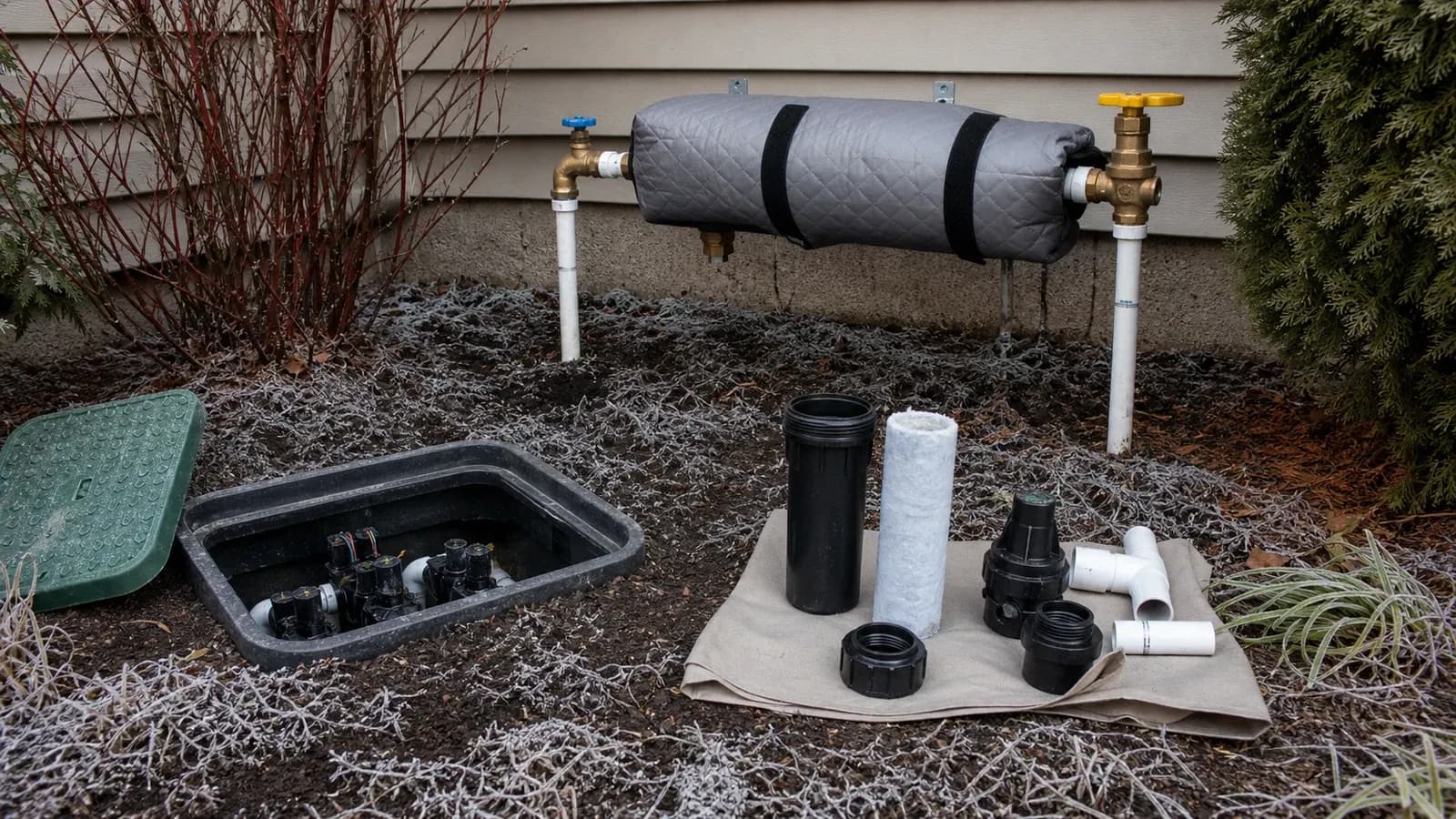
Winterization means removing damaging retained water and placing the system in a safe off-season state; it does not mean heating the whole buried network. A backflow preventer is an assembly that stops irrigation water returning toward a potable supply, and it may contain several water-holding chambers. IrriNex — a professional agricultural-irrigation equipment supplier — recommends inventorying irrigation valves, filters, pumps, fittings, emitters, and exposed pipe before choosing a drainage method.
Why is complete drainage more reliable than a slow drip?
According to Colorado State University Extension (CSU Extension), water increases in volume by about one-eleventh when it becomes ice, enough to crack pipe, fittings, valves, sprinklers, and pump cases. CSU also warns that blowout pressure above the rating of pipe or nozzles causes damage. Its separate drip-irrigation guidance recommends removing and storing portable head assemblies indoors, opening the mainline to drain, and using compressed air only where geometry retains water; a dripping tap is not presented as a substitute.
Three irrigation winterization methods compared
| Method | Advantages | Limits | Best suited for |
|---|---|---|---|
| Manual gravity drainage | Simple, quiet, and needs no compressor | Fails where pipe grade or closed components trap water | Best suited for purpose-sloped drip zones with low-point drains |
| Automatic drain valves | Release water after pressure falls | Cannot prove every pocket, valve chamber, or head is empty | Best suited as a design aid, not the only verification method |
| Controlled compressed-air blowout | Clears retained water from complex sprinkler zones | Stored-energy, noise, debris, and overpressure hazards | Best suited for trained professionals with rated equipment |
How to winterize an outdoor irrigation system in 5 steps
1. Inventory materials, low points, and vulnerable equipment
Mark rigid PVC, flexible polyethylene, above-ground risers, valve boxes, filter bowls, pumps, injectors, gauges, and the backflow assembly. Identify the designed drain and blowout points from the system plan instead of improvising at a potable connection.
2. Shut off and isolate the irrigation supply
Close the dedicated irrigation shutoff slowly, disable automatic pump starts, and lock the controller against unintended operation. Follow the local authority’s procedure for the backflow device because test cocks and isolation valves are not generic drain plugs.
3. Drain and store removable headworks
Depressurize first, then empty pumps, filter housings, regulators, gauges, injectors, and exposed irrigation accessories according to their instructions. Clean and dry removable assemblies before indoor storage, keeping seals and small fittings together.
4. Clear zones with the approved method
Open manual drains and lateral ends from high point to low point, then allow time for gravity flow. If a professional performs blowout, operate one designed zone path at a time, regulate below the lowest component rating, wear eye and hearing protection, and stop when discharge becomes mist rather than running air unnecessarily.
5. Protect, label, and plan spring recommissioning
Cap openings against insects without sealing moisture inside, support exposed pipe, and leave valves in the manufacturer-approved winter position. Photograph settings, list repairs, and schedule a slow spring pressure test before soil hides leaks.

Conclusion: remove trapped water, not just pressure
A slow faucet drip does not winterize an outdoor irrigation network; verified drainage of each vulnerable cavity does. First, isolate and drain removable headworks before the first hard freeze; second, hire qualified service for backflow assemblies or compressor blowout. For an off-season component checklist, contact the IrriNex technical team.