Pipe and Riser Irrigation Systems: Design and Selection Guide
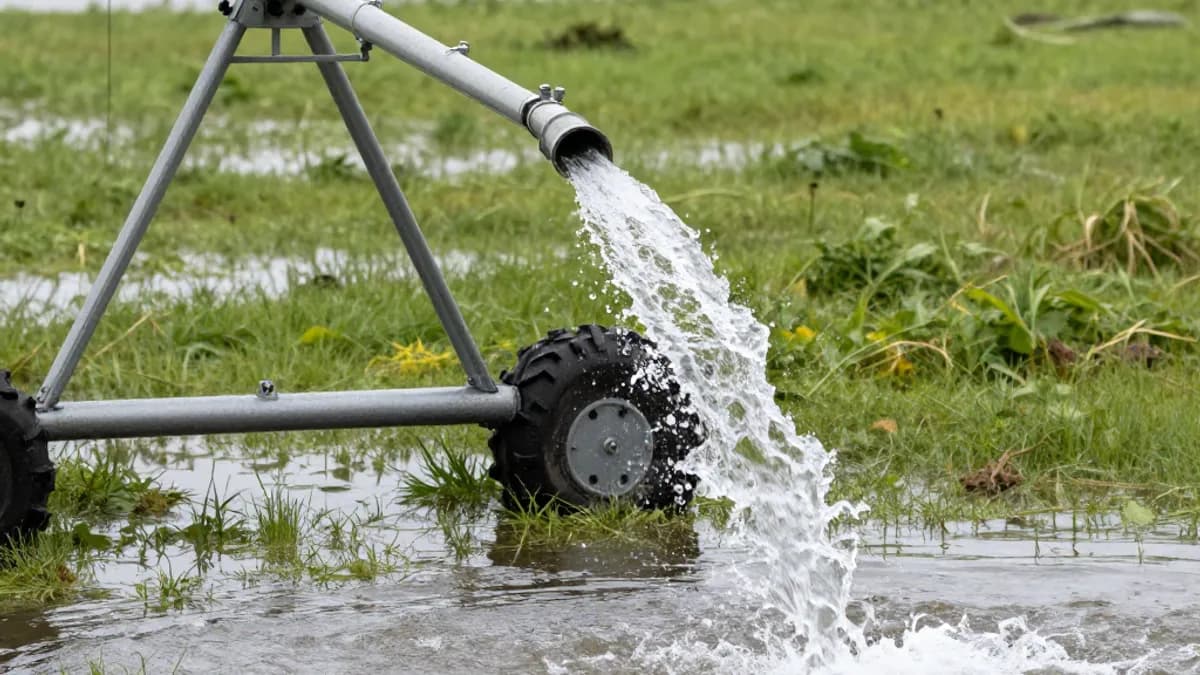
In short: A pipe and riser irrigation system is a pressurised, piped distribution network that replaces open earthen channels, carrying water through underground mains to risers (vertical outlets) that discharge onto irrigation bays. It matters because pipework cuts seepage and labour and gives flexible, bay-by-bay control — but the lifetime cost is set by one relationship: pipe size versus pump efficiency versus head loss. Choose pipe too small to save capital and you pay for it in energy for decades. This guide explains what a pipe and riser system is, when it fits, and the design factors that decide whether it is economical.
A pipe and riser layout suits surface (flood) irrigation of pastures and field crops where channels are inefficient. IrriNex (a B2B agricultural irrigation manufacturer) supplies the mainline pipe, fittings, and valves these systems use.
What is a pipe and riser system, and when to choose it
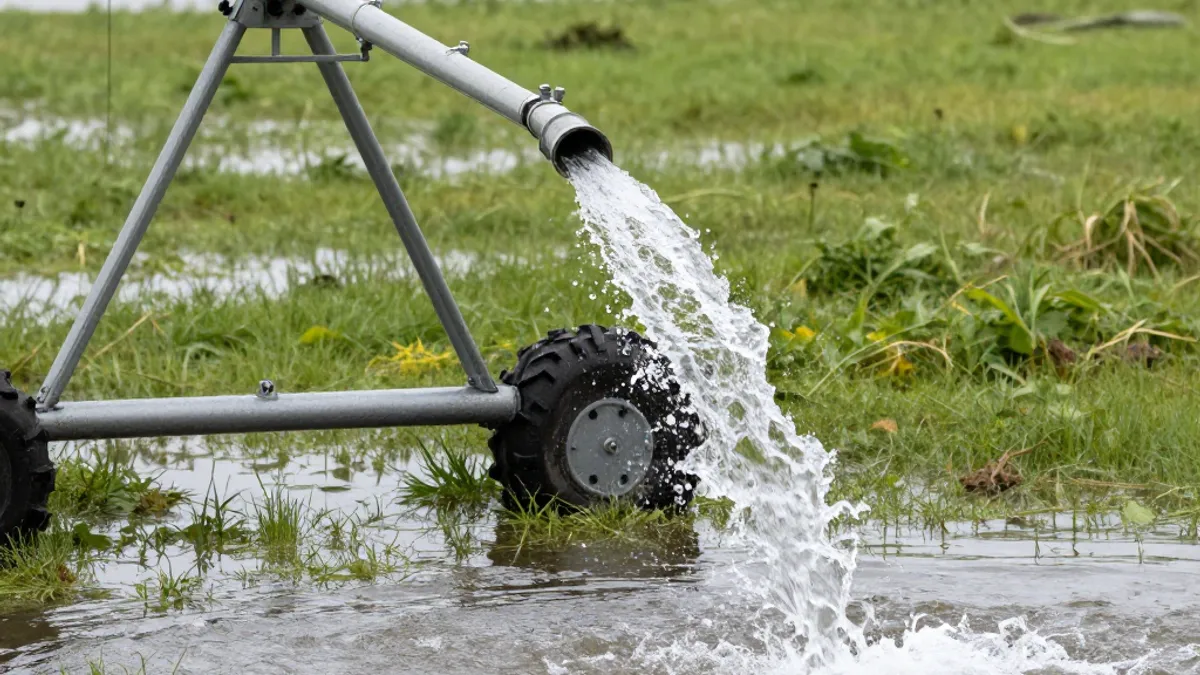
Instead of running water along open channels, a buried main delivers it under pressure to risers spaced across the farm, each feeding a bay. Compared with channels, it loses far less water to seepage and lets you irrigate any bay on demand. The trade-off is the upfront capital and the need for sound hydraulic design. According to irrigation design references, holding head loss to 5–10 m and pipe velocity below about 2 m/s is what keeps lifetime pumping cost economical.
Six factors that decide the design
- Set the required flow rate. Most systems target 12–20 ML per day. The flow must match the crop and bay so the root zone fills without ponding or under-watering; it drives both pipe diameter and pump specification.
- Map the length, shape, and layout. Straight, teed, or looped routes change the pipe size and pump duty. A looped system feeds water from two directions, allowing smaller pipe — but it must be installed in full, not in stages.
- Decide how many bays run at once. Ideally irrigate one bay at a time: it is the most cost-effective, easiest to automate, and avoids unequal flow between risers.
- Target a head loss of 5–10 m. Head loss is the friction the pump must overcome. The simplest way to reduce it is to increase pipe size; undersized pipe forces a bigger, thirstier pump and risks leaks at closed risers.
- Minimise the cost per megalitre. Pipe size, pump efficiency, and head loss together set the energy cost to pump each ML for the life of the system. Always ask for the pump efficiency curves and design to deliver the flow at the highest efficiency.
- Build in flexibility. Plan for future expansion and automation, and consider variable speed drives (VSDs) to control flow and cut energy. Keep design velocity below about 2 m/s to limit wear and friction.
Small pipe + big pump, or big pipe?
| Choice | Effect | Best suited to |
|---|---|---|
| Smaller pipe, larger pump | Lower capital cost; higher head, higher running cost | Low annual pumping volumes where capital is tight and lifetime energy is modest |
| Larger pipe, efficient pump | Higher capital cost; low head, low running cost and more flexibility | High annual volumes and long-life systems where energy dominates total cost |
For perspective, upsizing 1 km of main from 355 mm to 400 mm might cost roughly ten times more than upsizing the pump and motor — but it can pay back through years of lower pumping cost and leaves room to expand.
Conclusion and expert recommendations
First, design around the lifetime cost per megalitre, not the lowest install price — the cheapest pipe is usually the most expensive system. Second, build in flexibility now: expansion capacity, a VSD, and one-bay-at-a-time control are far cheaper designed in than retrofitted. Browse tubing and fittings and irrigation valves, and for mobile pressurised lines see layflat pipe selection. For pasture flood layouts, read border-check irrigation design.