High-Pressure Layflat Hoses for Mobile Farm Irrigation
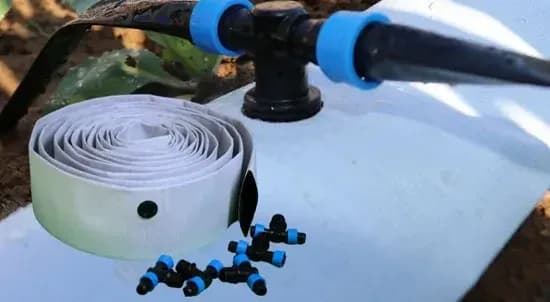
Summary: High-pressure layflat hoses are flexible, collapsible lines built to move large volumes of water through mobile irrigation systems such as hose reels, travelers, temporary mains, pump discharge lines, and field transfer setups. Mobile service is hard on hose: repeated dragging, pressure cycling, ultraviolet exposure, fertilizer contact, and rough storage all shorten life when the construction is wrong. Because irrigation takes a large share of the farm's water and pumping budget, hose reliability affects both uptime and water efficiency. The right hose is chosen by working pressure, safety factor, abrasion resistance, coupling method, and deployment frequency. In demanding mobile irrigation, heavy-duty TPU usually lasts longer than standard PVC.
What makes a layflat irrigation hose high-pressure
A high-pressure layflat hose is engineered to remain stable under sustained working pressure and short pressure surges while still rolling flat when drained. The hose body usually combines an inner liner, a woven reinforcement jacket, and an outer cover. The reinforcement carries pressure load, while the cover resists abrasion, UV exposure, and chemical contact.
Mobile irrigation systems need more than simple water transfer. They require hoses that can be deployed, dragged, pressurized, drained, and rewound many times without delamination or cracking. For related products, browse the layflat hose category.
TPU vs PVC layflat hose for mobile irrigation
PVC, or polyvinyl chloride, is widely used for light and medium-duty water discharge because it is economical and easy to handle. TPU, or thermoplastic polyurethane, is a tougher elastomer used where abrasion, flex fatigue, and high pressure matter more than the lowest purchase price. In mobile irrigation, those differences show up quickly.
| Option | Pros | Cons | Best suited for |
|---|---|---|---|
| Standard PVC layflat hose | Lower initial cost, light handling, suitable for seasonal low-pressure transfer | Lower abrasion resistance and shorter life under repeated dragging | Best suited for small farms, temporary drains, and low-duty irrigation runs |
| Reinforced PVC layflat hose | Better pressure capacity than standard PVC and still cost-effective | Can stiffen with age and may crack faster in harsh UV or cold conditions | Best suited for growers needing moderate pressure at controlled cost |
| Heavy-duty TPU layflat hose | Excellent abrasion resistance, high tensile strength, strong flex performance, longer service life | Higher initial purchase price | Best suited for hose reels, travelers, large farms, contractors, and abrasive field conditions |
How to select a high-pressure layflat hose in 5 steps
Step 1: Define the working pressure of the mobile system
Measure the normal operating pressure at the pump and near the hose outlet. Travelers and hose reels often need higher pressure than static drip headers. Choose a hose with a working pressure above the highest sustained operating condition, not just the average.
Step 2: Check the burst-to-working pressure safety factor
Use a minimum 3:1 burst-to-working pressure ratio for mobile irrigation hoses. According to ISO 7751 (a hose testing standard for rubber and plastics hose assemblies), burst pressure is a defined performance test, and it should not be treated as an operating target. Water hammer and sudden valve closure make this margin essential.
Step 3: Match material to field abrasion
If the hose will cross stubble, gravel, rocky soil, or concrete, prioritize abrasion resistance. TPU is usually the better choice for repeated dragging because its outer cover resists scuffing and puncture better than standard PVC. For light seasonal movement on smooth ground, PVC can still be economical.
Step 4: Inspect construction and coupling method
One-through-weave construction bonds the liner, jacket, and cover into one body, reducing delamination risk. Couplings must match hose diameter, pressure class, and pull load. Poor coupling is a common failure point even when the hose material is strong.
Step 5: Calculate total cost of ownership
Compare purchase cost with expected service life, repair frequency, labor time, and downtime during irrigation windows. A premium hose that lasts several seasons can cost less per hectare irrigated than a cheaper hose replaced repeatedly. This is especially true when one burst stops a traveler during peak crop demand.
Why one-through-weave construction matters
One-through-weave construction means the polymer is extruded through the woven reinforcement instead of being laminated loosely on each side. This creates a stronger bond between layers. It reduces the risk that the inner liner peels away, blocks flow, or forms a blister under pressure.
For mobile systems, that bond is critical because the hose bends, flattens, rolls, and pressurizes repeatedly. Delamination is not only a leak risk; it can also restrict flow and overload the pump.
Key specifications for mobile irrigation hoses
- Working pressure: Select for the real pump and traveler pressure, often 10 to 15 bar for demanding mobile systems.
- Burst pressure: Keep at least a 3:1 safety factor over working pressure.
- Diameter: Size for flow without excessive friction loss.
- Coil volume: Lower storage volume reduces transport time and reel load.
- Chemical resistance: Check compatibility with fertilizers and fertigation chemicals.
- Temperature range: Confirm flexibility in local cold and heat conditions.
If the hose supplies drip tape or temporary drip zones, combine it with components from drip irrigation products and drip tape systems.
Common mistakes when buying high-pressure layflat hose
- Choosing by diameter alone and ignoring pressure class.
- Using burst pressure as if it were working pressure.
- Buying PVC for abrasive mobile service where TPU is justified.
- Ignoring coupling quality and field pull load.
- Storing the hose wet, twisted, or under direct sun for long periods.
Bottom line
High-pressure layflat irrigation hoses are the practical choice for mobile water delivery because they combine large flow capacity with compact storage. PVC works for lighter duty and controlled budgets; TPU is the stronger choice for high-pressure, high-abrasion, frequently moved systems. Expert advice: specify working pressure, safety factor, material, coupling, and expected deployment frequency on the same purchase sheet; this prevents buying a hose that looks right but fails in the field. For equipment options, review layflat hoses, main pipe, and bypass valves.