Technical
Never size acid injection in a fertigation system from pH alone. Obtain representative laboratory results for total alkalinity, hardness and relevant ions, define the agronomic or equipment objective, and ask a qualified professional to evaluate a titration-based design. Two waters can have the same pH and very different acid-neutralizing capacity. The missing information cannot be recovered by buying a more precise pH probe.
This guide explains how to read that information, compare its units and prepare an evidence package for professional review. Its numerical examples are invented teaching cases. They specify neither a treatment target for your farm nor a product, concentration, mixing procedure or field dose.
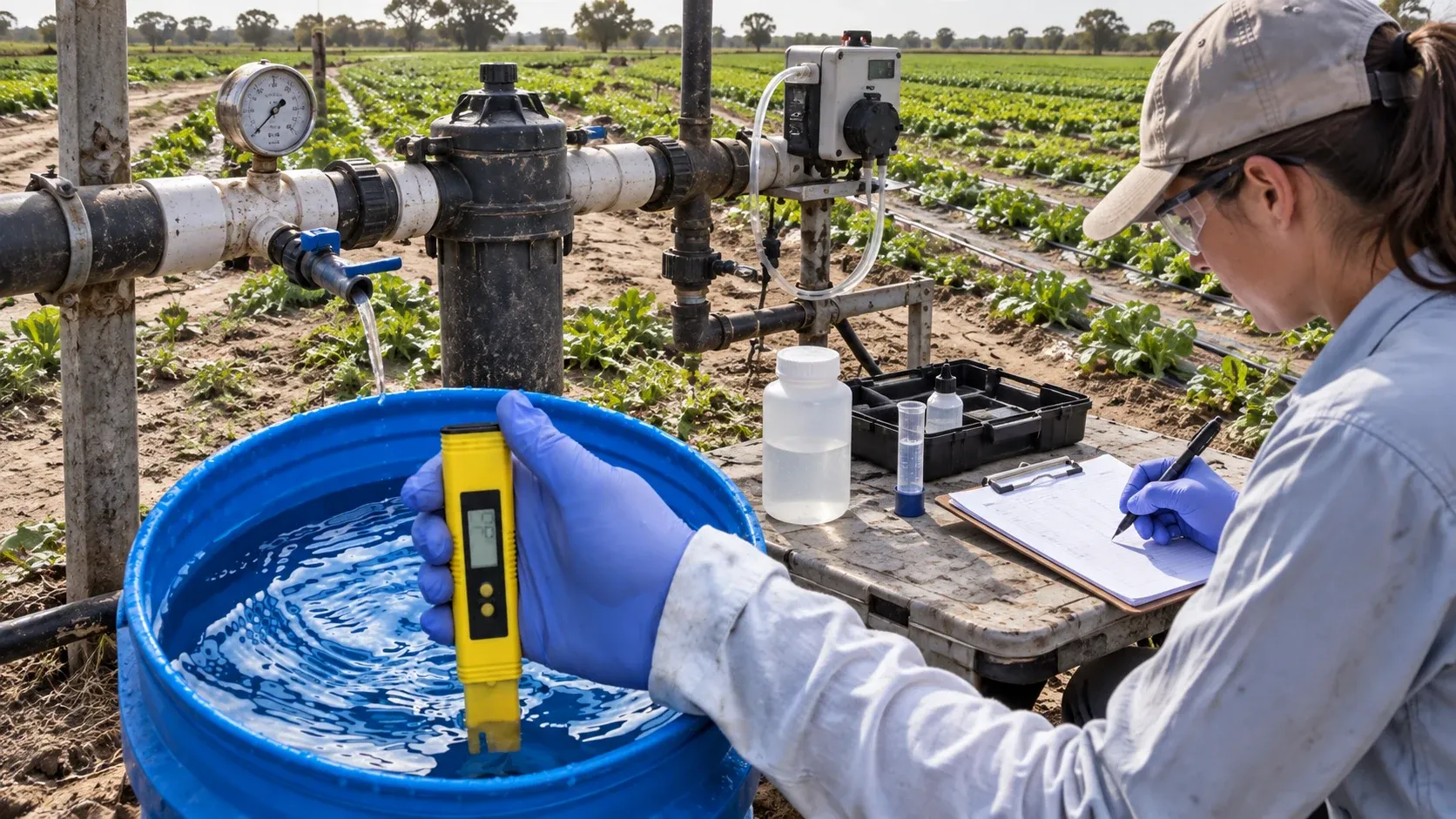
Image: an AI-edited scene based on a real agricultural water-sampling photograph, showing irrigation pipework, a sampling valve, filter and pH measurement. The extended scene is illustrative and is not an approved installation drawing.
pH describes hydrogen-ion activity on a logarithmic scale. A change of one pH unit represents a tenfold change in that activity, but it does not mean that ten times as much treatment product is required. Alkalinity describes the water's capacity to neutralize added acid to a specified analytical endpoint. In many irrigation waters, bicarbonate and carbonate account for much of that capacity; other constituents can also contribute.
| Measurement | What it describes | What it cannot establish alone |
|---|---|---|
| pH | The present acid–base condition of the sample | Neutralization demand, dissolved salt content or a suitable injector setting |
| Total alkalinity | Acid-neutralizing capacity, commonly reported as mg/L as CaCO₃ or meq/L | A crop-specific endpoint, product volume or scaling diagnosis |
| Hardness | Mainly dissolved calcium and magnesium, often also expressed as mg/L as CaCO₃ | Alkalinity: identical reporting units do not make the tests interchangeable |
A water can be alkaline in pH without containing a large alkalinity reserve. Hardness and alkalinity may occur together, but calcium associated with other ions does not automatically provide equivalent carbonate buffering. Likewise, a white deposit is an observation requiring investigation, not proof that alkalinity alone caused it. Keep laboratory analytes separate before considering interactions.
University of Georgia Extension's injector guidance distinguishes pH from acid-neutralizing alkalinity and calls for pH, alkalinity and hardness testing when evaluating acid injection.
Describe the intended irrigation use when commissioning the analysis. A drinking-water pass/fail summary may omit information needed for fertigation. Agree with the laboratory on containers, collection points, sample preservation, transport and test methods; different analytes can need different handling. Record a field pH measurement separately from the laboratory reading because sample storage, temperature and gas exchange can change the result.
| Request or record | Reason for including it |
|---|---|
| Source, sampling point, date, time, operating flow and source blend | Connect the result to the water that the irrigation system actually receives. |
| Field pH, laboratory pH and temperature | Distinguish a changing sample from a measurement or transcription problem. |
| Total alkalinity with units, method and endpoint | Establish the analytical basis for comparing samples. |
| Bicarbonate and carbonate, with reporting basis | Clarify whether values are measured, calculated or expressed as another equivalent. |
| Total hardness, calcium and magnesium | Support a separate assessment of mineral interactions and nutrient contributions. |
| EC, TDS where relevant, sodium, chloride and sulfate | Keep salinity and specific-ion concerns visible; pH correction does not remove them. |
| Iron, manganese and crop/system-specific ions | Investigate additional precipitation, deposit or crop concerns. |
| Detection limits, unusual sample condition and laboratory comments | Prevent a below-detection result from being treated as an exact zero. |
Sample each source that can operate independently and the blends used in practice. Rainfall, seasonal pumping depth, reservoir stratification and changing well contributions may alter the water delivered. Algal activity and carbon dioxide exchange can change pH without a corresponding simple change in alkalinity. The irrigation water-source assessment helps place the chemistry in its supply context.
“As CaCO₃” is an equivalent reporting convention, not a statement that the sample contains that mass of solid limestone. A milliequivalent per liter describes charge-equivalent concentration. Write the analyte and basis beside every number when transferring results into a spreadsheet.
| Reported quantity | Conversion | Boundary |
|---|---|---|
| Alkalinity in mg/L as CaCO₃ | Divide by approximately 50 to obtain meq/L | Keep the original method and endpoint with the result. |
| Alkalinity in meq/L | Multiply by approximately 50 to obtain mg/L as CaCO₃ | This does not identify which ions provide the capacity. |
| Bicarbonate in mg/L HCO₃⁻ | Divide by approximately 61 to obtain meq/L of bicarbonate | Bicarbonate equivalents alone need not equal total alkalinity. |
| Bicarbonate in meq/L | Multiply by approximately 61 to obtain mg/L HCO₃⁻ | Do not compare the resulting mass directly with mg/L as CaCO₃. |
For example, 122 mg/L HCO₃⁻ represents about 2 meq/L of bicarbonate, equivalent to about 100 mg/L as CaCO₃ on that component's equivalent basis. This arithmetic changes the reporting basis only. It does not add the other alkalinity components, determine a pH endpoint or calculate an acid volume. If the report uses an unfamiliar basis, ask the laboratory before combining columns.
Assume fictional sources A and B both have pH 7.8. Their measured total alkalinities are 40 and 220 mg/L as CaCO₃. For this classroom comparison only, suppose a project reviewer has chosen 60 mg/L as CaCO₃ as a screening reference for residual alkalinity. That reference is arbitrary here: it is not a recommended level for any crop, substrate or irrigation system.
| Item | Source A | Source B |
|---|---|---|
| Initial pH | 7.8 | 7.8 |
| Total alkalinity | 40 mg/L as CaCO₃ | 220 mg/L as CaCO₃ |
| Equivalent concentration | 40 ÷ 50 = 0.8 meq/L | 220 ÷ 50 = 4.4 meq/L |
| Relation to the fictional reference of 60 | Already below the reference; no positive removal gap on this comparison | 220 − 60 = 160 mg/L as CaCO₃, or 3.2 meq/L, for professional evaluation |
The example explains why the starting pH cannot determine the adjustment requirement. It does not authorize treatment of either source. Source A may still raise other agronomic or equipment questions, and Source B's calculated difference is an equivalent alkalinity gap rather than a pump setting. Product assay, density, reaction behavior, water composition, an approved endpoint and laboratory titration remain unknown.
A laboratory titration records how pH responds as acid equivalents are introduced under a documented method. The curve can reveal buffering and changes in response near the chosen endpoint. It must represent the water or solution being evaluated. A source-water curve is not automatically valid after fertilizer addition, source blending or a change in temperature and gas conditions.
| Normalized acid-equivalent position | Illustrative pH, low-capacity water | Illustrative pH, higher-capacity water |
|---|---|---|
| 0 | 7.8 | 7.8 |
| 1 | 6.7 | 7.6 |
| 2 | 5.7 | 7.3 |
| 3 | 4.7 | 6.8 |
These invented coordinates illustrate different slopes only. They are not measured data for A or B, and the horizontal scale has no conversion to meq/L, milliliters, product strength or operating time. The final row is not a target. A real curve, uncertainty and interpretation must come from the laboratory or qualified designer; interpolation through this teaching table has no operational meaning.
Nutrient-solution compatibility, prevention of carbonate deposits, management of a crop's root zone and removal of existing deposits are different tasks. They involve different evidence, exposure conditions and acceptance criteria. A cleaning objective cannot be transferred to water applied to living roots. Source-water pH also cannot stand in for a soil or substrate test.
Write a brief stating the crop, growing medium, source, fertilizer program, observed problem, sampling location and person approving the objective. For suspected fertilizer interactions, use the separate stock-solution compatibility review. A favorable pH reading alone does not prove solubility or exclude precipitation.
| Observed pattern | Professional question | Risk of using pH alone |
|---|---|---|
| High pH with low alkalinity | How sensitive is this water to small changes, and is treatment justified? | Overshooting an endpoint because buffering is weak. |
| Moderate pH with high alkalinity | What does the laboratory titration show for the approved objective? | Underestimating neutralization demand. |
| High alkalinity with appreciable hardness | What are the calcium, magnesium, carbonate and operating conditions? | Assuming a pH adjustment alone resolves all deposit mechanisms. |
| Very low alkalinity | How will fertilizer addition, source variation and controller response affect stability? | Applying a treatment strategy borrowed from a buffered source. |
An acidification design links chemistry to the hydraulic system and its protective functions. It should be reviewed as a complete operating envelope, including the smallest zone and source changes. The fertigation nutrient calculation framework explains water and nutrient accounting, but it must not be substituted for an acidification design.
| Design input | Evidence to request |
|---|---|
| Objective and laboratory chemistry | Approved rationale, current analysis, titration method and applicable uncertainty. |
| Professionally selected, permitted product | Assay, density, nutrient contribution, label and current safety data sheet. |
| Water flow and operating volume | Minimum/maximum conditions, active zones and available injection window. |
| Mixing and response delay | Evidence for representative sampling and stable downstream response. |
| Injector capability | Calibrated delivery over the required range, turndown and fault response. |
| Wetted materials | Documented compatibility of pump, seals, valves, tubing and instruments. |
| Protection and handling | Backflow protection, verified interlocks, containment, ventilation and trained personnel. |
| Acceptance and monitoring | Downstream pH, residual alkalinity where specified, sampling locations and action criteria. |
Acids are hazardous and corrosive. Follow the approved product label, safety data sheet and applicable local requirements through qualified personnel and compatible closed equipment. Protective clothing and equipment, secondary containment and verified fail-safe controls belong in that plan. Do not improvise with concentrated acid or infer handling instructions from an online calculation.
Record the source and zone, laboratory report identifier, objective and approver, titration method, injector calibration evidence, starting flow and water chemistry, and stabilized downstream measurements. Include residual alkalinity if the plan requires it, representative crop-outlet checks, alarm and interlock test results, operator, date and corrective action. Preserve the original units and locations; a single unlabelled pH number cannot establish acceptance.
Use independent measurement to distinguish a genuine chemistry change from a sensor problem. The EC and pH sensor verification guide covers placement and calibration. Set sampling frequency and conditions with the responsible specialist, especially after source or fertilizer changes. An unchanged controller display is not proof that the delivered water is unchanged.
| Observation | What to examine |
|---|---|
| Large pH swing | Low alkalinity, source changes, measurement quality and control response delay. |
| pH rebounds after sampling | Gas exchange, equilibration, timing and whether sampling conditions were consistent. |
| Same initial pH, different response | Current alkalinity, blend identity, titration record and product documentation. |
| Precipitation after fertilizer addition | Full ion analysis and solution compatibility; do not assume acid alone resolves it. |
| Different pH downstream | Travel time, mixing, zone flow, sampling location and additional inputs. |
| Suspected sensor drift | Independent verified measurement and the probe's maintenance record. |
| Changing blend | Actual source fractions and representative analyses for the operating blend. |
| Corrosion or leaks | Use the site's incident procedure and obtain a compatibility and equipment review. |
| Emitter scaling | Deposit identification, water chemistry and operating history before selecting a response. |
If only pH is available, the next deliverable is a representative laboratory report. If units differ, reconcile the reporting bases. If an objective is undefined, obtain agronomic and equipment review before selecting a target. If an approved design already exists, compare the current source, equipment and downstream evidence with its operating limits. Alkalinity makes the water's buffering demand visible; professional interpretation turns that information into a justified decision.
Products relevant to this irrigation guide.
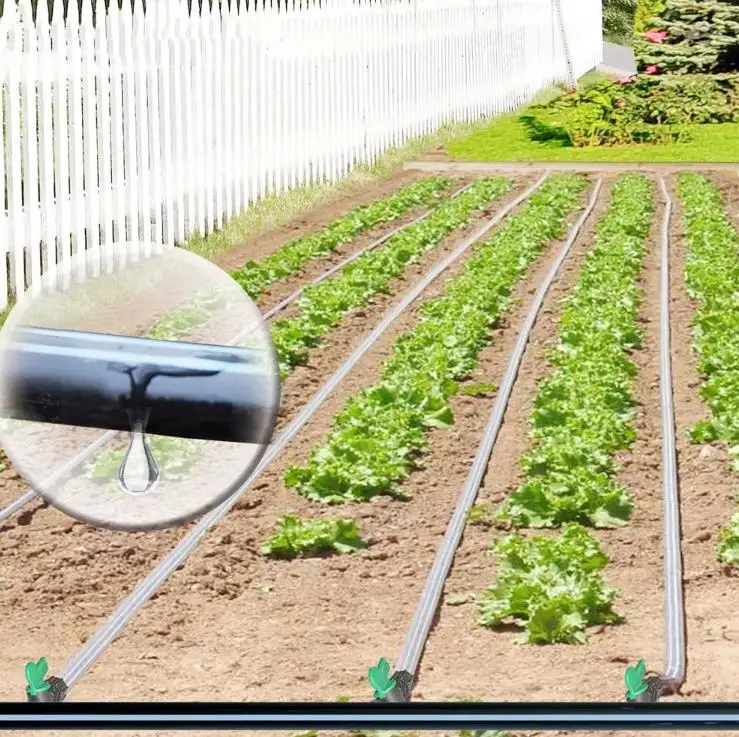
IRRINEX drip irrigation tape. Flow rate: 1.38/2.0/2.5/3.0L/H; Thickness: 0.2mm; Spacing: 20cm or as requested; Diameter: 16mm. Drip tape forms a lateral watering component with a selected outlet arrangement. Diameter, wall thickness and emitter options should be checked as one exact configuration.
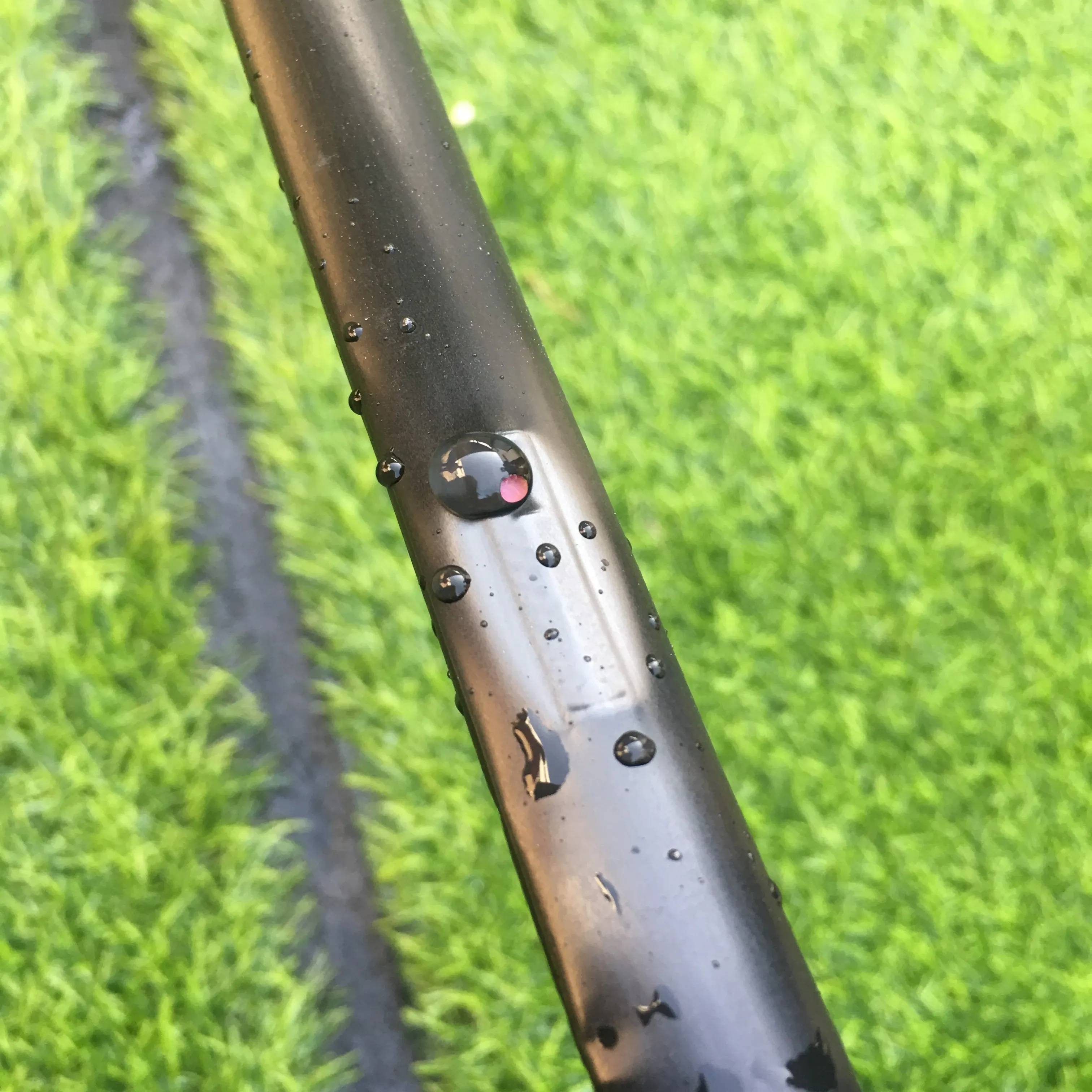
IRRINEX drip irrigation tape. Flow rate: 1.38/2.0/2.5/3.0L/H; Thickness: 0.2/0.3/0.4/0.5mm; Spacing: 0.1-2.5m,or as required. Drip tape forms a lateral watering component with a selected outlet arrangement. Diameter, wall thickness and emitter options should be checked as one exact configuration.

IRRINEX irrigation sprinkler. NOZZLE DIAMETER: 2.8mm; Working pressure: 1-3.0bar; Flow rate: 220-330L; Spray Radius: 5-6.5m. This sprinkler is a water-distribution component for a selected irrigation layout. Use the listing's named sprinkler form and exact operating data when comparing configurations.
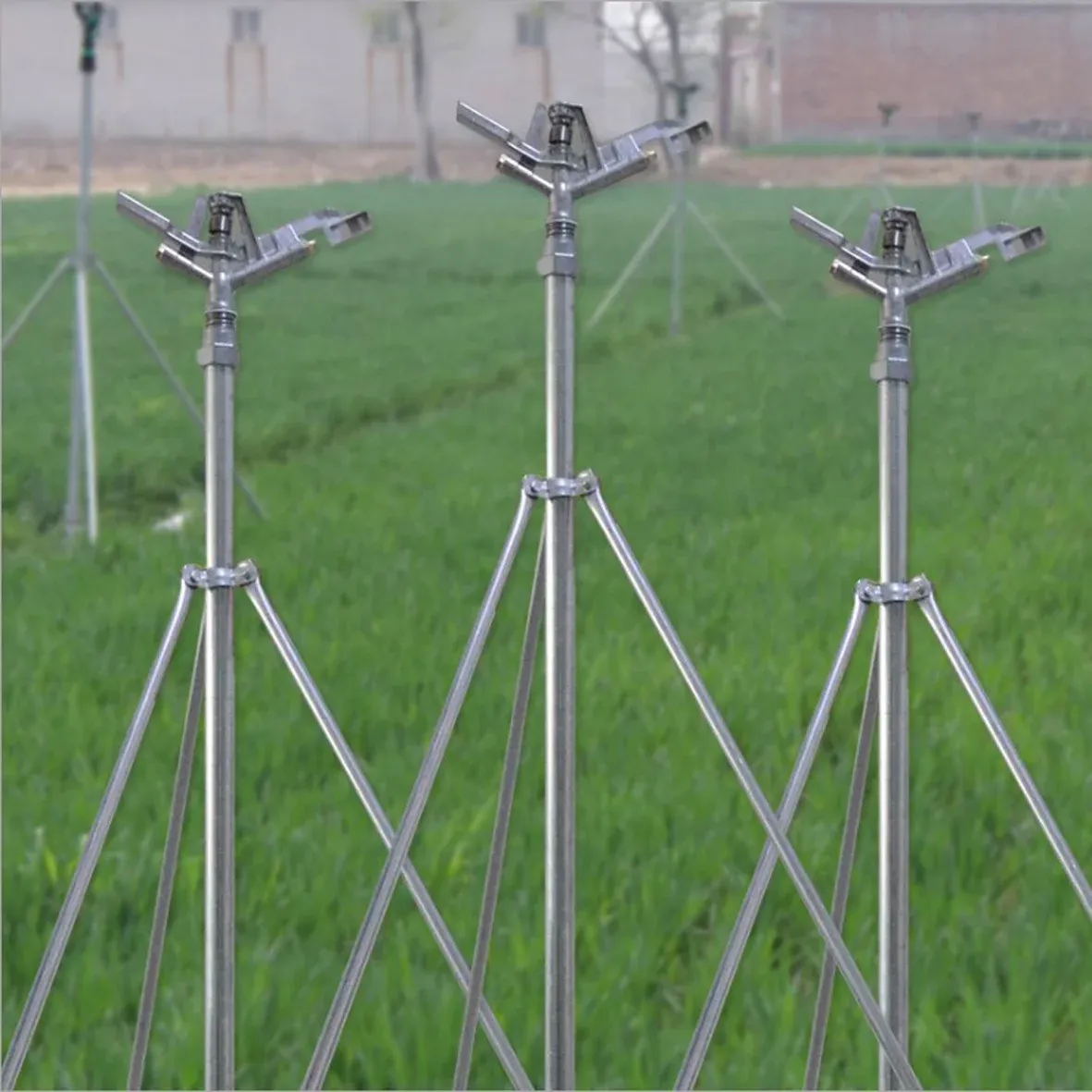
IRRINEX impact sprinkler. Size: 1"BSP male Threaded; Spray Radius: 32-40m; Pressure: 0.2-0.4Mpa. An impact sprinkler distributes water from a selected sprinkler position. Choose the exact connection and nozzle configuration using the recorded pressure and discharge information.