Drip vs Spray Irrigation: How to Choose the Right Watering System
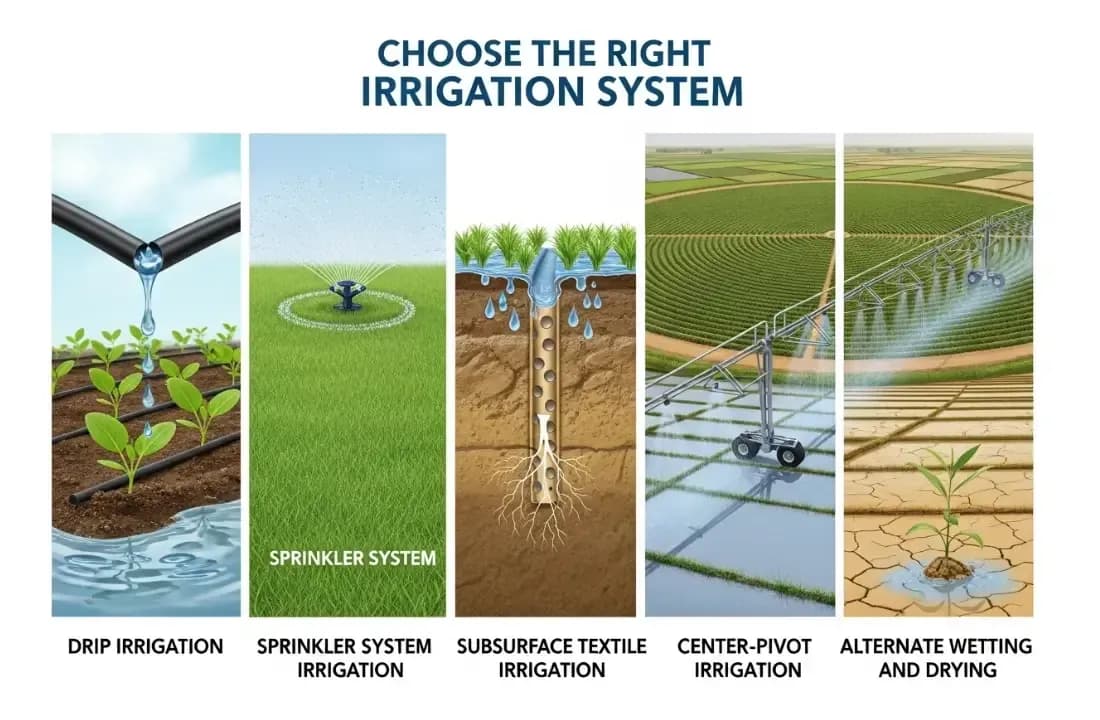
Summary: Drip irrigation and spray irrigation are two different ways to deliver water to plants. Drip irrigation sends low-volume water directly to the root zone through tubing and emitters. Spray irrigation uses sprinkler heads to throw water over a broader area, much like artificial rainfall. The choice matters because it controls water use, disease risk, pressure demand, and maintenance. According to FAO irrigation guidance, well-designed drip irrigation can reach about 90 percent application efficiency, while sprinkler systems often operate around 70 to 85 percent depending on wind, pressure, and nozzle condition. Use drip for beds, rows, containers, orchards, and greenhouses. Use spray for lawns and open turf where even surface coverage is the goal.
What is drip irrigation?
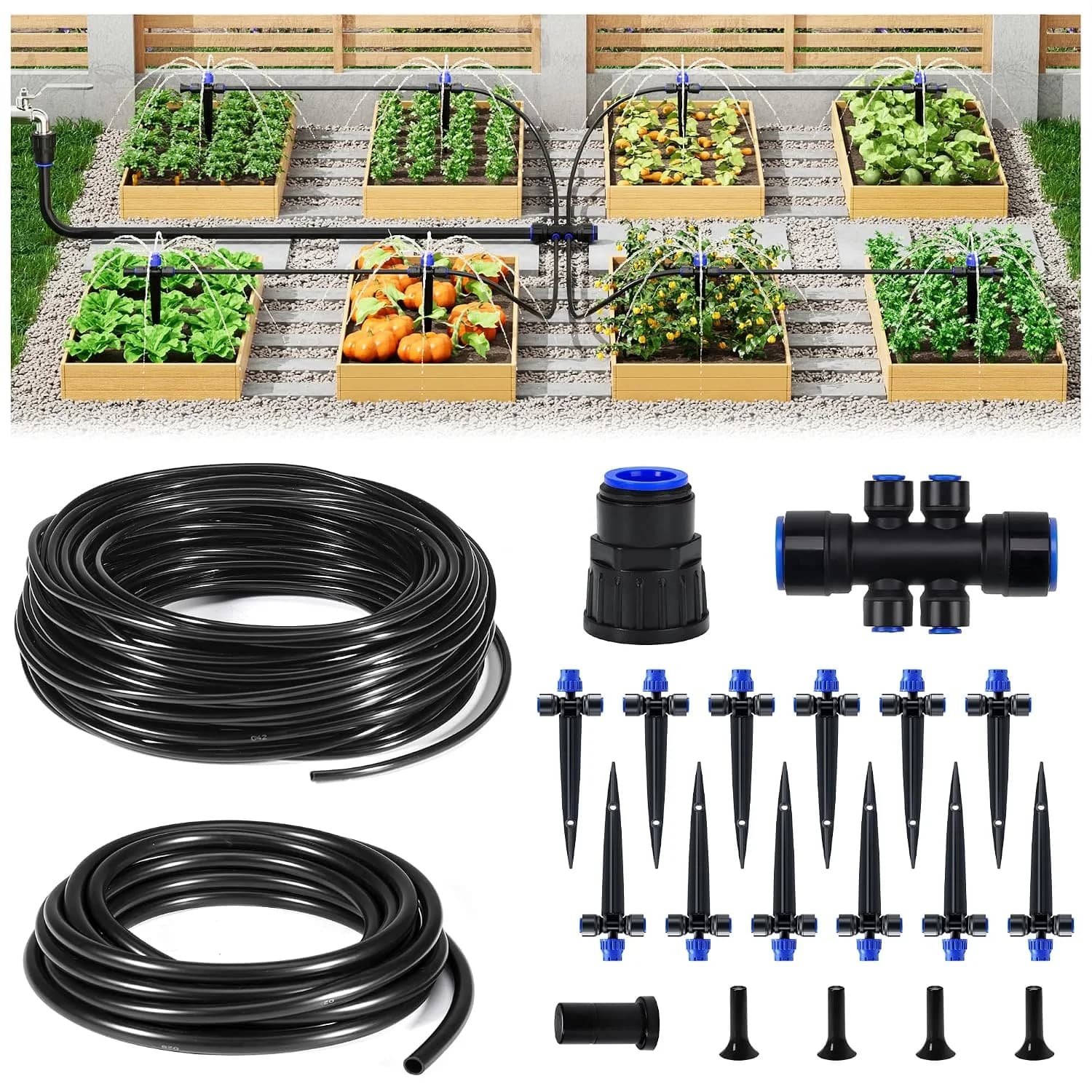
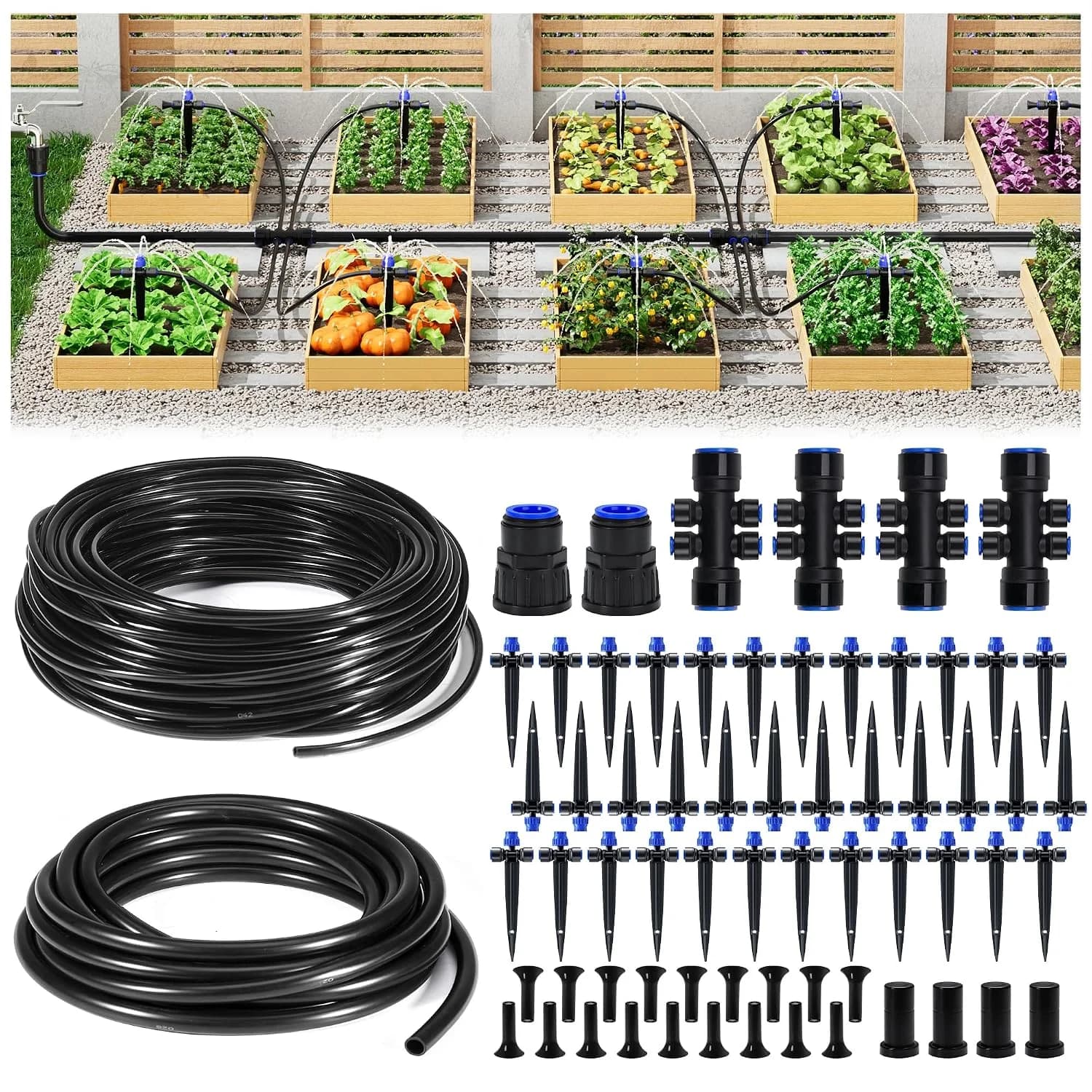
Drip irrigation is a low-pressure system that applies water near the root zone. It uses tubing, drip tape, inline emitters, or button drippers to release a controlled flow, often measured in litres per hour.
Drip is strongest where water should stay off the foliage: vegetables, orchards, raised beds, container crops, and protected cultivation. For examples, see IrriNex vegetable drip irrigation and orchard dripper system.
What is spray irrigation?
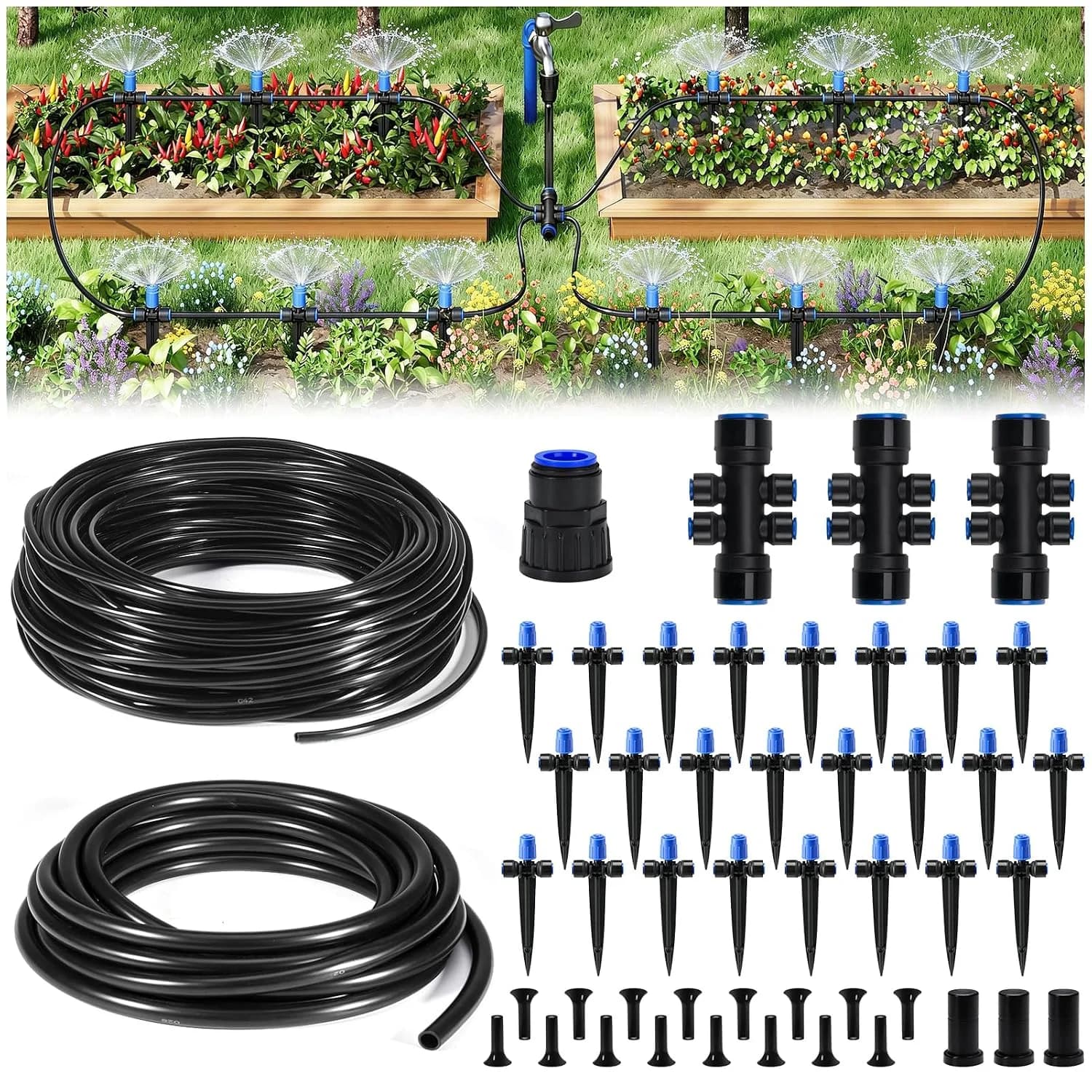
Spray irrigation distributes water through sprinkler heads, sprayers, or micro sprinklers. It is better for turf and broad plantings that need even surface coverage over a defined radius.
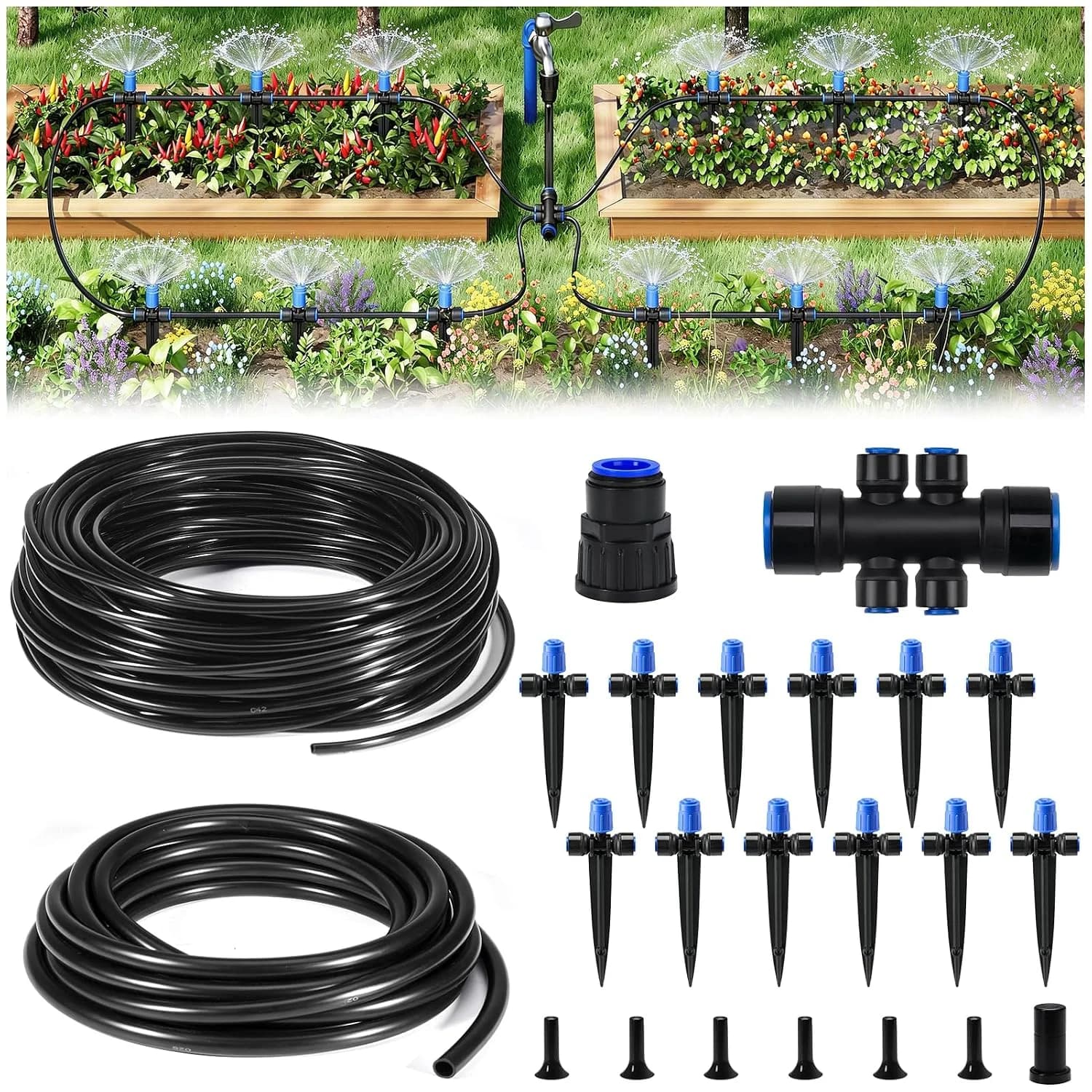
In smaller or protected spaces, micro sprinklers can bridge the gap between drip and large sprinklers. See the IrriNex micro sprinkler range and the greenhouse micro sprinkler solution.
Drip vs spray irrigation comparison
| Factor | Drip irrigation | Spray irrigation |
|---|---|---|
| Water efficiency | High; water goes to the root zone | Moderate to high; wind and evaporation affect results |
| Suitable for | Vegetables, shrubs, orchards, containers, greenhouses | Lawns, parks, sports fields, large turf areas |
| Pressure demand | Usually 10 to 30 psi | Often 30 to 60 psi |
| Disease control | Keeps foliage drier | Wets leaves and can raise fungal pressure |
| Maintenance | Filter and emitter checks | Nozzle, head, and pressure checks |
| Best suited for | Suitable for growers and gardeners focused on water savings | Suitable for turf managers and landscapers needing broad coverage |
How to choose the right watering system in 5 steps
Step 1: Match the method to the plant type
Use drip for plants spaced in rows or individual stations. Use spray for grass and ground covers that need uniform wetting across the surface.
Step 2: Check terrain and runoff risk
Slopes favour drip because slow application reduces runoff. Flat, open lawns are usually better served by sprinklers with correct head spacing.
Step 3: Measure water pressure and flow
Drip needs lower pressure but clean water. Spray needs higher pressure and enough flow to operate several heads at once.
Step 4: Consider water quality
Drip emitters clog when sediment is not filtered. If your source is a well, pond, or storage tank, plan filtration first with the IrriNex filtration guide.
Step 5: Design by zone, not by property
A mixed landscape often needs both systems. Put beds and trees on drip, and put the lawn on spray, each with its own runtime.
When a hybrid system works best
A hybrid system uses drip where precision matters and spray where surface coverage matters. This is often the best layout for homes, resorts, schools, and commercial landscapes with beds beside turf.
If nutrients are applied through drip zones, a fertigation layout can improve consistency. Review the IrriNex fertigation system solution.
Common mistakes when comparing drip and spray
- Using spray in vegetable beds because it looks simpler.
- Using drip under lawn and expecting turf-like uniformity.
- Skipping filtration on a drip zone.
- Running every zone for the same time even when plants and soil differ.
Bottom line
Drip irrigation is the better choice for water efficiency, root-zone precision, and dry foliage. Spray irrigation is the better choice for turf and large open areas. For mixed landscapes, choose by zone instead of forcing one method everywhere. Browse IrriNex drip irrigation, micro irrigation, and irrigation filters to build a matched system.