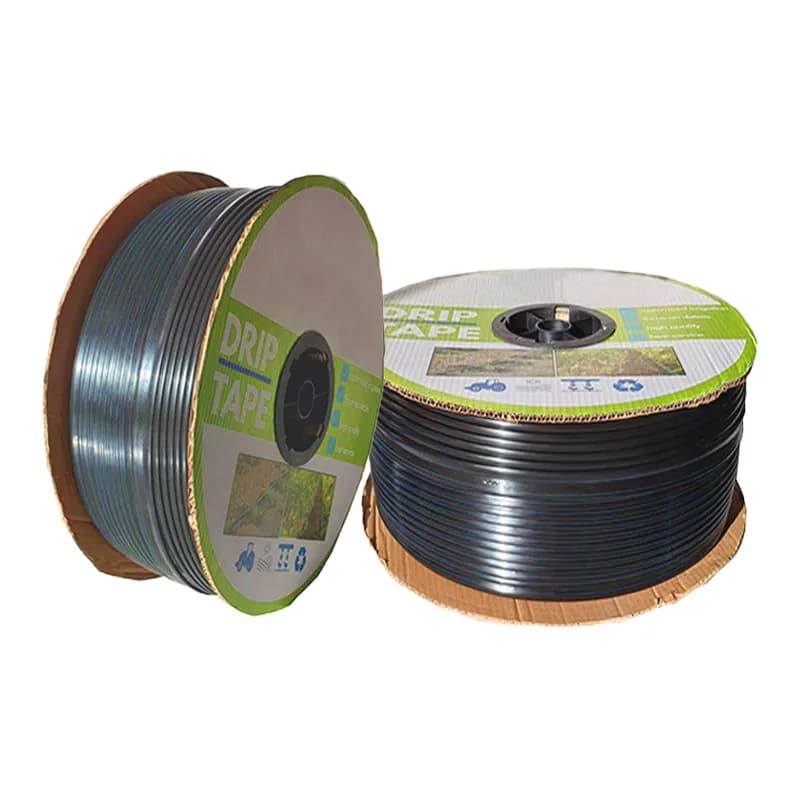
 1 / 2
1 / 2SKU: DRT-FLT
Thin-wall flat drip tape for cost-effective row crop irrigation with precise emitter spacing.
Material
PE
Size Range
16/20mm
Pressure
0.04 - 0.15 MPa
Standards
ISO9261
INQUIRY FOR:
Flat Drip Tape | Agriculture Irrigation System
| Parameter | Value |
|---|---|
| Wall Thickness | 0.15 / 0.20 / 0.25mm |
| Dripper Spacing | 10 / 20 / 30 / 40cm |
| Flow Rate | 0.8/2.2/3.1L/h |
| Operating Pressure | 0.04 - 0.15MPa |
| Diameter | 16mm |
| Roll Length | 1000 / 2000 / 3000 / 5000m |
| Customuzed Support | OEM/ODM |
Patch-type flat drip tape puts water exactly where roots need it — not on the surface, not lost to evaporation. Built for row crops and large fields, it delivers uniform flow even in low-pressure systems. A reliable choice for farms in arid or water-scarce regions where every liter counts.
Every meter of this drip tape is made from PE. It handles fertilizers and harsh field conditions without degrading, rolls out across uneven ground without kinking, and lasts through multiple seasons of outdoor use.
Tolerates fertilizers, pesticides, and both acidic and alkaline water. Performance stays consistent across different soil chemistries and fertigation programs.
UV-stabilized against sunlight and temperature swings. Suitable for permanent open-field installation without seasonal removal.
Emitters are built into the tape wall, not attached separately. Consistent flow along the full length, with lower risk of detachment or clogging.
Bends around rows and uneven ground without cracking. Easy to roll out, reposition, and store — no special tools required.
PE keeps material costs down without sacrificing durability. A practical option for large-scale farms where tape runs hundreds or thousands of meters.
Recoverable at end of service life. Many agricultural plastic recycling programs accept PE tape, reducing irrigation waste sent to landfill.
Flat drip tape is a simple product, but the details matter at scale. These are the seven things our customers consistently rely on.
High-strength PE holds up through seasons of field use. Stores compactly and lays flat during installation.
Works with standard fertigation programs. Resistant to corrosion from acidic or alkaline solutions.
Patch emitters distribute flow evenly at each outlet, delivering water to the root zone rather than the surface between rows.
Lightweight and rollable. Adapts to different row spacings and terrain with minimal labor and no special equipment.
Reliable performance at a price that works for large fields. Reduced water use offsets the initial investment quickly.
UV-stabilized PE handles sun, rain, and temperature changes without cracking or losing flexibility.
PE is recoverable at end of service life, supporting agricultural plastic recycling and reducing field waste.
Drip tape is straightforward to set up, but a few things — pressure, filtration, soil type — have an outsized effect on how long it lasts and how evenly it performs.
Lay tape in straight, evenly spaced rows at or just below the soil surface for direct root-zone delivery.
Patch emitters need stable pressure. Install a pressure regulator — fluctuations reduce flow uniformity and can damage the tape.
Sand, silt, and organic particles clog emitters quickly. A quality upstream filter is essential — clean or replace it regularly.
High mineral content, pH extremes, or suspended solids shorten tape life. Test your water before a full installation.
Sandy soils need closer spacing; clay soils can use wider intervals. Match the spec to your field's absorption rate, not just crop type.
Cap all tape ends. Inspect every connection before the first run — small leaks drop pressure across the whole line.
Before each growing season, flush the system and check for blockages, cracks, or pressure drops.
In high-sun environments, confirm the tape carries UV stabilization. Factor in local temperature range when selecting wall thickness.
Select emitter spacing and tape length based on crop type, row spacing, and irrigation cycle to ensure even coverage.
Consistent outlet pressure matters especially on longer runs. Pressure drops at the far end are a common cause of uneven irrigation.

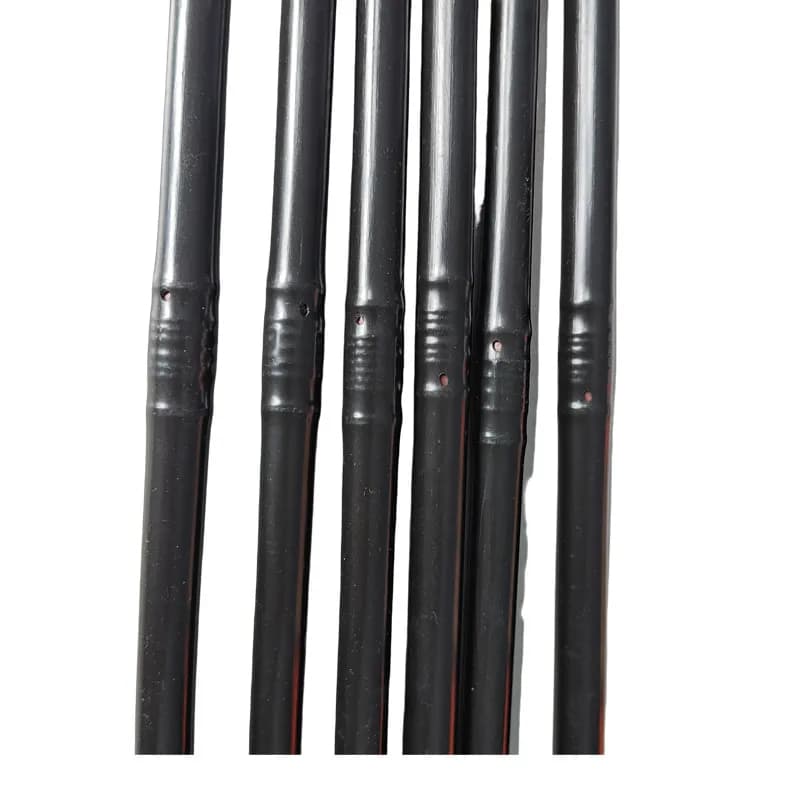
Cylindrical inline drip tape with turbulent flow emitters for uniform water distribution in row crops.
