How to Choose a Garden Irrigation System
A garden irrigation system is an organized way to move water from a source to lawns, beds, trees, containers, or food crops through hoses, pipes, sprinklers, driplines, or individual emitters. It matters because the correct method places an adequate dose within the active root zone while limiting evaporation, runoff, leaf wetness, weeds, and manual work. No single technology is automatically best: a sprinkler can establish closely sown beds, dripline suits regular rows, and point emitters serve separated plants or pots. Selection should therefore follow climate, soil infiltration, plant grouping, source pressure and flow, desired automation, and maintenance capacity. This guide turns those factors into five ordered decisions, compares four practical choices, and shows when a hybrid design is more sensible than one method everywhere. IrriNex (an irrigation equipment and project-support supplier) can then help match compatible components to the resulting plan.
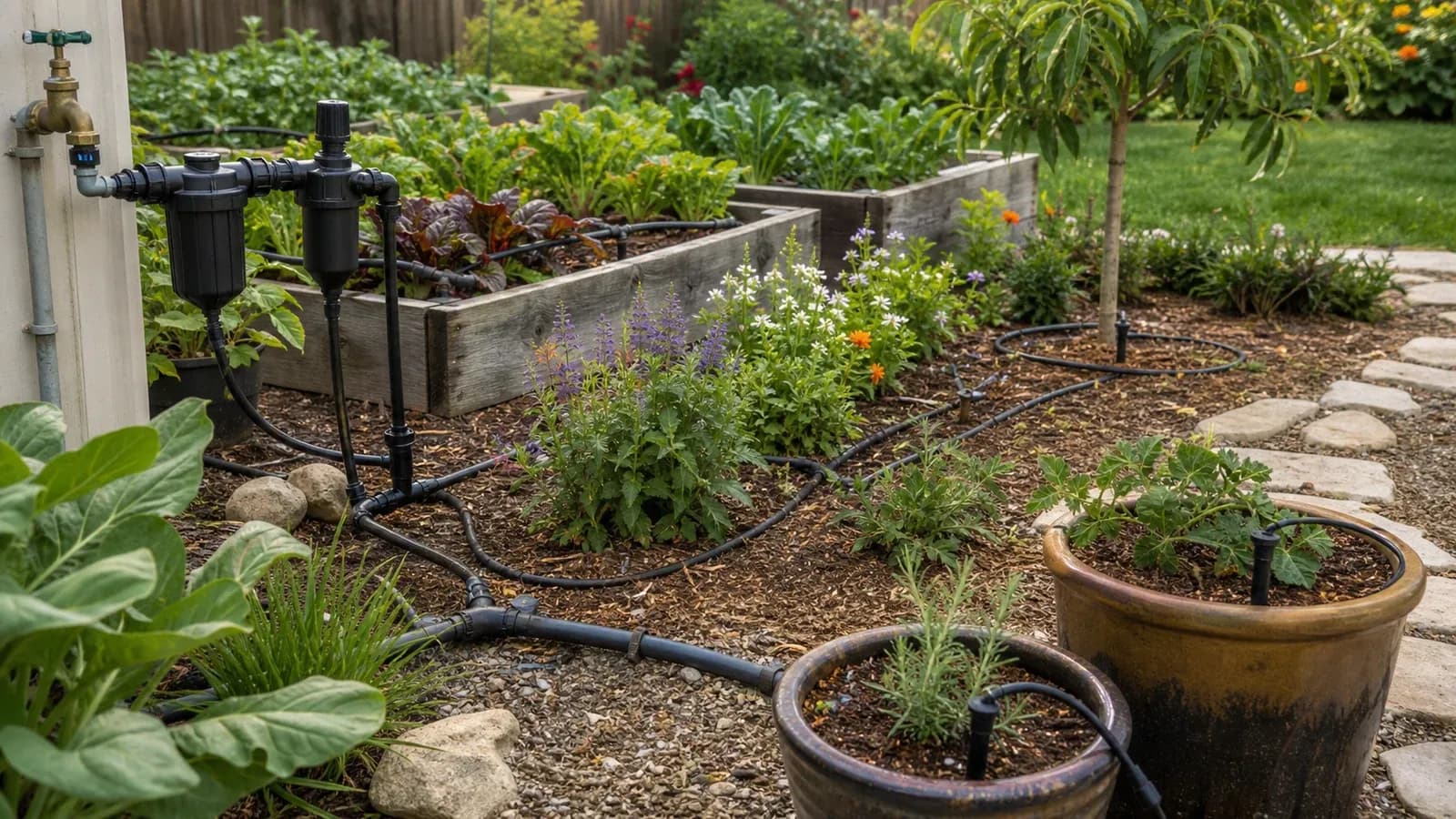
What is the most efficient garden watering method?
Application efficiency is the share of delivered water stored where plants can use it. The United Nations Food and Agriculture Organization (FAO, the UN food and agriculture agency) lists indicative field efficiencies of 90% for drip and 75% for sprinkler irrigation, but a poorly maintained drip system can still underperform a well-managed sprinkler.
Five steps to choose a garden irrigation system
- 1. Map plants and exposure. Measure lawns, rows, mixed borders, trees, and containers, then note sun, wind, slope, and shade. Group plants with comparable demand so each zone can receive one useful schedule.
- 2. Examine soil and roots. Identify whether water infiltrates rapidly in sand or spreads slowly in clay, and estimate active rooting depth. Perform a short wetting test to reveal runoff, ponding, or insufficient lateral spread.
- 3. Test the water source. Measure flow, pressure, and basic water cleanliness at the actual connection. Reserve enough capacity for household or farm use and size each irrigation zone below the dependable flow.
- 4. Match a delivery method to each zone. Use broad, even spray for turf or seedbeds and root-zone outlets for shrubs, rows, and containers. A hybrid layout prevents one method from overwatering paths or leaving dense crops dry.
- 5. Add control and a maintenance plan. Choose a timer or controller that can adjust by season and provide accessible filters and flush ends. Schedule inspections for leaks, clogged outlets, shifted spray, and plant growth.

Garden irrigation options compared
| Method | Advantages | Limits | Best for |
|---|---|---|---|
| Hand hose or watering can | Low initial cost and direct observation | Time-intensive and inconsistent | Best for very small gardens and spot watering |
| Movable sprinkler | Broad coverage and simple setup | Wind drift, evaporation, and leaf wetness | Best for lawns and closely sown beds |
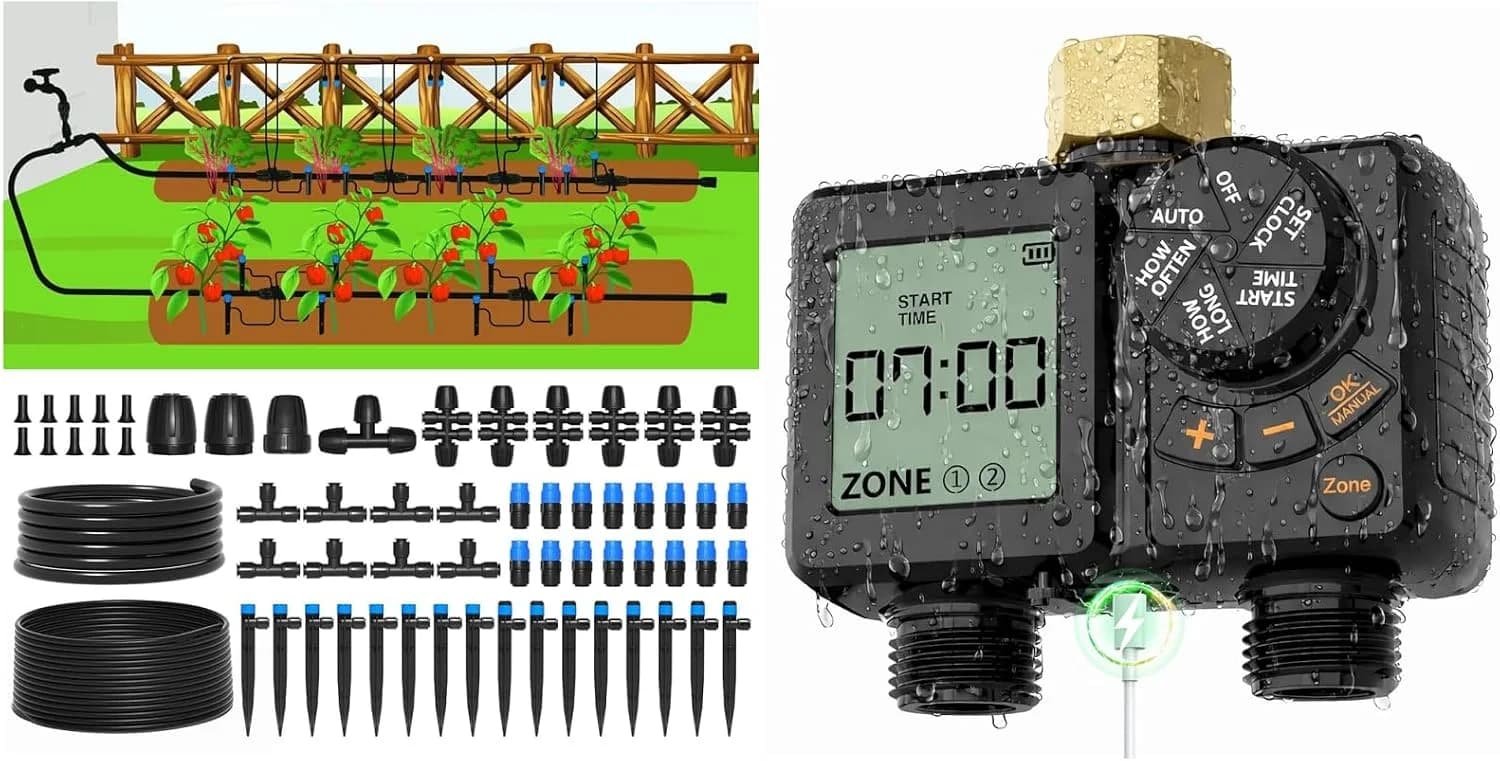
| Inline dripline | Uniform root-zone delivery along rows | Needs filtration and correct spacing | Best for regular beds, hedges, and rows |
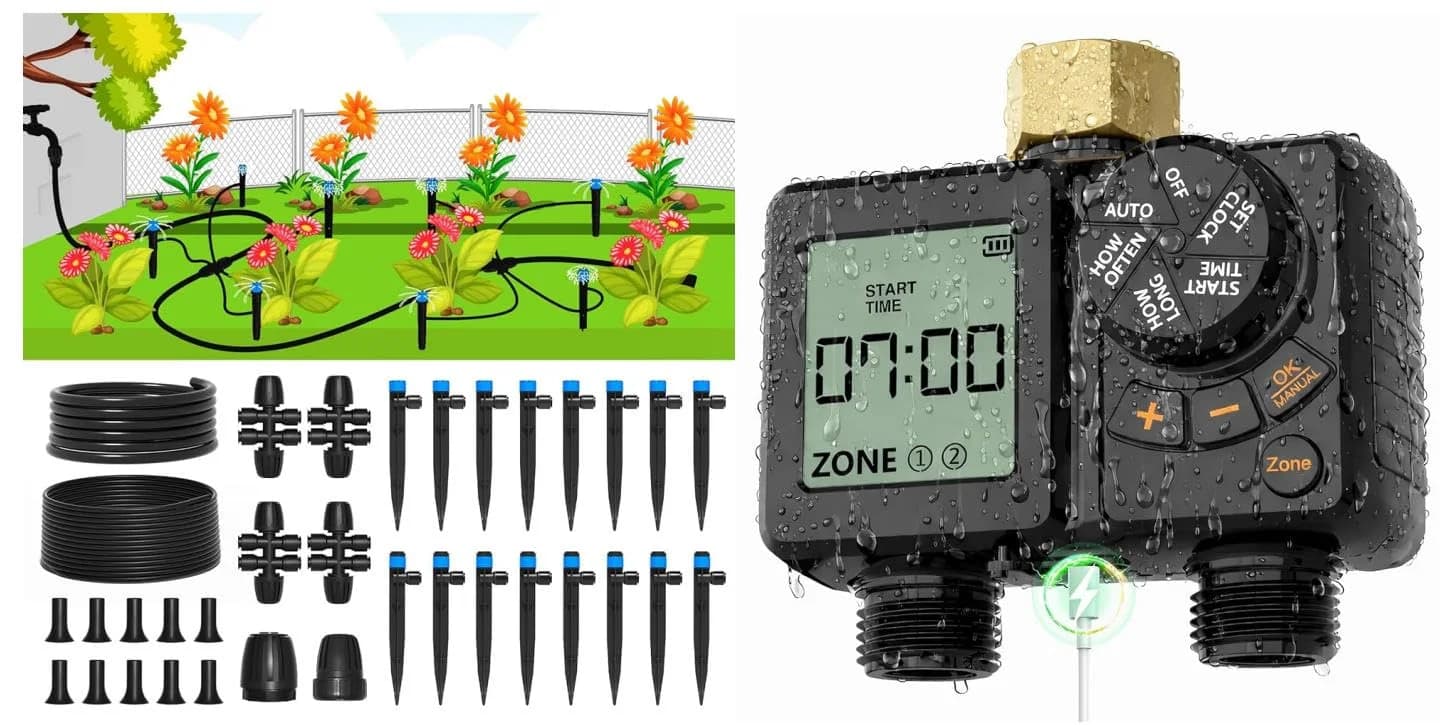
| Point emitters | Flow can be tailored by plant | More outlets to inspect | Best for pots, shrubs, and separated plants |
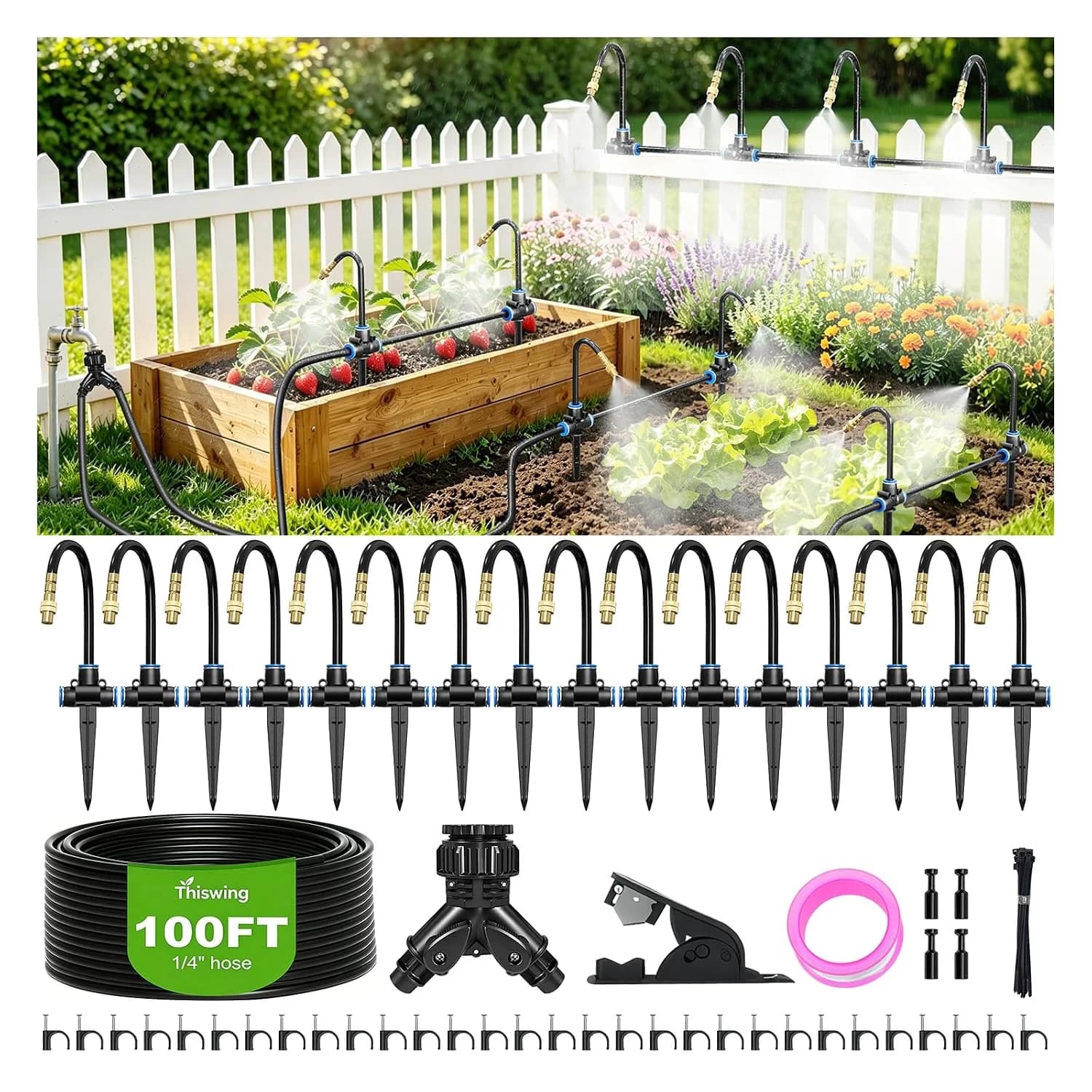
According to U.S. EPA WaterSense (the federal water-efficiency program), microirrigation uses 20–50% less water than conventional sprinklers. Explore the IrriNex drip irrigation range when beds and root-zone watering dominate the map.
Conclusion: specify each garden zone separately
The right garden irrigation system is often a controlled combination rather than one universal device. Measured source capacity and observed soil wetting should govern the final selection.
- Run a 20-minute field test and dig a small inspection hole before fixing runtime.
- Ask IrriNex support to review mixed zones or uncertain source capacity before ordering.