Technical2026-11-14
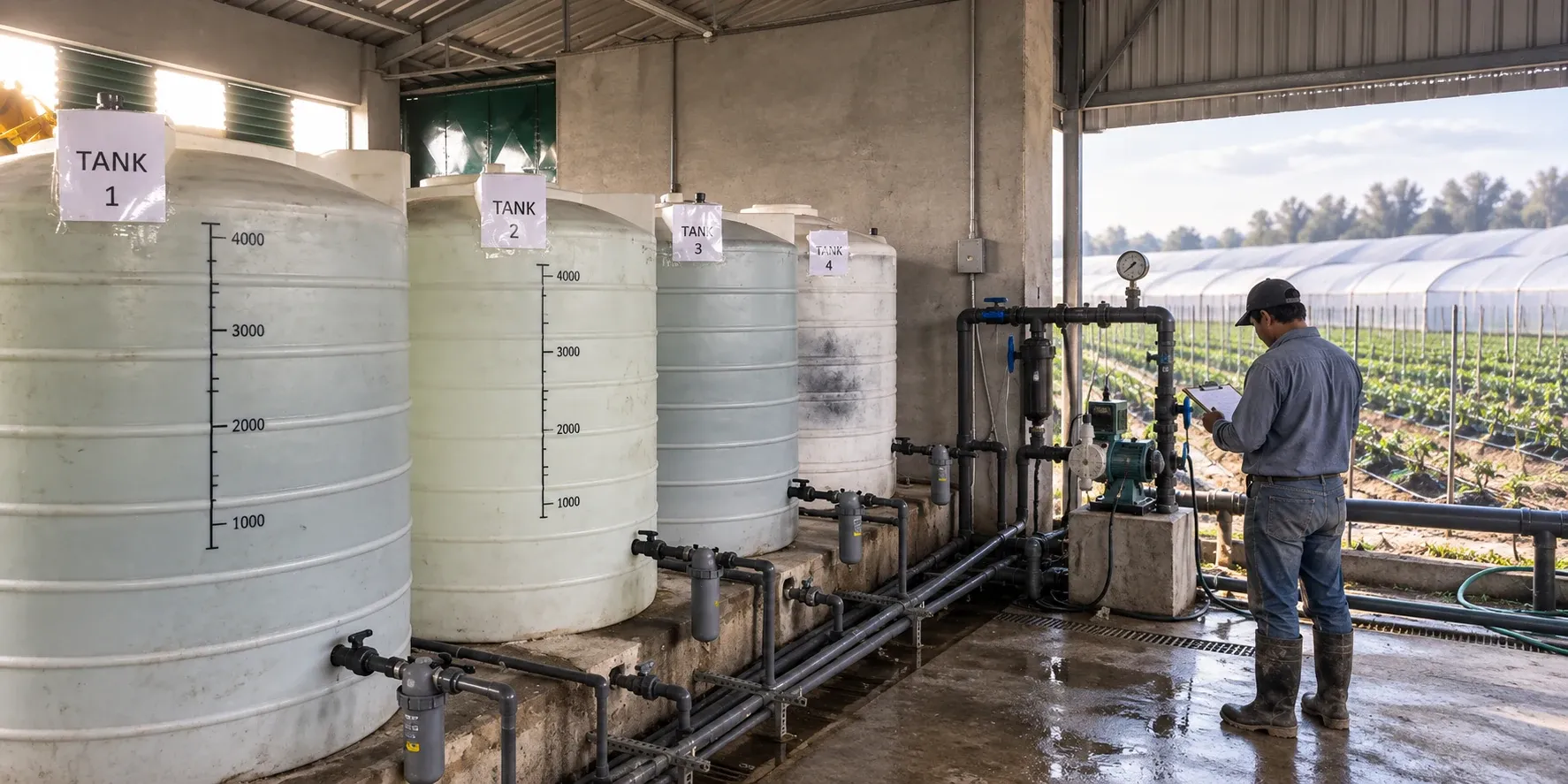
A fertigation tank should hold the stock solution your fertigation system will consume before the next practical refill, plus a documented operating reserve and the liquid the suction system cannot safely withdraw. Divide that total by the permitted fill fraction to obtain the minimum nominal capacity. Then check that the selected tank can be mixed, drained, accessed and monitored, and that the injector can deliver the required stock within the available irrigation window.
This guide sizes a nonpressurized stock tank feeding a dosing device. A pressure or bypass fertilizer tank works differently: irrigation water enters the vessel, dilutes its contents and carries fertilizer out. Its pressure rating and changing concentration require a different design assessment. The storage calculation below must not be used to specify a pressure vessel. For that separate operating mechanism, see why concentration changes in a bypass fertigation tank.
Catalog capacity is a geometric or nominal figure. It is not automatically the amount available to the crop. Establish the following boundaries before comparing quotations; otherwise two apparently similar tanks may offer different working storage.
| Term | Meaning in the sizing record |
|---|---|
| Nominal capacity, N | Stated tank volume. Confirm the manufacturer's dimensions, allowable service and volume calibration. |
| Maximum fill fraction, f | Permitted liquid level expressed as a fraction of N; leave the specified space for mixing, volume change and overflow prevention. |
| Heel, H | Liquid left below the validated low-level cutoff or suction limit. It occupies storage but is unavailable for normal dosing. |
| Usable draw | Maximum permitted fill minus the heel: f × N − H. Some of this must remain available as an operating reserve. |
| Interval demand, D | Stock withdrawn between two feasible replenishments, including any separately identified withdrawal for line charging or sampling. |
| Reserve, R | Additional usable stock justified by a specific delay or uncertainty. It is not an extra crop nutrient allowance. |
Measure levels in litres using a verified level-to-volume relationship. A curved base can make a centimetre near the bottom represent less liquid than a centimetre higher up. Record whether the starting and ending measurements include the suction line. Stock charged into a line, captured during maintenance or left as a heel is not automatically fertilizer delivered to plants.
For an event with a stable, measured stock draw rate, calculate Vevent [L] = qstock [L/h] × tinjection [h]. Add event volumes to obtain D [L] = Σ Vevent over the actual interval between refills. With variable rates, use metered totals or sum shorter time steps; a single nameplate pump rate is insufficient evidence.
The storage condition is N ≥ (D + R + H) / f, where every volume is in litres and f is a decimal between zero and one. This assumes the prepared stock remains suitable throughout the interval and the whole permitted draw can be mixed and withdrawn consistently. Add any separate, uncounted withdrawal to D before applying the equation. Do not count the same line-fill volume twice.
If only irrigation flow and an injection percentage are initially available, write down the percentage basis. In the example below, stock percentage means stock volume divided by carrier-water volume before injection: qstock = Qwater × 1,000 × r. A device that defines its ratio against final mixture volume requires the appropriate conversion. Confirm the convention and calibrate actual draw under operating pressure; the nutrient-target-to-injection calculation explains the preceding dose calculation.
The following figures are an original, hypothetical planning exercise, not a crop recipe or a recommendation for injection percentage. The listed hours are the active injection periods; stabilization and clear-water displacement occur outside them. Assume the three zones draw the same compatible stock, sequentially, once per day.
| Zone | Carrier-water flow | Injection time | Stock percentage | Stock draw |
|---|---|---|---|---|
| A | 30 m³/h | 2 h | 0.4% | 120 L/h × 2 = 240 L |
| B | 18 m³/h | 1.5 h | 0.5% | 90 L/h × 1.5 = 135 L |
| C | 24 m³/h | 2 h | 0.35% | 84 L/h × 2 = 168 L |
Total daily withdrawal is 240 + 135 + 168 = 543 L/day. For this exercise, assume the selected 1.5-day refill window contains 1.5 equivalent days of demand: D = 543 × 1.5 = 814.5 L. That multiplier is valid only for this assumed schedule. If discrete zone events cluster before the next staffed refill, add the events in the busiest actual window instead of multiplying a daily average.
Choose a project-specific reserve of 10% of interval demand, so R = 81.45 L. With a measured 40 L heel and an approved 90% fill limit, N ≥ (814.5 + 81.45 + 40) / 0.90 = 1,039.94 L, approximately 1,040 L nominal minimum. Neither 10% nor 90% is a universal design requirement.
A nominal 1,000 L tank provides only 0.90 × 1,000 − 40 = 860 L of usable draw, less than the 895.95 L demand-plus-reserve requirement. It fails this stated case. A 1,200 L candidate provides 1,040 L of usable draw, leaving 144.05 L above that requirement. Here “1,040 L nominal minimum” and “1,040 L usable draw” happen to share a number but describe different quantities. Verify the candidate's actual geometry and mixing limits before selecting it.
If the hypothetical prepared stock contains 100 g of fertilizer product per litre of final solution, the 543 L daily draw contains 54.3 kg of product. That is not 54.3 kg of a particular nutrient. The nutrient mass depends on the product analysis. This concentration is illustrative only: confirm product solubility at the lowest expected solution temperature, source-water chemistry and permitted mixing practice. For liquid concentrates, distinguish product litres, density and product mass. Prepare to the verified final solution volume; adding solids to a stated water volume can change the final volume.
The delivery check is required stock rate = event stock volume / permitted injection time. If Zone A still requires 240 L but only 1.25 h remains for injection, the required rate becomes 192 L/h. The stock volume is unchanged, but its delivery rate and instantaneous dilution change. An agronomist must confirm that the revised application pattern remains suitable, and the dosing device must be verified at that flow and pressure.
A larger tank cannot compensate for an injector that delivers too slowly. Reserve measured time to pressurize and stabilize the zone, deliver stock, then displace nutrient solution to the intended outlets with clear water. Do not shorten the final displacement merely to empty the stock tank. Agriculture Victoria's fertigation guidance connects tank selection with solubility and injection duration, and emphasizes accounting for nutrient travel through the system.
A one-day supply can be a useful starting point, but it is not a universal capacity rule. Map staffing, deliveries and cleaning against the irrigation schedule. The critical period is the longest credible interval when a compatible batch cannot be replenished, including the time needed to mix and verify it.
| Strategy | Potential benefit | Evidence needed before selection |
|---|---|---|
| Each shift | Smaller working batches and frequent observation. | Staff handover, measured preparation time and coverage for a missed refill. |
| Daily | Simple batch identity and predictable routine. | Demand on the busiest day and a refill slot outside sensitive injection periods. |
| Every 1.5 days | Can bridge an overnight staffing gap. | Exact event sequence; the refill hour moves relative to daily zone starts. |
| Several days | Fewer mixing operations and delivery visits. | Solution stability, seasonal demand changes, containment and old-stock management. |
| Automatic make-up | May reduce manual filling workload. | Validated concentration control, batch traceability, independent high-level protection, low-level shutdown and a response to sensor or fill-valve failure. |
Prefer identifiable batches where practical. Repeatedly topping up an unknown heel makes stock age and concentration harder to reconstruct. If mixing during dosing is permitted by the design, validate homogeneity through the whole transition; a level rise alone does not prove that the new stock has the intended strength. Define who responds to a late delivery, failed mixer or unavailable operator before relying on the reserve.
Do not combine incompatible concentrates to make them fit one tank. Calcium-containing stock commonly needs separation from concentrated phosphate- or sulfate-containing mixtures. Any A/B, micronutrient or acid grouping must follow the actual products, water analysis and agronomist-approved recipe. A large shared vessel does not resolve chemical incompatibility.
Create one demand ledger per stock group, using that channel's own injection rate, event duration, heel and refill interval. If Tank B is used only on selected zones, its consumption need not match Tank A. Keep acid in its specifically designed storage and dosing arrangement where required; fertilizer-tank capacity is not evidence of acid compatibility. Review stock-solution solubility and mixing compatibility before fixing the batch concentration.
| Check | Evidence to record |
|---|---|
| Materials and exposure | Compatibility of tank, seals, fittings and mixer with the stock; suitability for UV, ambient heat and solution temperature. |
| Lid, vent and maximum fill | Required ventilation, protection from contamination and a marked permitted fill level without pressurizing an atmospheric tank. |
| Mixing range | Homogeneity at both maximum and minimum working volumes, without excessive splashing or an exposed agitator. |
| Suction and drainability | Secure suction intake above deposits, verified low-level cutoff, measured heel and a controlled method to empty the base. |
| Level measurement | Calibrated scale or instrument, usable reading resolution and an independently tested low-level shutdown. |
| Overflow and containment | Compatible secondary containment and controlled overflow arrangements sized to the site's applicable requirements. |
| Foundation and access | Support for the full liquid mass, anchorage where needed, service clearance and access for filling, cleaning and replacement. |
| Fill and isolation points | Identified connections, backflow protection and safe isolation of electrical, mechanical and hydraulic energy. |
A tank that fits the floor plan may still leave no space to remove a strainer or lift a mixer. Check the delivery route and access to drains before purchase. Commission the level scale and cutoff with a safe, approved procedure. Use clean-water trials where appropriate, then confirm chemical-service performance through the qualified commissioning process.
| Record group | Required entries |
|---|---|
| Identity | Tank, recipe revision, batch ID, operator and preparation date/time. |
| Preparation | Ingredient masses or liquid volumes with density basis, water used, final solution volume and intended stock concentration. |
| Starting inventory | Measured level, retained heel identity and any approved carryover disposition. |
| Consumption | Zones, injection start/stop times, calibrated or metered draw and separate line charging or sample removal. |
| Closing inventory | Ending level, refill amount, stock remaining before the next event and any recovered or disposed material. |
| Exceptions | Alarm, precipitation, leak, missed refill or unexplained balance; corrective action and authorization. |
Reconcile starting stock plus prepared additions minus measured withdrawals against ending stock. Investigate differences larger than the combined measurement uncertainty; do not invent a universal tolerance. Electrical conductivity and pH may flag a mixing problem, but they do not replace an ingredient and volume record. Use EC and pH verification to interpret measurements in their actual sampling context.
| Observed symptom | First investigation | Decision before resizing |
|---|---|---|
| Tank empties early | Actual zone hours, draw calibration, leakage and recipe changes. | Correct the demand ledger and locate any unintended withdrawal. |
| Tank remains unexpectedly full | Closed valve, blocked strainer, failed pump or incorrect schedule. | Confirm delivery; remaining stock can indicate underdosing. |
| Concentration varies | Incomplete mixing, repeated top-ups or wrong final volume. | Restore a known batch before changing the tank size. |
| Suction fails near low level | Air entry, vortexing, intake position and cutoff setting. | Re-establish the safe heel and usable draw. |
| Refills are too frequent | Missed preparation slots, reduced fill level or higher demand. | Compare staffing changes with genuinely larger working storage. |
| Stock becomes old | Low seasonal demand and excessive carryover. | Reduce batch size or revise refill frequency after checking stability. |
| Overflow during mixing | Added product volume, foaming, fill control and free space. | Stop filling safely and verify the maximum fill limit. |
| Solids or scale appear | Temperature, water chemistry, compatibility and cleaning history. | Resolve the chemistry; extra volume alone is not a cure. |
| Level readings disagree | Calibration, tank shape and sensor fouling. | Use an independent approved volume check. |
| Demand changes after rezoning | New flow, overlap and injection durations. | Recalculate each refill window and each stock channel. |
| Criterion | One larger tank | Several smaller tanks |
|---|---|---|
| Compatibility | Acceptable only for one verified compatible stock. | Allows separate incompatible groups with suitable plumbing. |
| Recipe flexibility | Changing recipe may require removing a large retained batch. | Can reserve a vessel for another approved recipe. |
| Refill labour | Fewer batches, potentially longer individual mixing jobs. | More connections and records, potentially easier shift-sized batches. |
| Redundancy | One vessel outage can stop its entire stock supply. | Continuity is possible only with designed isolation and compatible spare duty. |
| Minimum batch and cleaning | Low demand may fall below the reliable mixing range. | Smaller batches and staged cleaning may be easier to manage. |
| Space and containment | Concentrated floor load and a larger single release scenario. | More service aisles and separate or appropriately designed shared containment. |
| Cost and maintenance | Fewer level instruments and fittings, but less operational flexibility. | More sensors, valves and inspections to maintain. |
Count redundant capacity only if it can actually serve the same compatible stock without interrupting safe operation. Two tanks cannot simply be added together on paper when each holds a different recipe. Select the arrangement that meets the worst refill window while remaining practical at the smallest expected seasonal batch.
Follow product labels, safety data sheets and local storage requirements. Have qualified personnel confirm materials, support, containment, backflow protection and control interlocks. Use the specified protective equipment and handling procedure. Isolate energy and pressure before servicing; never enter a stock tank. Do not discharge leftover nutrient stock or cleaning liquid onto soil or into waterways. Provide an approved recovery or disposal route before the first batch is prepared.
The final purchase brief should state stock group, interval demand, justified reserve, measured heel, permitted fill fraction, mixing range and injector duty. It should also identify the refill owner and acceptance checks. That connects tank capacity to a repeatable operation rather than to a catalog number alone.
Image note: the agricultural stock-tank scene was adapted from a real photograph with AI editing. It illustrates storage, suction plumbing and injection equipment; it is not a certified installation drawing or evidence of a field trial.
Products relevant to this irrigation guide.
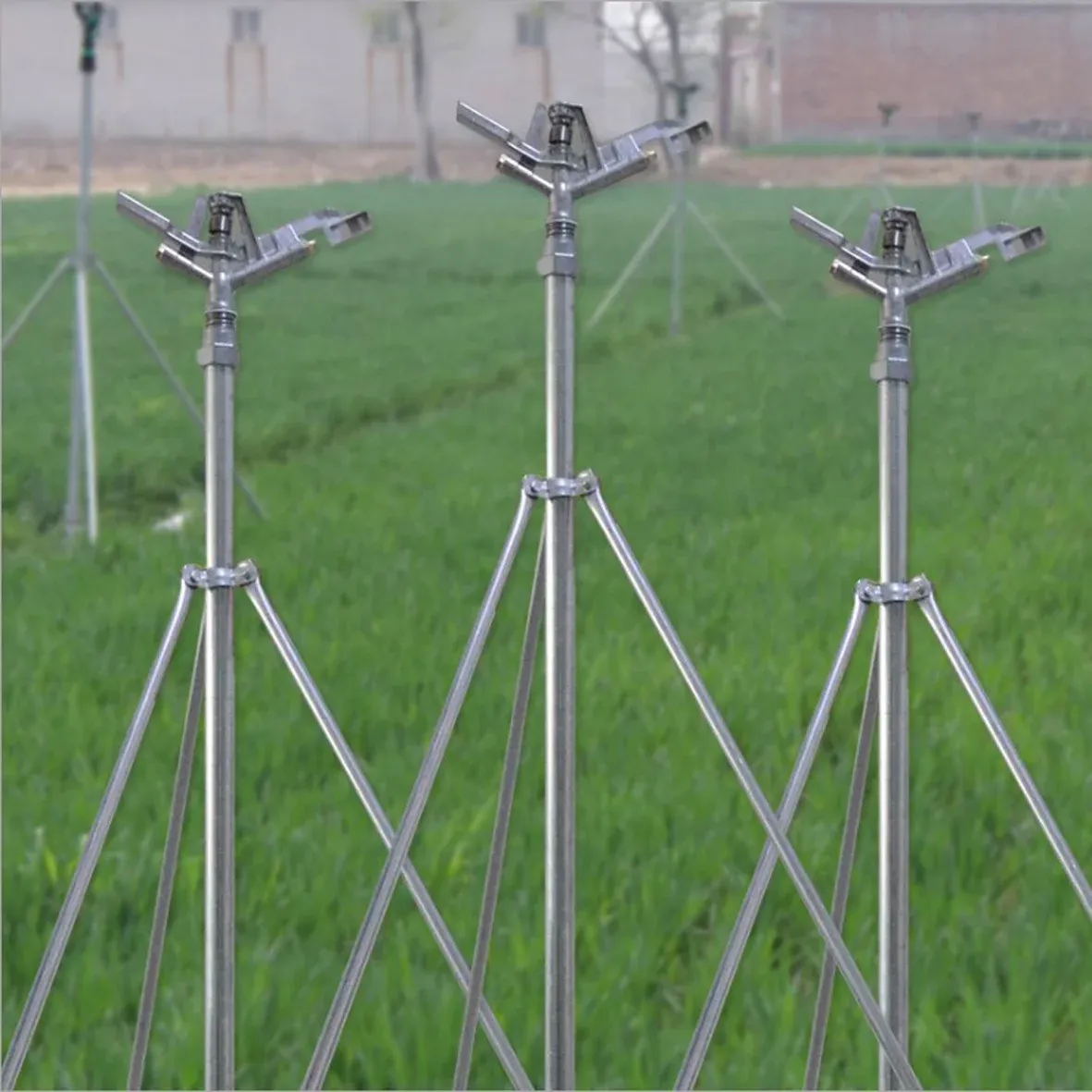
IRRINEX impact sprinkler. Size: 1"BSP male Threaded; Spray Radius: 32-40m; Pressure: 0.2-0.4Mpa. An impact sprinkler distributes water from a selected sprinkler position. Choose the exact connection and nozzle configuration using the recorded pressure and discharge information.

IRRINEX irrigation sprinkler. Flow rate: 39~205L/H; Nozzle: 0.85,1.0,1.2,1.4,1.6,1.8,2.0mm; Radius: 5.8-11.4m; Stake length: 40/60cm. This sprinkler is a water-distribution component for a selected irrigation layout. Use the listing's named sprinkler form and exact operating data when comparing configurations.

IRRINEX irrigation valve. Working pressure: 0-6 Pressure. An irrigation valve forms part of the system's flow-control arrangement. The named valve form and its actual connections should be checked before choosing a configuration.
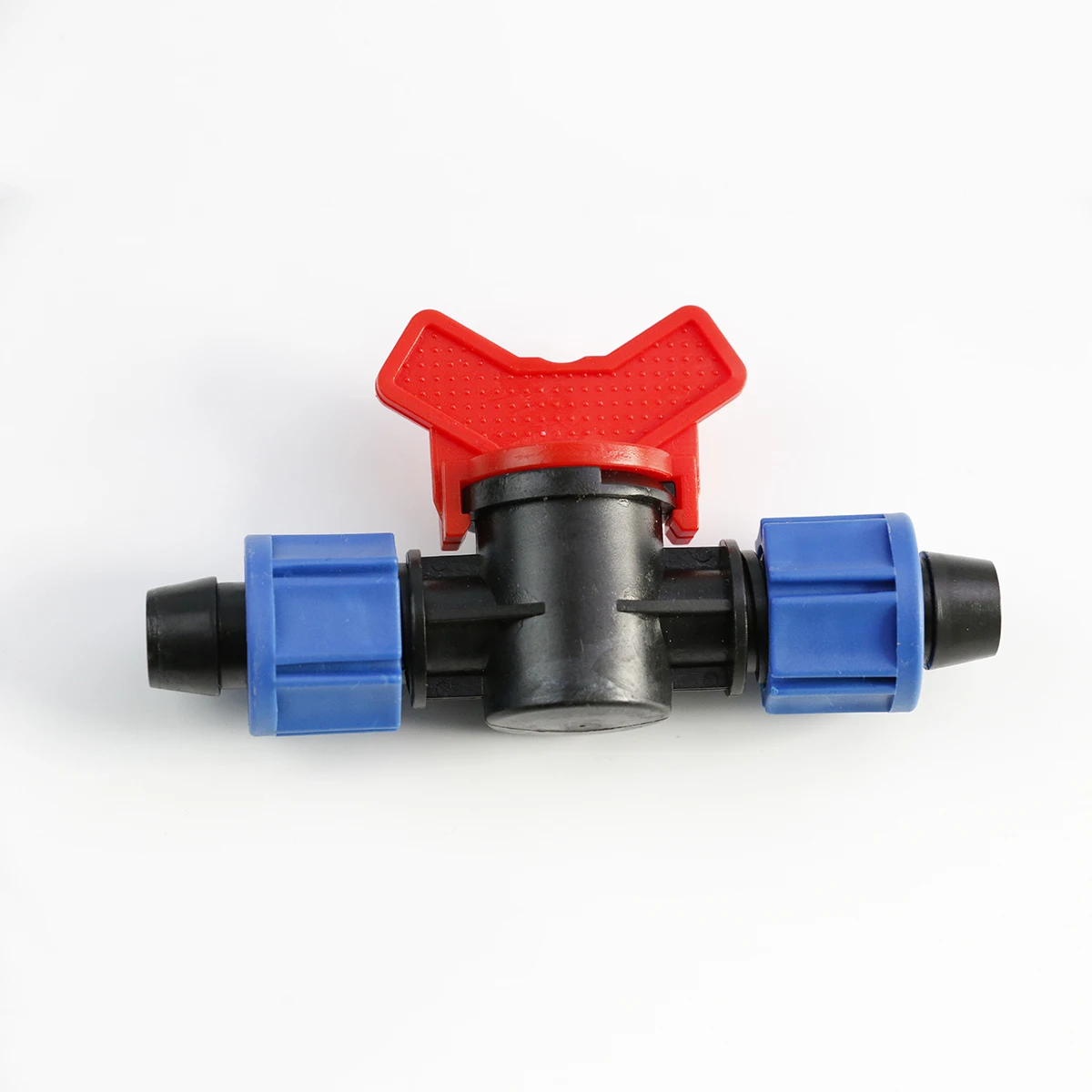
IRRINEX irrigation valve. Size: 16mm. An irrigation valve forms part of the system's flow-control arrangement. The named valve form and its actual connections should be checked before choosing a configuration.