Choosing the Best Irrigation System for a Vegetable Garden
The best irrigation system for a vegetable garden is the delivery method—or controlled combination of methods—that keeps the active root zone adequately moist without creating avoidable runoff, evaporation, weeds, or prolonged leaf wetness. The choice matters because vegetables change water demand from germination through harvest, while crop spacing, canopy disease risk, soil texture, climate, mulch, bed level, and source capacity all change performance. Overhead irrigation can establish dense seedbeds and leafy crops; dripline targets regular rows and fruiting plants; a soaker hose offers simple root-zone watering on short, level beds. This guide evaluates those options through five progressive decisions rather than declaring one universal winner. It defines the key efficiency measure, provides a three-way comparison, and shows where a hybrid layout can protect both crop health and labor. IrriNex (an irrigation equipment and project-support supplier) can then help convert the selected approach into compatible filtration, tubing, outlets, and control.
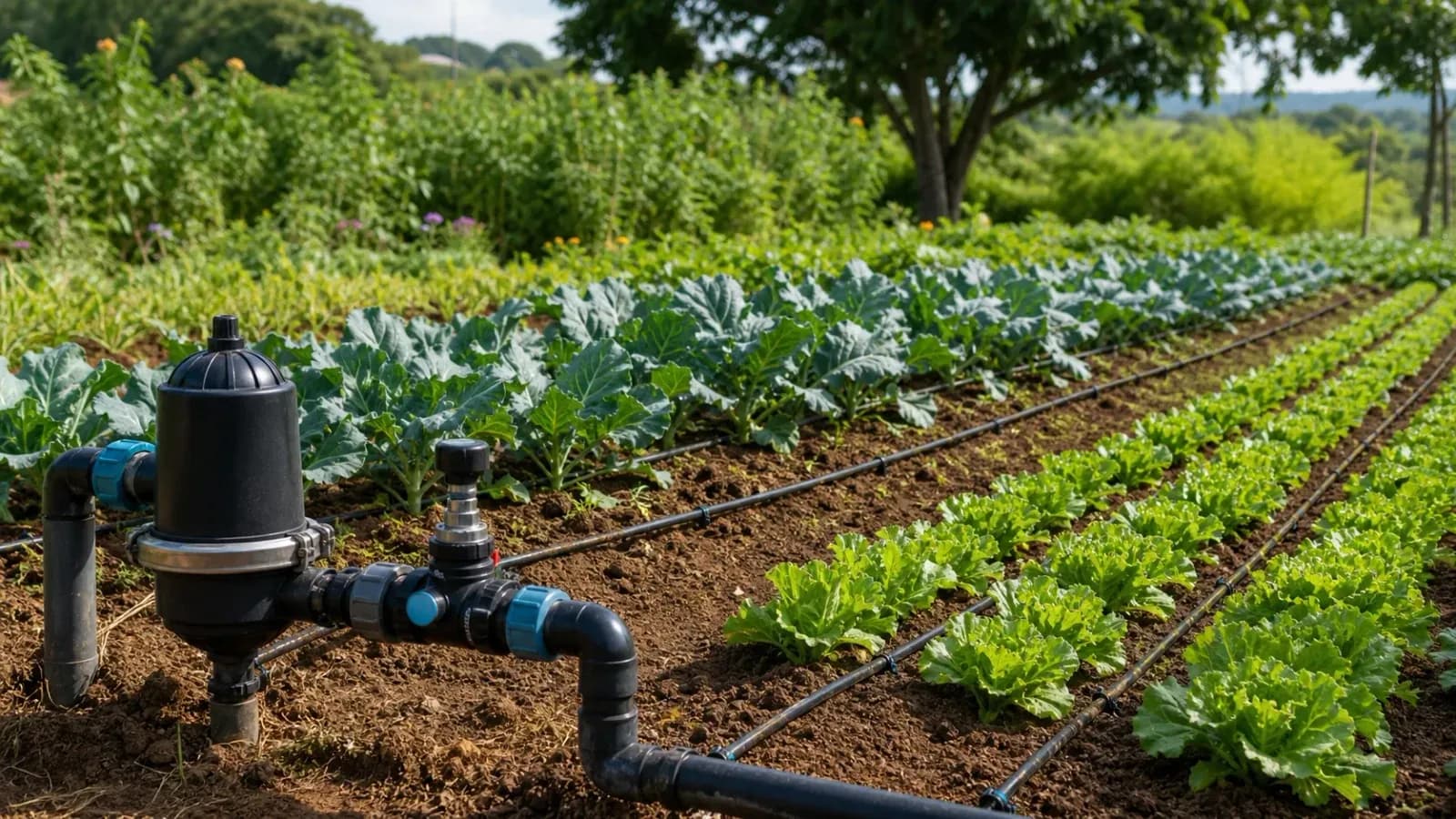
What does “best” mean for vegetable-garden irrigation?
The active root zone is the soil depth and width containing most water-absorbing roots. According to the United Nations Food and Agriculture Organization (FAO, the UN food and agriculture agency), indicative field application efficiency is 90% for drip and 75% for sprinkler irrigation; efficiency is valuable only when water still reaches the crop’s effective roots.
Five steps to choose vegetable-garden irrigation
- 1. Classify crops by stage and canopy. Separate germinating beds, leafy crops, fruiting crops, roots, and transplants on the plan. Note crops prone to foliar disease because frequent leaf wetness may increase management risk.
- 2. Test soil infiltration and bed level. Observe how quickly a measured dose enters the soil and how far moisture spreads sideways. Correct low spots or divide long beds before relying on a soaker hose.
- 3. Quantify source flow and water quality. Measure dependable flow and pressure, then identify sediment, algae, or mineral load that can obstruct small passages. Size zones within capacity and select a serviceable filter.
- 4. Assign the delivery method. Use gentle overhead coverage where the whole seed surface must stay uniformly moist and root-zone delivery where spaced plants dominate. Combine methods on separate valves when one schedule cannot serve both stages.
- 5. Validate and adjust by observation. Run each zone, inspect moisture below the surface, and record the time needed to wet the active roots. Shorten, lengthen, or split cycles as weather, canopy, and rooting depth change.

Overhead, drip, and soaker irrigation compared
| Option | Advantages | Limits | Best for |
|---|---|---|---|
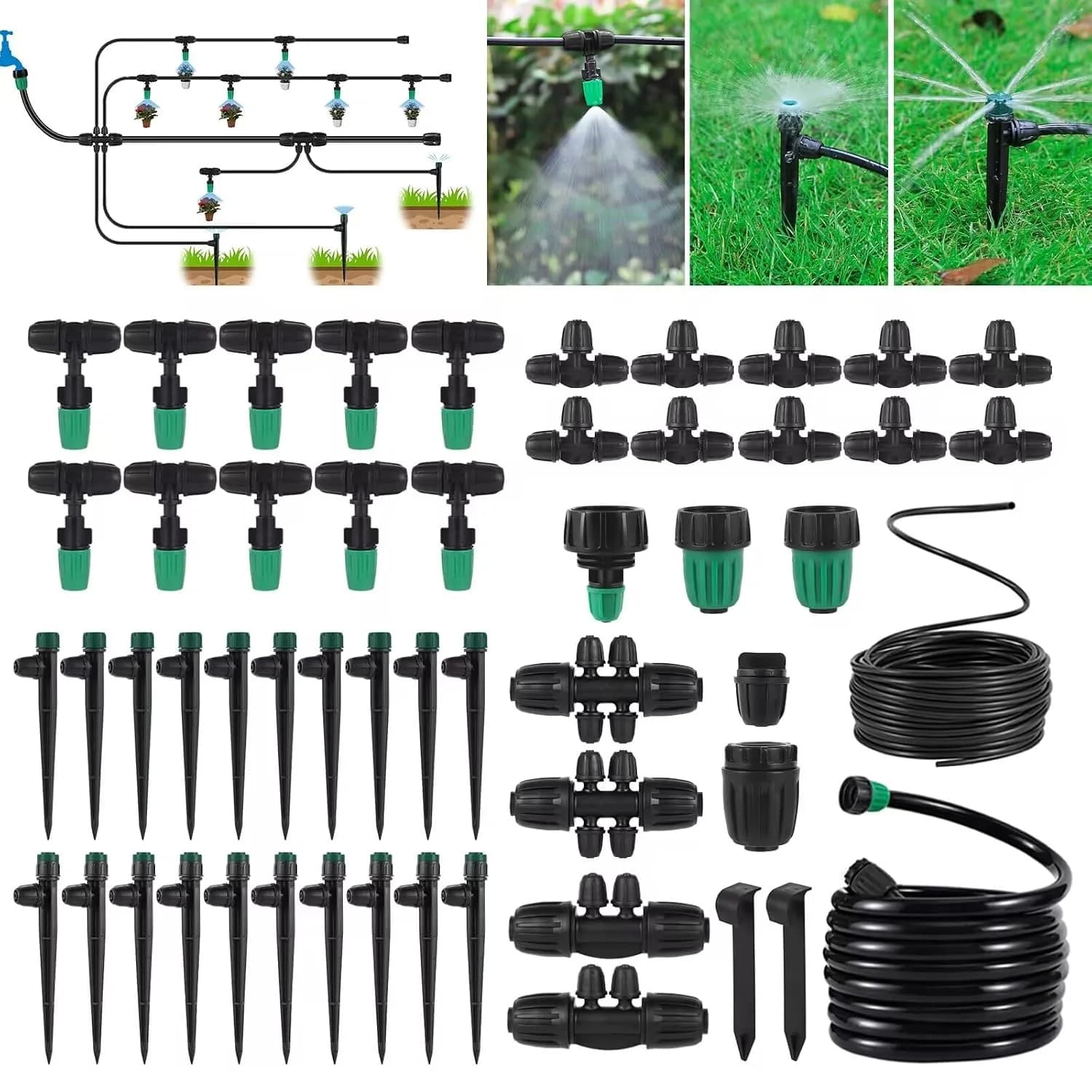
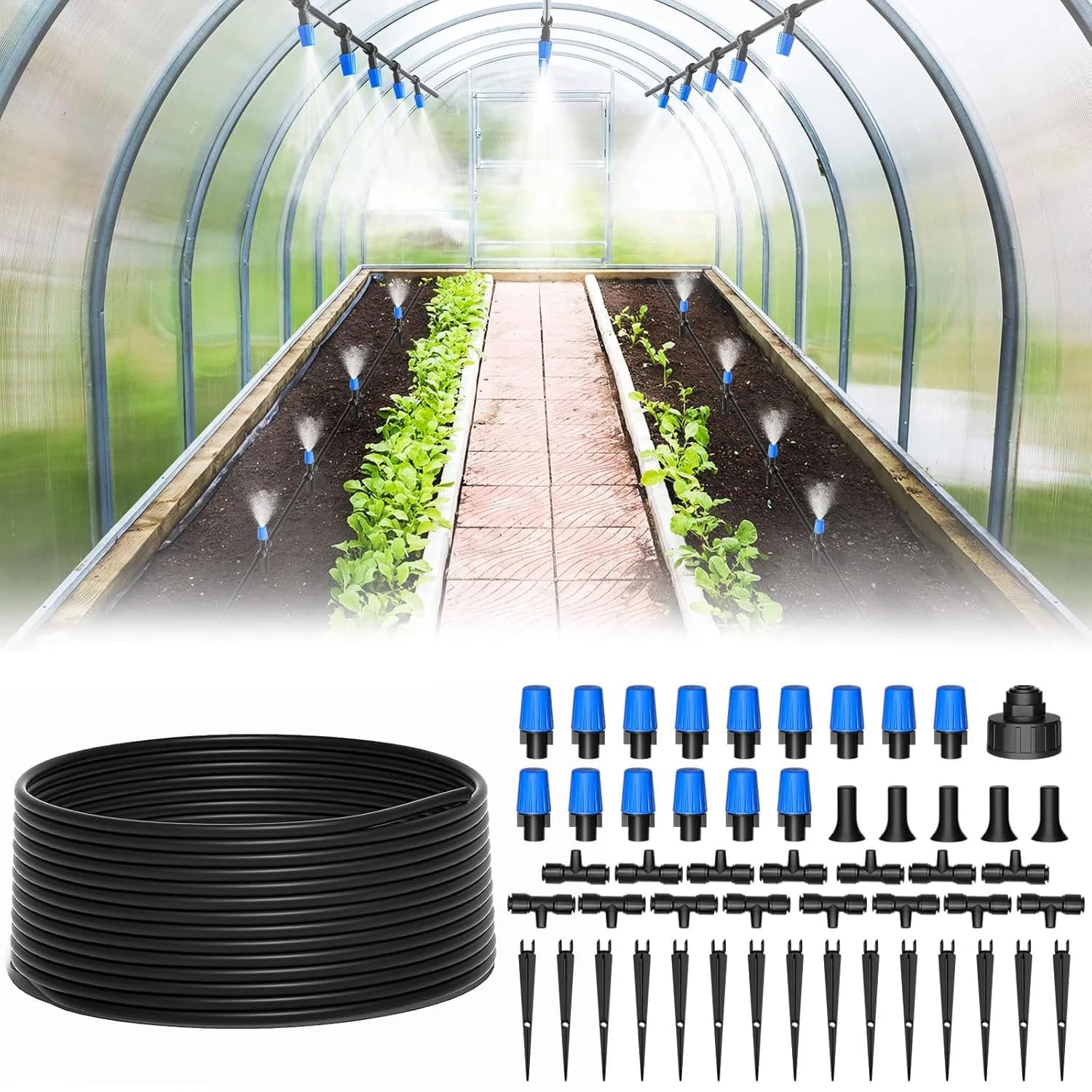
| Overhead sprinkler | Uniform surface coverage and quick bed setup | Wind drift, leaf wetness, and watered aisles | Best for seedbeds, leafy crops, and dry low-wind sites |
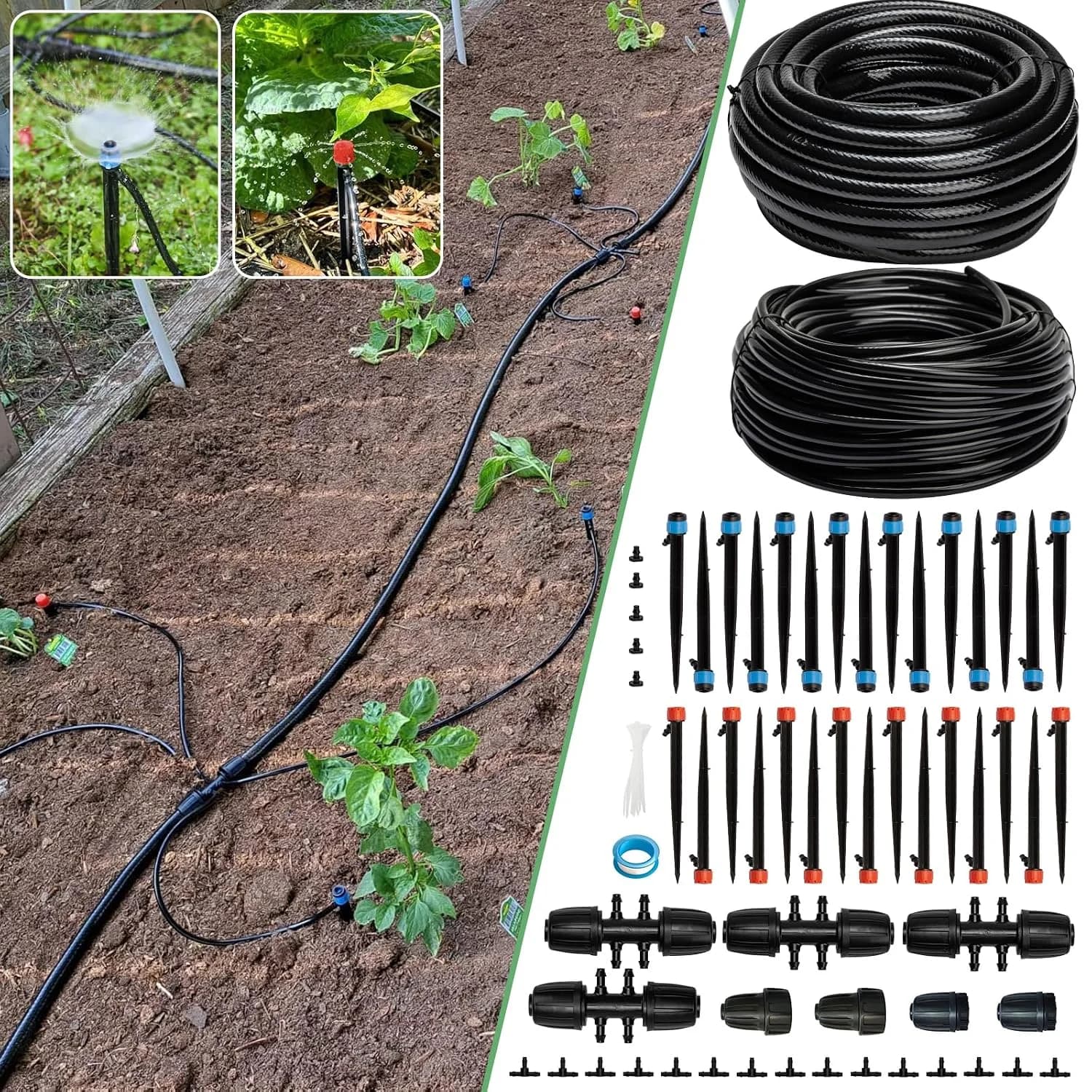
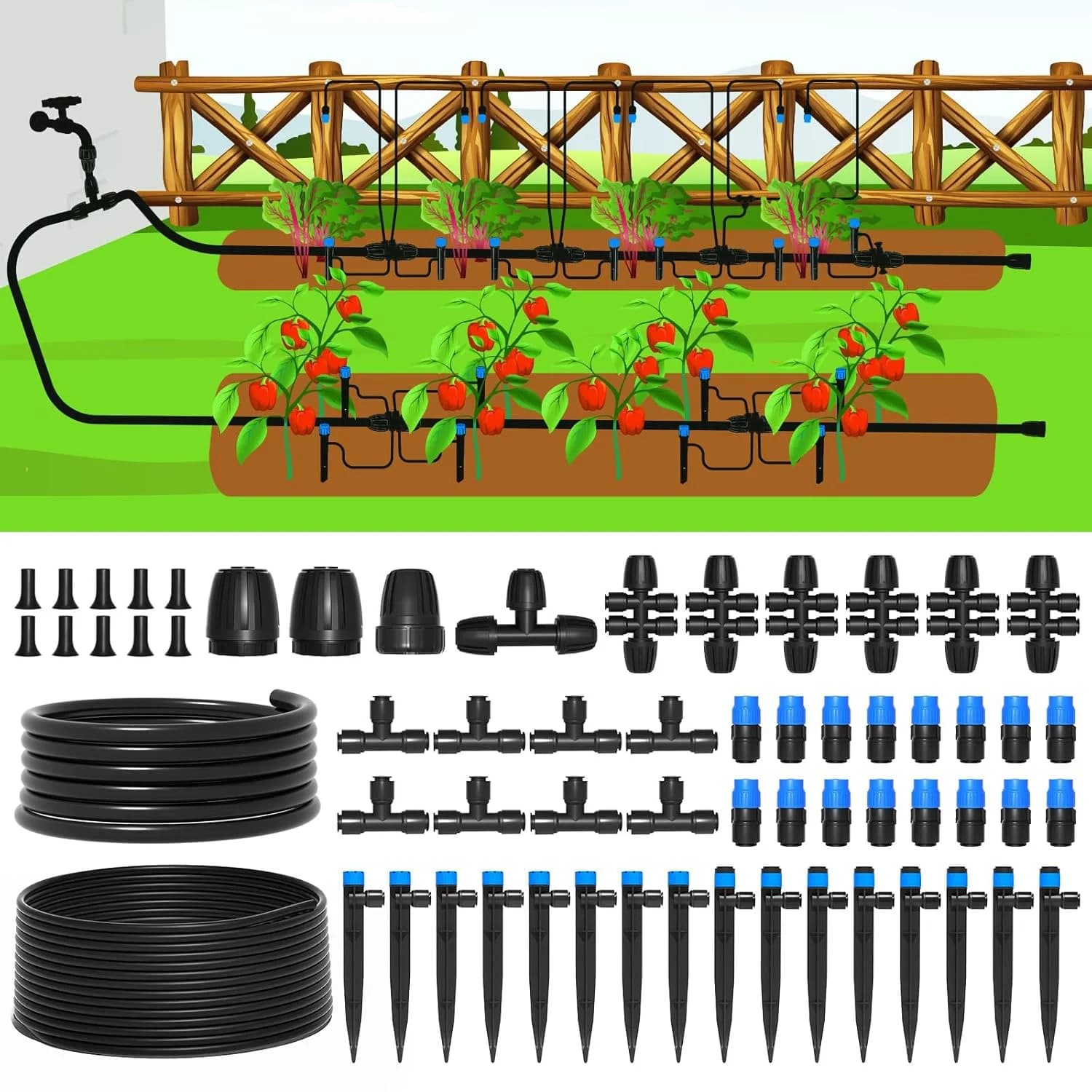
| Inline dripline | Regular root-zone dosing with little aisle wetting | Needs filtration, spacing design, and flushing | Best for rows, tomatoes, peppers, and mulched beds |
| Soaker hose | Simple installation and low initial complexity | Uneven output on slopes or long runs | Best for short, level home beds and beginners |
According to U.S. EPA WaterSense (the federal water-efficiency program), microirrigation uses 20–50% less water than conventional sprinklers. IrriNex drip pipe options are relevant where regular rows and root-zone delivery lead the design.
Conclusion: use crop evidence, not habit
The best irrigation system for a vegetable garden is the method that matches the current crop stage, soil, and health risk while remaining easy to inspect. Separate controls make a hybrid design practical.
- Check moisture at root depth twice during the first week and document the required runtime.
- Keep overhead and root-zone devices on separate schedules; request an IrriNex design review for larger mixed plantings.