Best Drip Lines for Organic Gardens: Bed, Orchard, and Soil Guide
Abstract: An organic-garden drip line is polyethylene tubing with factory-installed emitters that applies small, repeatable flows beside roots while leaving most foliage and pathways dry. It matters because organic production depends on healthy soil biology, careful input records, and stable moisture rather than simply replacing synthetic products. Small flexible dripline suits containers and tightly planted beds; full-size inline dripline offers durable, uniform service in orchards or permanent beds; thin-wall drip tape is economical for straight seasonal vegetable rows. The best option is not automatically the one with the closest emitter spacing. Soil texture, root width, bed geometry, water quality, pressure variation, expected reuse, and the farm’s organic-system plan all affect the choice. This guide separates irrigation performance from certification claims and gives organic gardeners a measured method for selecting, documenting, filtering, installing, and maintaining an IrriNex drip-line system.
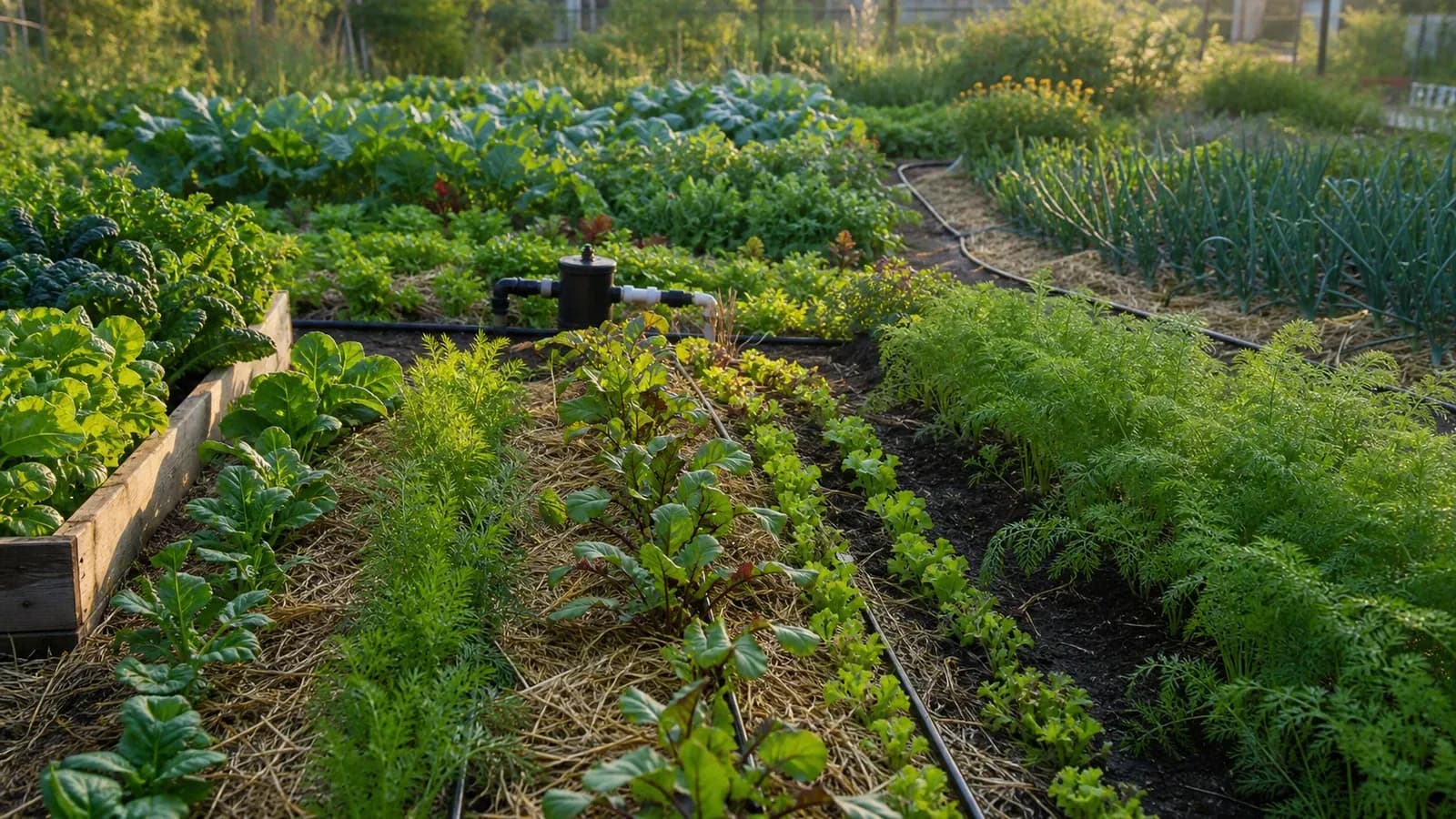
What makes a drip line suitable for organic gardening?
A drip line is a lateral tube containing integral emitters, while drip tape is a flatter, thinner seasonal form of integral lateral. Neither material makes a crop organic by itself: the certified operation and its practices must meet the applicable standard. IrriNex — a professional irrigation-component supplier — recommends requesting material and input records, then selecting from drip-irrigation systems according to soil, crop, and hydraulic performance.
What do authoritative sources say about efficient organic watering?
The US Department of Agriculture Agricultural Marketing Service (USDA AMS) states that its National Organic Program governs US organic production, handling, labeling, and enforcement; growers should therefore confirm irrigation-related inputs with their certifier rather than accept an unsupported “organic” product claim. For water performance, US Environmental Protection Agency (EPA) WaterSense reports that microirrigation can use 20–50 percent less water than conventional sprinkler systems because it delivers low flows to the root zone.
Three drip-line options for organic growing
| Option | Advantages | Limits | Best suited for |
|---|---|---|---|
| Small-diameter flexible dripline | Routes easily around containers and dense mixed planting | Lower hydraulic capacity and shorter practical runs | Best suited for herbs, planters, and compact raised beds |
| Full-size inline dripline | Durable wall and uniform emitters for repeated use | Higher initial material cost and less convenient retrieval | Best suited for orchards, perennial borders, and permanent beds |
| Thin-wall drip tape | Low material cost and efficient coverage of straight rows | Needs low pressure and is vulnerable to handling damage | Best suited for seasonal vegetables and market-garden rows |
How to select organic-garden drip line in 5 steps
1. Map roots, beds, crops, and soil texture
Draw each bed and note row spacing, mature root width, slope, mulch, and whether crops move next season. Sandy soil usually needs closer wetting points than fine soil, so confirm the actual wetting pattern instead of copying plant spacing.
2. Check certification and material documentation
Ask the certifier what records the organic-system plan requires for irrigation water, cleaners, fertilizers, and equipment contact materials. Keep supplier specifications and avoid claiming that ordinary tubing is certified organic unless an applicable certificate explicitly says so.
3. Choose line type, emitter spacing, and discharge together
Use flexible line for curves, durable inline line for permanent plantings, and tape for straight seasonal rows. Match emitter discharge to soil intake and calculate total zone demand before fixing spacing.
4. Install clean filtration and stable pressure
Select a serviceable irrigation filter for measured source contamination and regulate pressure to the line specification. Flush the header and laterals before closing ends so installation debris does not become the first blockage.
5. Verify moisture, mulch, and maintain records
Run a timed test, excavate small cross-sections between emitters, and confirm moisture overlaps through the active root zone without ponding. Place compatible mulch above accessible lines, inspect weekly during establishment, and record runtime, filter cleaning, leaks, and crop response.

Conclusion: protect soil with measured irrigation
Choose small flexible dripline for compact curves, full-size inline dripline for permanent zones, and drip tape for straight seasonal rows. First, confirm records and inputs with the organic certifier; second, test the wetting pattern before planting the whole bed. For a documented system review, contact the IrriNex technical team.