 1 / 7
1 / 7SKU: FLT-CYC
Séparateur de sable hydrocyclone centrifuge pour pré-filtration d'eau de puits.
Matériau
PP, SS
Gamme de Tailles
2" / 3" / 4"
Pression
PN10
Normes
ISO
DEMANDE POUR:
Filtre Hydrocyclone
| Paramètre | Valeur |
|---|---|
| Connection Size | 2" / 3" / 4" |
| Max Flow | 15 - 80m³/h |
| Sand Removal | > 98% |
| Max Pressure | 1.0MPa |
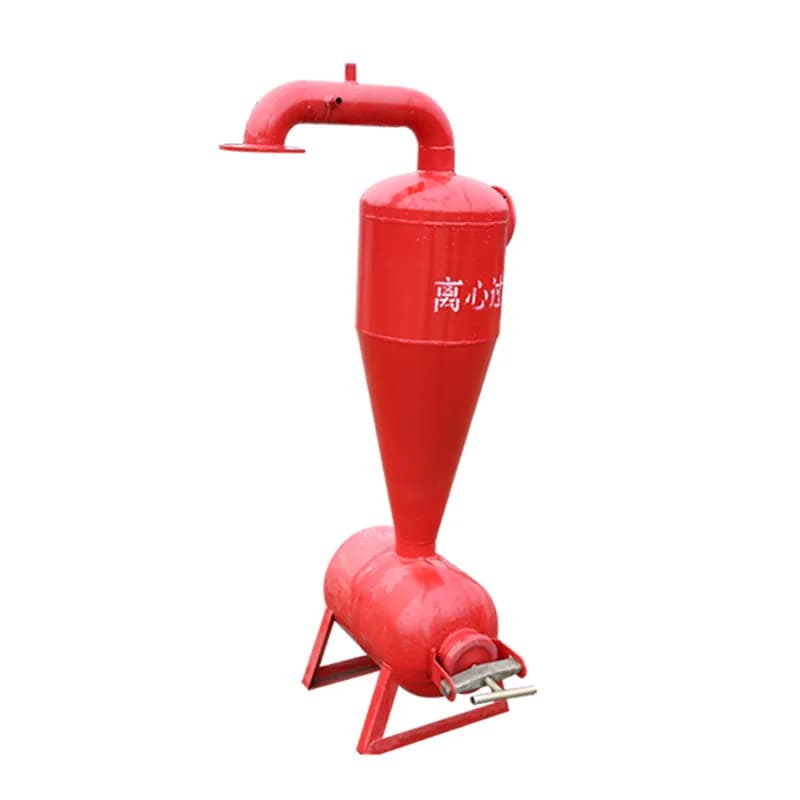
A filtre hydrocyclone separates sand and heavy particles from eau using centrifugal force. Eau enters the filtre body at an angle and immediately begins rotatif. The rotation throws heavier particles — sand, grit, silt — toward the outer wall, where they slow down and fall into a collection chamber at the base.
Clean eau exits from the top outlet and continues into the système d'irrigation. The whole process happens continuously and passively — no power, no filtre cartridges, no moving parts to wear out.
One limitation worth knowing: filtre hydrocyclones are effective against particles denser than eau (sand, mineral grit) but don't remove organic matter, algae, or fine dissolved particles. For eau sources with significant organic load, a screen or filtre à disques downstream is usually needed.
The filtre body, collection chamber, and inlet geometry are all sized to work together. These images show the key details worth checking when specifying or installing the unit.


Cleaning takes a few minutes and needs no tools for routine sediment removal. The collection chamber holds a meaningful amount of material before it backs up — how often you need to clean depends on the sediment load in your source eau.
The filtre's inlet and outlet diameter should be at least as grand as your pump's inlet diameter — and in most cases should match the diameter of the connecting tube exactly. Undersizing the filtre connection creates a débit restriction that loads the pump and reduces système pression downstream.
Centrifugal separation efficiency depends on débit velocity through the filtre body. At very low débit rates, centrifugal force is reduced and separation drops off. Each filtre size has an optimal débit range — operating significantly below the rated minimum débit is where performance suffers most. If you're unsure whether your débit rate is within range for a given filtre size, send us your pump curve and we'll check it.
