IrriNex Logo
IrriNexIrrigation Solutions
Products
Solutions
DownloadsBlogAboutContact
Get Quote →
IrriNex Logo
IrriNexIrrigation Solutions

Specializing in drip irrigation, sprinkler systems, and smart water management. Reliable agricultural irrigation solutions from China for global farms.

A brand of ZLONG LIMITED | Hong Kong

+86 17300766401 info@irrinex.com WhatsApp

PRODUCTS

  • Drip Irrigation
  • Micro Irrigation
  • Irrigation Valves
  • Irrigation Filters
  • Irrigation Accessories

SOLUTIONS

  • Vegetable Drip Irrigation System
  • Orchard Dripper Irrigation System
  • Greenhouse Micro Sprinkler System
  • Greenhouse Drip Irrigation System
  • Water Supply Systems

COMPANY

  • About Us
  • Contact

RESOURCES

  • Blog
  • Downloads
  • Sitemap
MATERIALS:PVC | CPVC | HDPE | PP | PPR | PPH | PVDF
STANDARDS:DIN | ANSI | BS | ISO 9001

© 2026 ZLONG LIMITED. All rights reserved.

Privacy PolicyTerms of ServiceShipping PolicySitemap
HomeProductsMicro Sprinkler
Micro Sprinkler

Micro Sprinkler

4 products available

Inverted Micro Sprinkler
micro sprinkler

Inverted Micro Sprinkler

Inverted mounting micro sprinkler for overhead greenhouse and shade house irrigation.
PPNylon
Request Quote
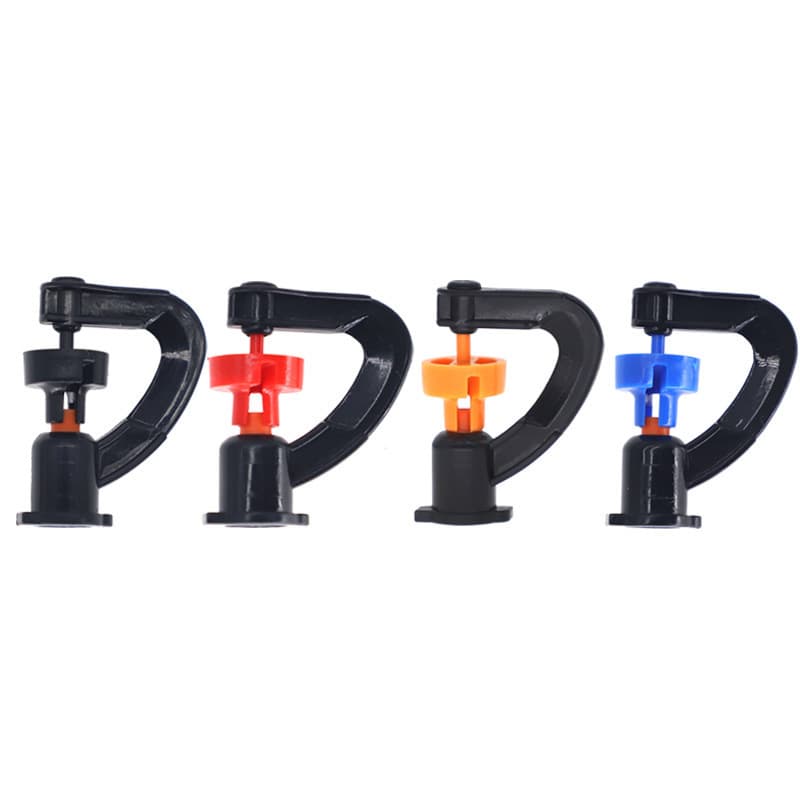
G Type Rotating Micro Sprinkler
micro sprinkler

G Type Rotating Micro Sprinkler

G-type micro sprinkler with high-efficiency rotating deflector for even distribution.
PPNylon
Request Quote
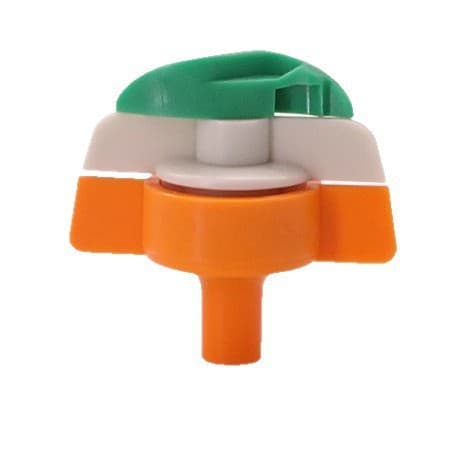
Full Circle Rotating Sprinkler
micro sprinkler

Full Circle Rotating Sprinkler

Full circle rotating micro sprinkler for 360° uniform water distribution.
PPNylon
Request Quote
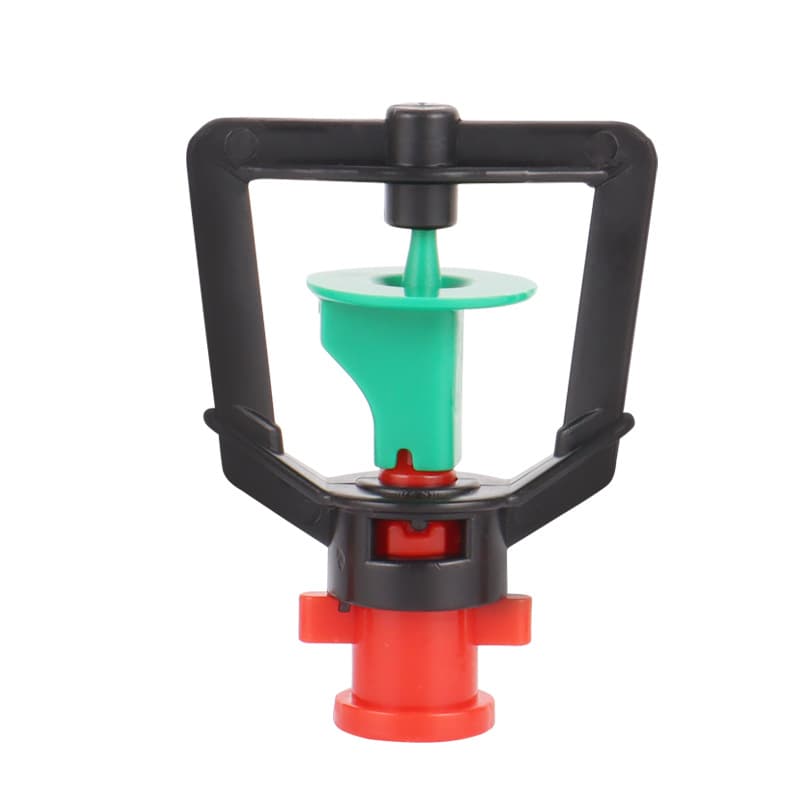
241T Rotating Micro Sprinkler
micro sprinkler

241T Rotating Micro Sprinkler

Classic 241T rotating micro sprinkler with anti-insect design for greenhouse and nursery irrigation.

PPNylon
Request Quote
Micro Sprinklers & Drip Tubing – IrriNex
micro sprinklers

Micro Sprinklers Made for Real Field Conditions

Micro sprinklers sit between drip tape and full overhead systems — more coverage than a dripper, lower pressure and water use than a conventional sprinkler head. The tradeoff works well for orchards, nurseries, and crops that need moisture at the surface rather than strictly at the root.

We manufacture micro sprinklers in-house and have been supplying agricultural projects across 60+ countries. If you have a layout question before ordering, our technical team will look at it — that's part of how we work, not an add-on service.

Request a Quote → Technical Datasheet
IrriNex Micro Sprinkler
micro sprinklers
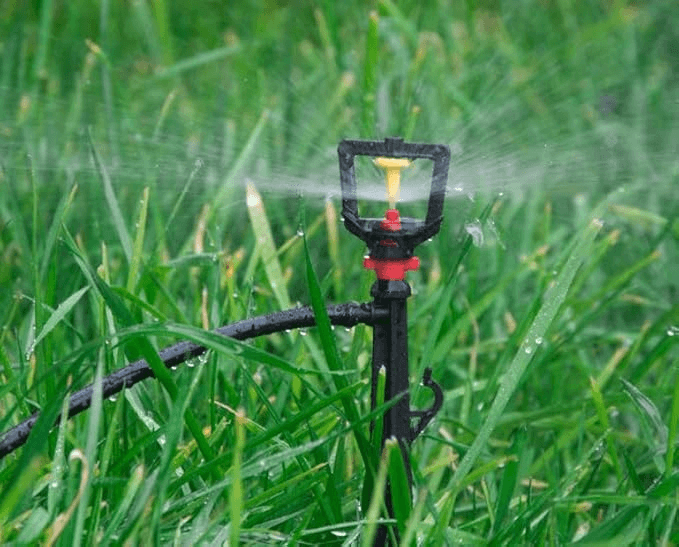
Rotating Micro Sprinkler — MS-ROT Series
Low-pressure rotating head for orchards and nurseries. Adjustable radius with stable output across moderate pressure variation.
PP / PE 30–360° arc 0.15 – 0.30 MPa 40–300 L/h
why micro sprinklers

Where Micro Sprinklers Make Sense

They're not the right tool for every situation — but where the application fits, the performance difference over drip or overhead is real and measurable.

01
Even Coverage Without Overhead Infrastructure
Micro sprinklers distribute water across a radius rather than a single point. This matters for young trees, propagation beds, and any crop where surface coverage helps germination or establishment. No overhead pipe runs required.
02
Lower Water Use Than Conventional Sprinklers
Output rates run from 40 to 300 L/h depending on the head — well below a full sprinkler. Combined with low operating pressure, the pump load is significantly less than conventional overhead systems handling the same coverage area.
03
Soil Stays Where It Is
Low-pressure delivery means no impact force at the soil surface. Erosion and nutrient runoff are reduced. On sloped beds or fine-textured soils where a standard sprinkler would pit and compact the surface, micro sprinklers perform noticeably better.
04
Works Across Orchard, Greenhouse, and Nursery Setups
Spacing, arc angle, and radius can be matched to the layout. A rotating head on a stake works for an orchard with 4 m tree spacing; a fixed deflector head works for a propagation bench. The same product family covers both.
05
Compatible with Low-Pressure Sources
Most of our micro sprinkler heads operate between 0.15 and 0.30 MPa. Gravity-fed tank systems and small pumps can often meet this requirement without modification. Worth checking your source pressure before specifying conventional overhead.
06
Fertigation Works Through the Same System
Fertilizers can be injected at the header and distributed through the sprinkler network. Soluble nutrients reach the entire wetted zone, not just the immediate root. This works best when soil type and irrigation frequency are matched to uptake rate.
drip irrigation tubing

Tubing for Drip Irrigation Systems

The tubing that connects your header to your emitters affects pressure loss, flexibility, UV resistance, and long-term cost. There's no single right answer — it depends on your layout, burial depth, and how long the system needs to run.

dripline
Dripline — Integrated Emitter Tube
Emitters are molded into the tube wall at fixed spacing during extrusion. This is the most common choice for row crops and raised beds because there's nothing to punch or install separately. Spacing options range from 10 to 50 cm; wall thickness from 0.15 to 1.2 mm depending on whether the application is seasonal or multi-year. Thicker wall holds up to root intrusion and mechanical handling; thinner wall is cost-effective for annual replacement cycles.
PE 12 / 16 / 20 mm 10–50 cm spacing 0.15–1.2 mm wall
HDPE tubing
HDPE — High-Density Polyethylene
Hard, rigid, and pressure-rated well above what most drip systems require. HDPE is used for main lines and submains — the larger-diameter runs that carry water from the pump to the field laterals. It doesn't flex easily, so it's not suitable for tight bends or where the pipe needs to follow irregular terrain. Underground burial is where HDPE performs best: UV resistance becomes irrelevant, and the material handles soil pressure and temperature cycling without creep.
HDPE 20–110 mm OD PN6 / PN10 / PN16 buried mains
LDPE tubing
LDPE — Low-Density Polyethylene
Soft and flexible. LDPE bends around corners, follows contoured beds, and is easy to cut and connect without tools. It's used for lateral runs and distribution lines in greenhouses and nurseries where the layout changes regularly. Pressure rating is lower than HDPE, so it's not appropriate for high-pressure mains. UV stabilizer is standard in our stock; without it, LDPE becomes brittle in sun exposure within one to two seasons.
LDPE 12 / 16 / 20 / 25 mm UV stabilized lateral runs
LLDPE tubing
LLDPE — Linear Low-Density Polyethylene
The material used in drip tape and thin-wall dripline. LLDPE gives better puncture and tear resistance than LDPE at the same wall thickness, which is why it's the standard for lay-flat tape that gets rolled out and retrieved each season. It also tolerates the small stress concentrations around emitter inserts better than standard LDPE, which is why integrated-emitter driplines are almost universally made from it now. Not a substitute for HDPE on pressurized mains.
LLDPE drip tape / thin wall high tear resistance seasonal use
Not sure which tubing to specify? Send us your system layout — header size, lateral length, emitter type, and whether lines are surface or buried. We'll recommend the right tubing combination and flag any pressure-loss issues before you order.
applications

Where Micro Sprinklers Are Used

The coverage pattern and low-pressure operation make micro sprinklers a practical fit for several types of operations that drip tape doesn't serve well.

Orchard & Tree Crop Irrigation
Nursery & Propagation Beds
Greenhouse & Protected Cultivation